
A clicking noise from your front axle when turning is a clear warning that an outer CV joint is failing. This sound indicates metal-on-metal contact inside the joint due to worn bearings or lack of grease. Ignoring it risks sudden axle failure, loss of power, and unsafe driving. Prompt diagnosis and replacement are essential for safety and to prevent further damage.
CV Axle Anatomy: Understanding the Parts That Click
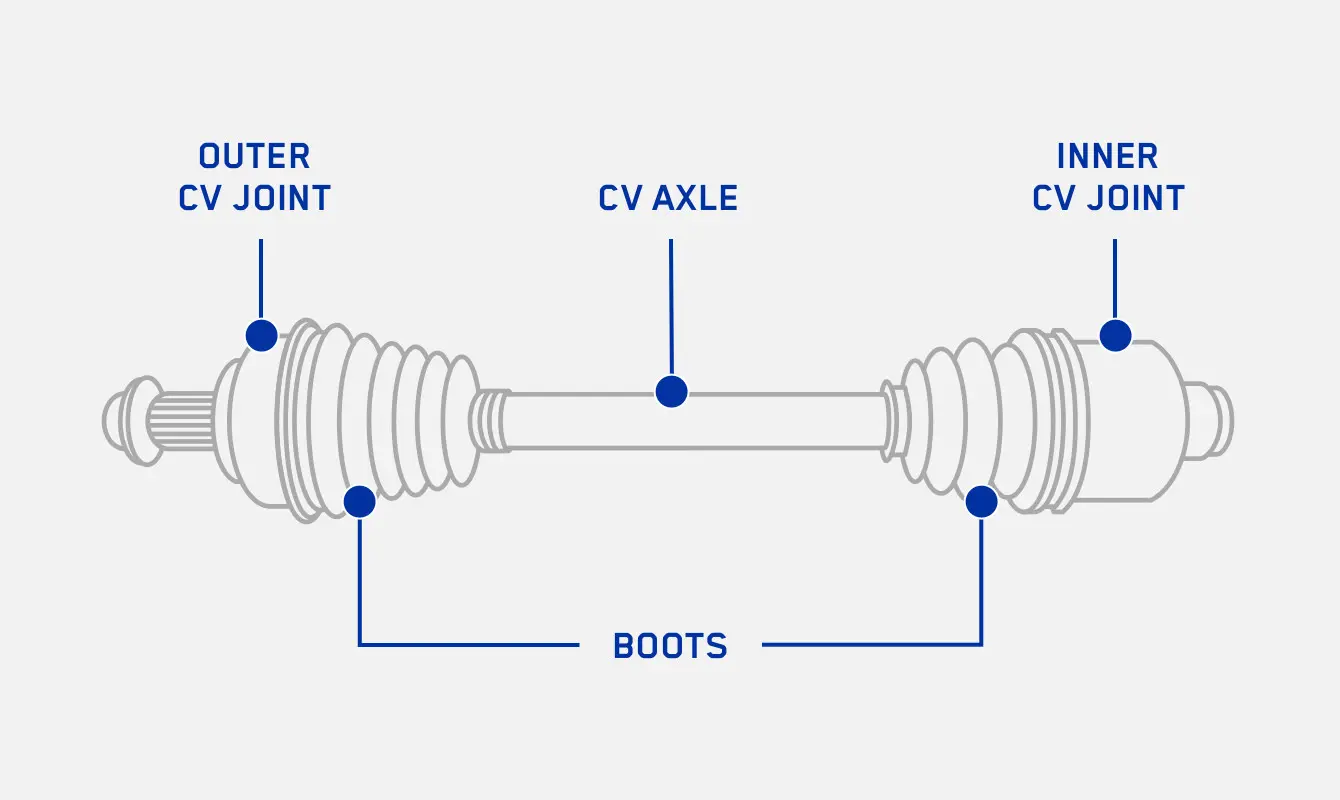
A CV axle has two constant-velocity joints: an inner joint (near the transmission) and an outer joint (near the wheel). Each contains bearings, a cage, and a protective rubber boot. The outer joint is most often responsible for clicking when turning because it operates at a greater angle. The boot protects the joint from dirt and moisture and retains grease. If the boot tears or cracks, grease leaks out, contaminants enter, bearings wear, and play develops—resulting in a click.
Root Causes of Clicking: From Boot Damage to Joint Wear
Outer CV joint wear is the most common cause of clicking when turning. Inner joint wear can cause clicking or vibration during acceleration. Boot damage—tears, cracks, or leaks—allows grease to escape and dirt to enter, accelerating wear. Other suspension components like ball joints or tie rods can cause similar noises, but they are less likely to click specifically when turning. If you hear a click only during turns, suspect the outer CV joint first.
Step-by-Step Diagnosis: How to Confirm the Source of the Click
Before replacing anything, confirm the source with this procedure:
- Safety first: Park on level ground, engage the parking brake, and chock the wheels.
- Visual inspection: Check the CV boots for cracks, tears, or grease splatter. A torn boot is a red flag.
- Turning test: Drive in a tight circle (e.g., a parking lot) and listen for clicking. Reverse direction to confirm. If the click is louder when turning one way, the outer joint on that side is likely worn.
- Acceleration test: Listen for clicking during acceleration and deceleration. If it occurs only under load, it may be the inner joint.
- If you're unsure, consult a professional for a thorough inspection.
Repair vs. Replacement: Making the Right Decision for Your Axle
Rebuilding a CV joint is rarely cost-effective compared to replacing the entire axle. Replacement is recommended if the joint is worn, the boot is torn, or the axle is damaged. Consider the cost of parts and labor: DIY replacement can save money but requires skill and tools. Quality matters—choose a reputable aftermarket brand or OEM to ensure durability and safety. A cheap axle may fail prematurely, costing you more in the long run.
OEM vs. Aftermarket CV Axles: What to Choose and Why
OEM axles are made to original specifications but are often more expensive. Aftermarket axles vary in quality; choose brands that meet or exceed OEM standards. Look for features like new CV joints, proper boot material, and correct grease. Warranty and customer reviews can indicate reliability. For many vehicles, quality aftermarket axles offer a reliable and cost-effective alternative. As a manufacturer of suspension components, we understand the importance of precision and durability—though we don't make CV axles, our engineering expertise informs our recommendations.
Preventive Maintenance: Extend the Life of Your CV Axles
Regularly inspect CV boots for cracks, tears, or leaks during routine maintenance. Avoid driving on rough terrain or hitting potholes that can damage boots. Replace damaged boots promptly to prevent joint contamination. Follow your vehicle manufacturer's service intervals for suspension inspections. If you notice any clicking or vibration, address it early to avoid more extensive damage. Simple preventive care can save you from costly repairs.
When to Call a Professional: Safety and Complexity Considerations
If you lack the tools, experience, or confidence, professional replacement is safer. Some vehicles have complex suspension designs that require special tools. If the axle is severely damaged or the noise is accompanied by other symptoms, seek professional diagnosis. A professional can also inspect related components like ball joints and tie rods, ensuring the root cause is addressed. Don't risk your safety—when in doubt, get expert help.
Conclusion: Don't Ignore the Click – Protect Your Safety
A clicking axle is not something to ignore. It signals a worn CV joint that can fail suddenly, leaving you stranded or causing an accident. Diagnose the issue promptly, decide between repair and replacement, and choose quality parts. Regular maintenance and early intervention will keep your vehicle safe and reliable. If you need quality suspension components, browse our range of automotive suspension components or learn more about our manufacturing facility and quality control processes.
FAQ
Q: Can I drive with a clicking CV axle?
A: It's risky. The joint can fail completely, causing loss of power and potential loss of control. Replace it as soon as possible.
Q: How much does it cost to replace a CV axle?
A: Costs vary by vehicle and labor rates. DIY parts can range from $50 to $200 per axle, while a shop may charge $200 to $500 per axle including labor.
Q: How long does a CV axle last?
A: With proper maintenance, CV axles can last 100,000 miles or more. Boot damage accelerates wear.
Q: Can I replace just the boot instead of the whole axle?
A: If the joint is still in good condition and the boot is torn, you can replace the boot. But if the joint is worn, replace the axle.
Q: What's the difference between a click and a clunk?
A: A click is often a CV joint issue, while a clunk may indicate ball joint or control arm problems. Diagnose carefully.