Suspension Articulation: How to Measure and Improve Off-Road Traction

Suspension articulation is the ability of your suspension to keep all four tires on the ground when traversing uneven terrain. It's the difference between crawling over a rock ledge with confidence and getting stuck with a wheel spinning in the air. In this guide, we'll break down what articulation is, why it matters, how it's measured, and how you can improve it on your vehicle.
What is Suspension Articulation?
Articulation refers to the suspension's capacity to allow the wheels to move up and down independently, maintaining tire contact with the ground. When one wheel climbs a rock, the opposite wheel drops into a hole—the more articulation, the longer your tires stay planted, translating to better traction and stability.
Think of your suspension as a system of links, springs, and dampers. When you hit a bump, the suspension compresses on one side and extends on the other. The range of that movement—from full compression to full droop—is articulation. It's not just about shock travel; it's about the entire geometry of control arms, trailing arms, and bushings working together.
Why Articulation Matters for Off-Roading
Articulation directly affects your vehicle's ability to climb, descend, and traverse obstacles. When a wheel lifts off the ground, it loses traction, and the drivetrain sends power to that spinning wheel—wasting energy and reducing forward motion. With greater articulation, all four wheels remain in contact more often, maximizing grip and minimizing the need for momentum or lockers.
Consider a rocky trail with a series of ledges. A vehicle with poor articulation will lift a front wheel early, losing drive and potentially becoming high-centered. A well-articulated vehicle will keep that wheel on the rock, transferring power to the ground and crawling over smoothly. That's why off-road enthusiasts prioritize articulation—it's the difference between a controlled climb and a frustrating winch-out.
Articulation vs. Wheel Travel vs. Flex: Clearing Up the Terminology
People often use these terms interchangeably, but they mean different things:
- Wheel travel is the total vertical distance a single wheel can move from full droop to full bump, measured in inches. It's a component of articulation but doesn't tell the whole story.
- Articulation is the simultaneous movement of multiple wheels in opposite directions—the axle's ability to twist. It's often quantified by the RTI score (explained below).
- Flex is a colloquial term for articulation, often used in the off-road community to describe how much a suspension can "bend" when flexed over an obstacle.
In short, wheel travel is about one wheel; articulation is about the whole axle's ability to conform to terrain. A vehicle can have long wheel travel but poor articulation if the suspension geometry restricts independent movement.
How Articulation is Measured: RTI Ramp Testing
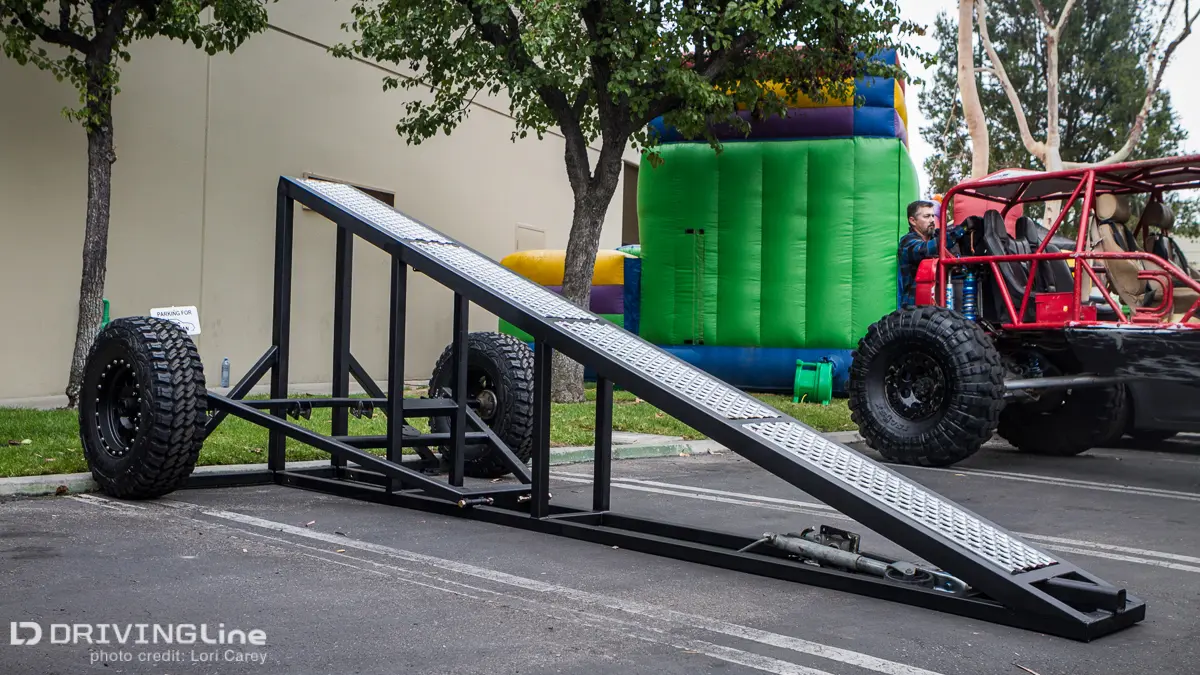
The Ramp Travel Index (RTI) is the standard measurement for articulation. It's calculated by driving a vehicle onto a ramp with a known angle (usually 20 degrees) until one wheel lifts off the ground. The distance traveled up the ramp is measured, and the RTI score is calculated as: (distance traveled in inches / wheelbase in inches) × 1000. A higher score means better articulation.
For example, a vehicle with a 100-inch wheelbase that travels 40 inches up the ramp before lifting a wheel has an RTI of 400 (40/100 × 1000). Most stock SUVs score between 300 and 500, while heavily modified rock crawlers can exceed 1000.
RTI testing is valuable because it provides a repeatable, objective way to compare articulation across vehicles. It's used by manufacturers, off-road magazines, and enthusiasts to evaluate suspension designs. If you're serious about improving your rig's articulation, measuring your baseline RTI before and after modifications is a smart practice.
Suspension Designs and Their Articulation Potential
Different suspension architectures have inherent articulation advantages and trade-offs:
- Solid axle (live axle): This design uses a rigid beam connecting both wheels. Because the axle can twist, solid axles typically offer excellent articulation. The lack of independent movement is compensated by the axle's ability to rotate around its axis, allowing one wheel to go up while the other goes down. This is why many dedicated off-road vehicles (Jeep Wrangler, Toyota Land Cruiser) use solid axles.
- Independent suspension (IFS/IRS): Each wheel moves independently, which improves ride comfort and on-road handling. However, articulation is often limited because the control arms and half shafts restrict droop travel. IFS vehicles can still be modified with longer arms and coilovers, but they rarely match solid axle articulation.
- Torsion bar / leaf spring: Older designs, but leaf springs can offer good articulation if they're long and have sufficient flex. Torsion bars are less common off-road due to limited travel.
When choosing a vehicle or upgrading suspension, consider the architecture. If maximum articulation is your goal, a solid axle is the starting point. If you're stuck with IFS, focus on maximizing droop travel with longer shocks and disconnecting sway bars.
How to Improve Your Vehicle's Articulation
There are several proven ways to increase articulation, ranging from simple to complex:
- Disconnect the sway bar: The sway bar (anti-roll bar) resists body roll, but it also limits independent wheel travel. Disconnecting it (manually or with quick disconnects) allows the suspension to flex more freely. This is one of the most cost-effective upgrades, often costing under $100 for disconnects. On-road, you'll want to reconnect it to maintain stability.
- Install longer shocks: Shocks limit droop travel. Replacing them with longer travel shocks (while ensuring proper bump stop clearance) can increase articulation. Measure your current droop and choose shocks that match your suspension's limits.
- Softer springs: Springs that compress more easily allow the suspension to absorb bumps without lifting wheels. However, too soft can cause bottoming out. Consider progressive springs that offer a soft initial rate but firm up as they compress.
- Adjustable control arms: For IFS, aftermarket upper control arms with extended ball joints can increase negative camber and droop travel. For solid axles, longer control arms can improve geometry and articulation.
- Remove or modify bump stops: Bump stops prevent the suspension from bottoming out, but they can also limit compression travel. If you're not bottoming out, trimming or replacing them with shorter ones can add a few inches of travel.
- Upgrade bushings: Worn or stiff bushings can bind the suspension, reducing articulation. Replacing them with polyurethane or rubber bushings designed for flex can help. For example, our Large suspension bushing line is engineered to provide smooth movement while maintaining durability.
Before making changes, assess your vehicle's current setup. Start with sway bar disconnects and longer shocks—they're relatively inexpensive and yield noticeable gains. Always test after modifications to ensure the suspension doesn't bind or cause driveline issues.
Common Myths About Articulation
Myth 1: More wheel travel always means more articulation.
While related, wheel travel is only one factor. A vehicle with long travel but a stiff sway bar may have less articulation than one with shorter travel and no sway bar. Articulation depends on the entire system's ability to move independently.
Myth 2: Lift kits always improve articulation.
A lift kit can actually reduce articulation if it's not paired with longer shocks and control arms. Lifting without addressing suspension geometry can limit droop travel and cause coil spring unseating. Properly designed lift kits with extended travel components can improve articulation, but a basic spacer lift often does not.
Myth 3: Disconnecting the sway bar is dangerous off-road.
While it increases body roll, off-road speeds are low, and the risk is minimal. Many off-roaders drive with sway bars disconnected on trails and reconnect for highway driving. It's a standard practice in the community.
Myth 4: Articulation is only for rock crawling.
Even on desert trails or forest roads, articulation helps maintain tire contact, improving traction and ride comfort. It's beneficial for any off-road driving.
Conclusion: Balancing Articulation with Other Suspension Factors
Articulation is a critical aspect of off-road performance, but it's not the only one. A suspension must also provide stability, handling, and load-carrying capability. Overemphasizing articulation can lead to excessive body roll on-road or poor towing stability. The key is to find a balance that suits your driving style.
When modifying your suspension, consider articulation alongside wheel travel, ride quality, and durability. Start with the basics—sway bar disconnects and shock upgrades—and test your vehicle's RTI to measure progress. Remember that every component, from bushings to control arms, plays a role in how freely your suspension can move.
As a manufacturer of automotive suspension components, we understand the importance of quality parts in achieving optimal articulation. Worn or inferior bushings can bind the suspension, negating other upgrades. Our Large suspension bushings are designed to provide the compliance needed for maximum flex while maintaining precision and longevity.
Whether you're building a rock crawler or just want to improve your weekend trail rig, understanding articulation is the first step. Measure your baseline, make targeted upgrades, and enjoy the confidence that comes from knowing your suspension is working with you, not against you.