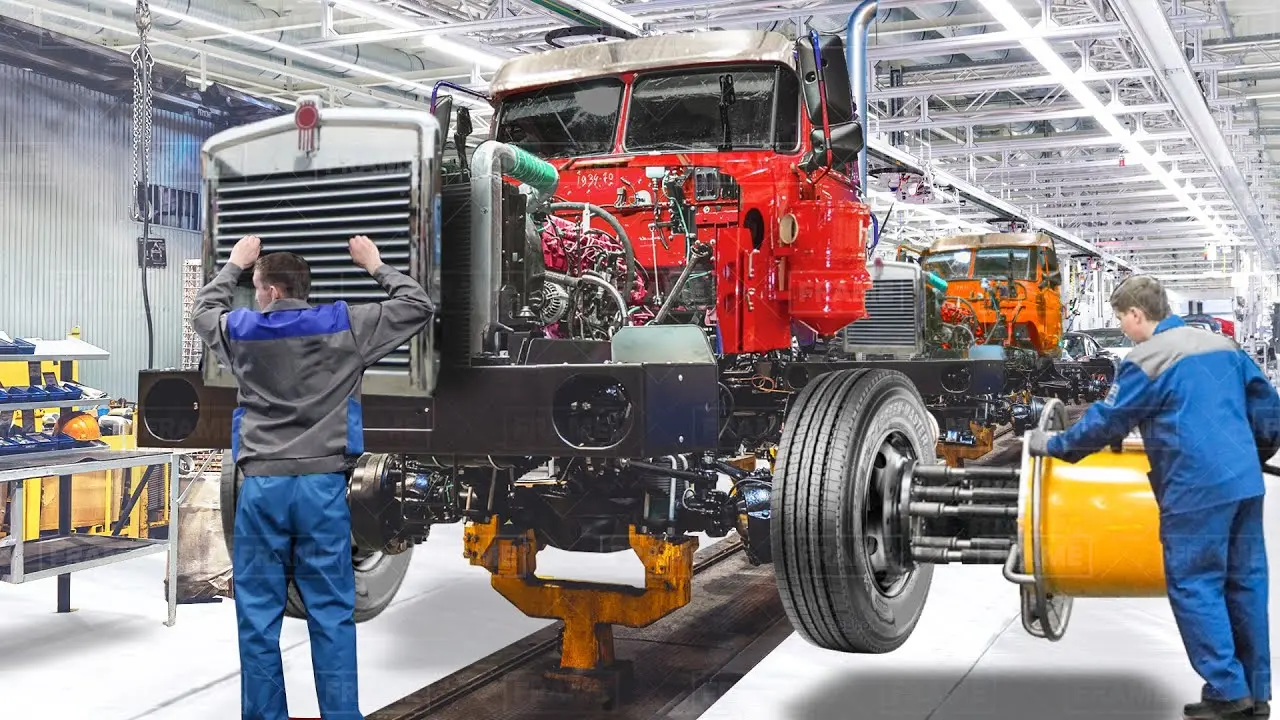
Truck Chassis Manufacturing Process: A Buyer's Guide to Materials, Quality, and Aftermarket Fit

If you're buying aftermarket chassis components, the manufacturing process behind the frame determines whether those parts will fit, perform, and last. OEM chassis are engineered to exact vehicle specifications with strict tolerances and validation. Aftermarket options vary—some replicate OEM quality, others cut corners. Knowing how chassis are made helps you evaluate suppliers and avoid costly, unsafe mistakes.
How Truck Chassis Are Manufactured: Step-by-Step
The process starts with flat steel or aluminum, which is cut, formed, welded, treated, and assembled into a ladder-like frame. Each step affects strength, weight, and dimensional accuracy—critical for aftermarket compatibility.
Blanking and Cutting
High-strength steel or aluminum coils are unrolled and cut into blanks using shearing or laser cutting. Material grade and thickness depend on the application: heavy-duty trucks typically use thicker, high-strength steel for maximum load-bearing capacity. For aftermarket buyers, the material grade directly impacts repairability and weldability.
Forming: Stamping, Bending, and Hydroforming
Blanks are shaped via stamping presses, press brakes, or hydroforming. Hydroforming uses high-pressure fluid to create complex, seamless sections that improve strength and reduce weight. This step determines the precise geometry of frame rails, which must match suspension and body mounting points exactly. If an aftermarket frame deviates even slightly, components may not align.
Welding and Joining Techniques
Robotic MIG welding is standard in modern chassis manufacturing, ensuring consistent weld penetration and reducing human error. Some manufacturers use laser welding for critical joints. The welding sequence is carefully controlled to minimize distortion and residual stress. Poor welds can lead to cracking under load—a safety risk.
Heat Treatment and Surface Treatment
After welding, the chassis may undergo heat treatment to relieve stress and improve material properties. Surface treatment, such as e-coating or powder coating, provides corrosion resistance. This is critical for longevity, especially in regions with road salt or high humidity. Aftermarket frames with inadequate corrosion protection may fail prematurely.
Assembly of Crossmembers and Suspension Mounts
Crossmembers are bolted or welded to the frame rails to create a ladder structure. Suspension mounts, engine mounts, and other brackets are attached with precision to ensure proper alignment. Tight tolerances are essential for vehicle handling and ride quality. Misaligned mounts can cause premature wear and poor drivability.
Final Inspection and Testing
Every chassis is inspected for dimensional accuracy and weld quality. Some manufacturers perform load testing to simulate real-world conditions. Only after passing these checks is the chassis shipped to the vehicle assembly plant. When evaluating aftermarket suppliers, ask about their inspection and testing protocols.
Material Selection: Steel vs. Aluminum and Trade-offs
Steel is the traditional choice for truck chassis due to its high strength and lower cost, but it is heavier. Aluminum offers significant weight savings and corrosion resistance, but at a higher material cost and with different welding requirements. The trade-off between weight and strength affects fuel efficiency, payload capacity, and ride quality. For aftermarket buyers, material choice also impacts repairability and compatibility with existing components. Steel frames are easier to weld and repair, while aluminum requires specialized techniques and may not be compatible with steel aftermarket parts.
Quality Control and Testing in Chassis Manufacturing
Quality control in chassis manufacturing employs non-destructive testing (NDT) methods such as ultrasonic, X-ray, and magnetic particle inspection to detect internal flaws without damaging the part. Dimensional verification using coordinate measuring machines (CMM) ensures that every mounting point is within tolerance. Fatigue testing and load testing simulate years of real-world stress to validate durability. Look for manufacturers that adhere to international standards like ISO 9001 or IATF 16949, as these indicate a robust quality management system.
OEM vs. Aftermarket Chassis: Manufacturing Differences and Implications
OEM chassis are designed and built to exact vehicle specifications, with strict tolerances and validation through extensive testing. Aftermarket chassis vary widely: some replicate OEM specs using similar materials and processes, while others may cut corners on material grade, welding quality, or corrosion protection. These differences have direct implications for fitment, durability, and safety. A poorly manufactured aftermarket chassis may not align correctly with suspension components, leading to premature wear or handling issues. Always verify that an aftermarket chassis meets OEM specifications or exceeds them.
Modern Manufacturing Technologies: Automation and Robotics
Modern chassis manufacturing relies heavily on automation and robotics to improve consistency and precision. Robotic welding ensures uniform weld quality, while automated guided vehicles (AGVs) and conveyor systems streamline assembly. In-line inspection systems use sensors and cameras to monitor quality in real time, catching defects early. Digital twin technology allows engineers to simulate and optimize the manufacturing process before production begins, reducing waste and improving efficiency. These technologies result in higher-quality chassis with tighter tolerances, which is beneficial for aftermarket compatibility.
How to Evaluate Aftermarket Chassis Manufacturers
When evaluating aftermarket chassis manufacturers, look for evidence of quality control: certifications like ISO 9001, documented testing procedures, and facility standards. Ask about the materials they use—specific steel grades or aluminum alloys—and their welding methods. Transparency about engineering specifications and design data is a good sign. A strong warranty and responsive after-sales support indicate confidence in their product. By applying these criteria, you can make an informed decision that prioritizes safety and performance.
FAQ
What is the most important factor in chassis manufacturing for aftermarket buyers?
Dimensional accuracy and material quality. If mounting points are off, even high-strength materials won't prevent alignment issues.
Can aftermarket chassis be as safe as OEM?
Yes, if they replicate OEM specifications and use equivalent materials and processes. Look for evidence of quality control and testing.
How does material choice affect aftermarket part compatibility?
Steel frames are easier to weld and repair, while aluminum requires specialized techniques and may not be compatible with steel aftermarket parts. Always match materials.
What certifications should I look for?
ISO 9001 or IATF 16949 indicate a robust quality management system.
Why is robotic welding preferred?
Robotic welding ensures consistent weld quality, reducing the risk of defects that could compromise structural integrity.