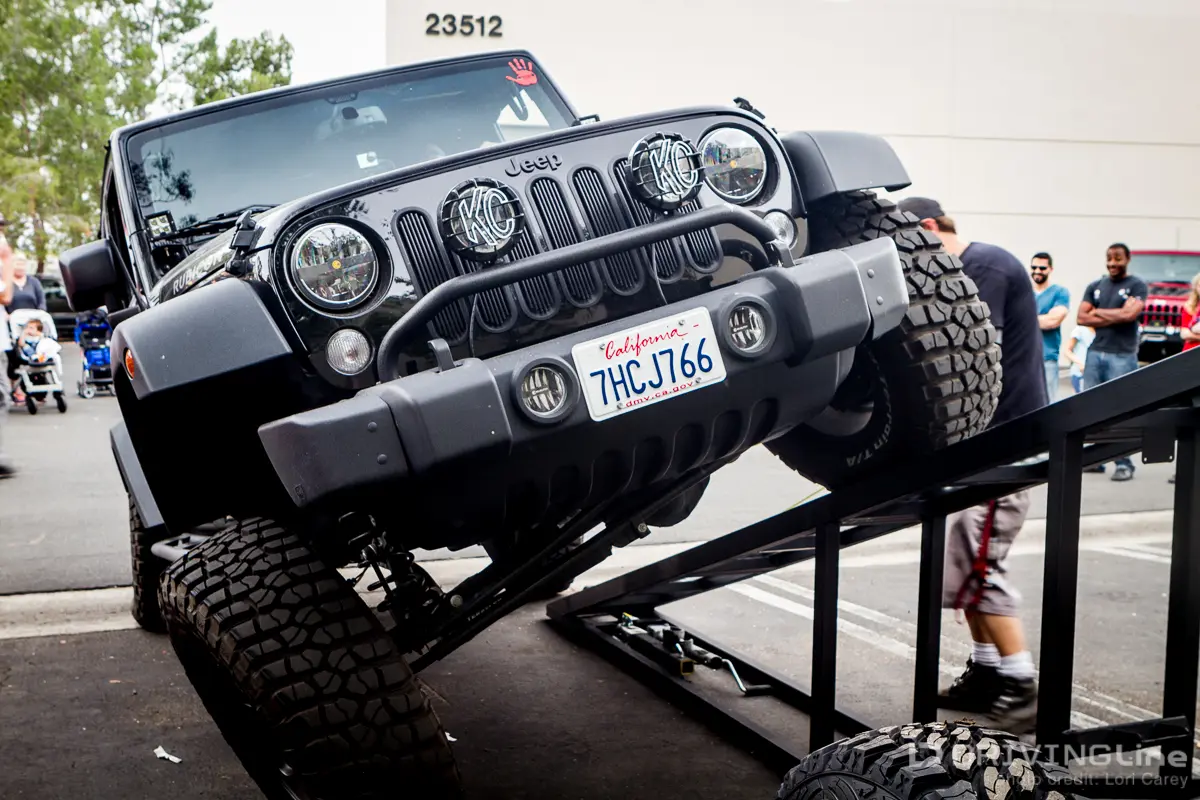
Suspension Travel and Wheel Control: A Manufacturer's Guide to Geometry, Components, and Trade-offs

Balancing suspension travel and wheel control is the core engineering challenge for any vehicle. More travel does not automatically mean better control; it requires careful geometry and component selection to maintain tire contact and alignment. This guide explains the relationship, the components involved, and how to choose the right setup for your needs.
Defining Suspension Travel and Wheel Control: What You Need to Know
Suspension travel is the total vertical movement of the wheel from full droop (extension) to full bump (compression). Wheel control is the ability to maintain tire contact and alignment through suspension geometry and components. Optimal performance requires a balance, not maximization of travel alone.
Travel is measured in inches or millimeters and directly affects how well the tire follows the terrain. Wheel control ensures that the tire stays perpendicular to the road or trail, maximizing the contact patch. Without proper control, even a long-travel suspension can lose grip and stability.
For example, a vehicle with 12 inches of travel but poor geometry may experience excessive camber change, reducing the tire's contact patch during cornering. Conversely, a well-designed suspension with 8 inches of travel can outperform it by keeping the tire planted.
Actionable takeaway: When evaluating suspension upgrades, consider both travel and the geometry that controls wheel motion. A kit that increases travel without addressing geometry may degrade handling.
The Role of Suspension Geometry in Wheel Control
Suspension geometry dictates how the wheel moves through its travel, directly impacting wheel control. Key angles—camber, caster, toe, and roll center—must be optimized for the intended travel range.
Camber change during travel is critical. As the suspension compresses, the wheel should ideally maintain negative camber to keep the contact patch flat. If geometry is not designed for the travel, the wheel may gain positive camber, reducing grip. For example, a MacPherson strut naturally increases negative camber in bump, but excessive travel can cause the opposite effect if the strut angle is not optimized.
Roll center influences body roll and weight transfer. A higher roll center reduces body roll but can cause jacking forces. Lower roll centers increase roll but may improve grip in certain conditions. The roll center should be designed to work with the suspension travel to keep the tire planted.
Suspension links and pivot points determine the wheel's path. Control arms, trailing arms, and multi-link setups must be positioned to minimize unwanted toe and camber changes. Proper pivot placement ensures the wheel moves vertically without scrubbing or steering itself.
Actionable takeaway: When modifying suspension, check the geometry at full bump and droop. Use alignment specs and consider adjustable control arms to correct camber and toe changes.
Key Components for Wheel Control: Control Arms, Bushings, and More
Control arms are the primary link between the chassis and wheel, locating the wheel and managing forces. They must be strong enough to handle loads without flexing, yet allow precise movement. Quality control arms use proper ball joints and bushings to maintain alignment under stress.
Bushings play a crucial role in compliance and precision. Rubber bushings allow some deflection, absorbing noise and vibration but reducing control. Polyurethane or solid bushings improve precision but transmit more harshness. For example, our Large suspension bushing line is designed to maintain geometry under load while reducing NVH.
Sway bars reduce body roll by transferring load between sides. They improve wheel control during cornering but can limit independent articulation off-road. Disconnectable sway bars offer the best of both worlds.
Knuckles and spindles connect the control arms to the wheel, providing the steering axis. Their geometry affects scrub radius and steering feel. High-quality knuckles are essential for precise control.
Actionable takeaway: When upgrading control arms, consider the bushings. For daily driving, rubber or hydraulic bushings offer comfort; for performance, polyurethane or spherical bearings provide precision.
Types of Suspension Travel: Stock, Mid-Travel, and Long-Travel
Stock travel is designed for comfort and everyday driving. It typically ranges from 4 to 6 inches and is tuned for predictable handling on paved roads. Springs and dampers are matched to provide a smooth ride while maintaining control.
Mid-travel suspensions offer a compromise for light off-road and performance. They usually provide 6 to 8 inches of travel, using upgraded components like longer control arms and adjustable coilovers. This setup improves off-road capability without sacrificing too much on-road comfort.
Long-travel suspensions are for serious off-road, maximizing articulation at the cost of on-road handling. They can provide 10 inches or more of travel, using extended control arms, custom spindles, and high-performance shocks. The focus is on keeping tires in contact with rough terrain, even if it means more body roll and reduced responsiveness on pavement.
Actionable takeaway: Match travel to your primary use. If you rarely leave pavement, stock or mid-travel is sufficient. For rock crawling or desert racing, long-travel is worth the trade-offs.
Trade-offs: Why More Travel Can Hurt Wheel Control
Increased travel can lead to adverse camber and toe changes if geometry isn't optimized. As the wheel moves further, the suspension angles change more dramatically. Without proper design, the tire may lean excessively, reducing grip and causing uneven wear.
Longer travel requires softer springs to allow full compression, which increases body roll and reduces responsiveness. Soft springs also allow more weight transfer during braking and acceleration, making the vehicle feel less stable.
Proper design can mitigate some trade-offs but not eliminate them. For example, long-travel kits often include custom control arms that correct geometry, but they cannot fully compensate for the inherent compromises of extreme travel.
Actionable takeaway: Be wary of cheap long-travel kits that simply add longer shocks without addressing geometry. Invest in a system that includes proper control arms and alignment adjustments.
Choosing the Right Travel for Your Vehicle Use
Assess your primary use: daily driving, towing, off-roading, or racing. Each requires different travel and control characteristics.
- Daily driving: Stock or mild mid-travel (4-6 inches) with a focus on comfort and predictable handling.
- Towing: Stock or slightly upgraded travel with heavy-duty springs to maintain control under load.
- Light off-road: Mid-travel (6-8 inches) with upgraded control arms and shocks.
- Serious off-road: Long-travel (10+ inches) with full suspension kits designed for articulation.
- Racing: Specialized setups based on the discipline—desert racing needs high-speed stability, rock crawling needs articulation.
Consider terrain and speed requirements. High-speed desert running demands stable geometry to prevent wheel hop, while slow rock crawling prioritizes articulation. Match travel to the terrain you'll encounter most.
Match travel to suspension geometry and component quality. A well-engineered mid-travel kit can outperform a poorly designed long-travel system. Ensure the kit includes necessary components like control arms, bushings, and alignment specs.
Actionable takeaway: List your typical driving conditions and rank them by importance. Use that list to determine the maximum travel you need without sacrificing control.
Manufacturer Insights: How We Balance Travel and Control
As a manufacturer of automotive suspension components, we design suspensions that optimize geometry for specific travel targets. Our engineering process starts with defining the intended use and travel range, then designing control arms and bushings to maintain geometry throughout that range.
Quality components are essential for achieving control. We use precision-machined bushings and ball joints to minimize deflection. For example, our Large suspension bushing is designed to maintain compliance while reducing play.
Testing and validation are critical. We use computer simulation and physical testing to verify that our components perform under real-world conditions. This includes fatigue testing and alignment checks at full travel.
Actionable takeaway: When buying suspension parts, look for manufacturers that provide engineering data and testing evidence. Avoid generic parts that may not be designed for your vehicle's specific geometry.
Common Myths and Misconceptions About Suspension Travel
Myth: More travel always equals better off-road performance. Reality: Travel must be paired with proper geometry and damping. Excessive travel without control can cause instability and poor traction.
Myth: Softer springs always improve ride comfort. Reality: Springs must be matched to the vehicle's weight and intended use. Too soft can cause bottoming out and poor handling.
Myth: Wheel control is only about alignment. Reality: Alignment is important, but control also depends on bushings, control arms, and shock tuning. All components work together.
Actionable takeaway: Evaluate suspension upgrades holistically. Don't fall for marketing that emphasizes travel alone.
Conclusion: Achieving Optimal Performance
Balancing suspension travel and wheel control requires understanding the interplay between geometry, components, and your driving needs. Start by defining your primary use, then choose a suspension system that provides adequate travel without sacrificing control. Invest in quality components and proper installation to ensure your vehicle performs safely and effectively.
For more information on our suspension components, visit our product page or learn about our manufacturing process.