Suspension System Science: How Geometry, Components, and Trade-offs Guide Your Part Choices

Choosing the right suspension parts starts with understanding the science: how geometry, components, and trade-offs interact to determine ride comfort, handling, and durability. This knowledge empowers you to prioritize what matters for your vehicle's intended use, rather than relying on generic advice.
The Purpose of a Suspension System: Balancing Ride, Handling, and Durability
A suspension system must do three things simultaneously: keep tires in contact with the road, provide ride comfort, and maintain stable handling. These goals often conflict—stiffer springs improve handling but degrade comfort; softer springs do the opposite. Recognizing this trade-off is the first step in making informed parts decisions. Every vehicle's suspension is tuned for a specific use case: a family sedan prioritizes comfort, a sports car prioritizes grip, and an off-roader prioritizes wheel articulation. When you change components, you shift this balance. Define your priorities—comfort, performance, or durability—to guide every upgrade or replacement.
The Physics of Suspension: Springs, Damping, and Unsprung Mass
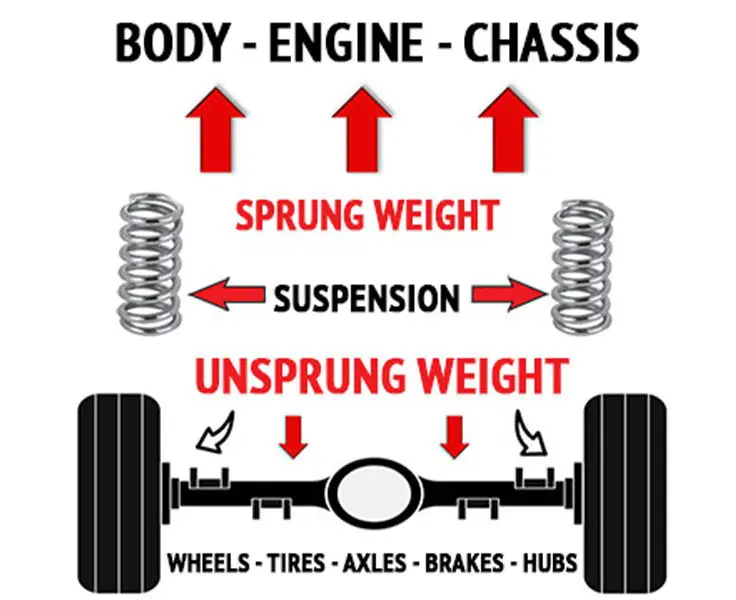
Suspension physics revolves around managing energy and mass. The vehicle body (sprung mass) is supported by springs, while wheels and axles (unsprung mass) absorb road impacts. The goal is to keep tires planted while minimizing body motion. Springs store energy from bumps; dampers (shocks) dissipate that energy to control oscillation. A critical concept is the sprung-to-unsprung mass ratio: lighter unsprung mass improves tire contact and ride quality. For example, reducing wheel weight or using aluminum control arms lowers unsprung mass, enhancing grip and comfort. Damping ratios are tuned to prevent excessive bounce (underdamping) or harshness (overdamping). Understanding these principles helps you choose springs and dampers that match your driving needs.
Key Components: Springs, Dampers, Struts, Control Arms, and More
Each suspension component has a specific role, and they work as a system. Springs support the vehicle's weight and absorb road energy. Common types include coil springs (most common), leaf springs (trucks and solid axles), and torsion bars (space-efficient). Dampers control spring oscillation; they come in twin-tube (comfort-oriented) and monotube (performance-oriented) designs. Struts are a structural damper that also serves as a suspension link, common in MacPherson setups. Anti-roll bars (sway bars) reduce body roll during cornering by linking opposite wheels. Bushings and control arms maintain wheel alignment and isolate noise and vibration. Worn bushings cause clunks and vague handling. For example, our automotive suspension components include control arms and bushings for Hyundai and KIA vehicles, engineered to restore precise geometry.
Types of Suspension Systems: Independent vs. Dependent, Common Configurations
Suspension architectures fall into two broad categories: independent and dependent. Independent suspension allows each wheel to move vertically without affecting the opposite wheel, improving ride comfort and handling on uneven surfaces. Dependent systems (solid axles) connect wheels via a rigid beam, offering durability and load capacity but compromising ride quality. Within independent systems, MacPherson struts are simple, compact, and cost-effective, making them standard on most front-wheel-drive cars; they offer good handling but less camber control. Double wishbone designs use two control arms to precisely control wheel motion, providing superior grip and adjustability, often found in performance cars. Other types include multi-link (a refinement of double wishbone) and trailing arm (common in rear suspensions). Choosing between these depends on your vehicle's design and performance goals.
Suspension Geometry and Its Impact on Handling
Alignment angles—camber, caster, and toe—dictate how tires contact the road. Camber is the vertical tilt of the wheel: negative camber (top leans inward) increases cornering grip but causes inner-edge tire wear if excessive; positive camber aids stability but reduces grip. Caster is the steering axis tilt: positive caster improves straight-line stability and steering return, but too much makes steering heavy. Toe is the horizontal angle of the wheels relative to the vehicle centerline: toe-in (fronts closer) enhances stability, toe-out improves turn-in but can cause feather-edge wear. These angles change under load and suspension travel, which is why alignment specs are critical. Modifying ride height or installing aftermarket arms alters geometry, so a professional alignment after suspension work is essential.
Maintenance and Troubleshooting: Signs of Wear and Replacement Tips
Common symptoms of suspension wear include excessive bouncing after bumps, uneven tire wear, pulling to one side, and noises like clunking or squeaking. Inspect visually for leaking shock absorbers, cracked or deteriorated bushings, and worn ball joints. Shocks and struts typically last 50,000 to 100,000 miles, but this varies with driving conditions. Bushings and control arm bushings can wear earlier, especially on rough roads. If you hear a clunk over bumps, check control arm bushings—our Large suspension bushing and Small suspension bushing are designed for Hyundai and KIA models. DIY replacement is possible for some components, but alignment and safety-critical parts like struts are best left to professionals. Always replace suspension parts in pairs (e.g., both front struts) to maintain balance.
Advanced Suspension Technologies: Active, Semi-Active, and Future Trends
Modern vehicles increasingly feature adaptive suspension systems. Semi-active dampers (like MagneRide) use magnetorheological fluid to adjust damping in real time, offering a compromise between comfort and handling. Active systems use hydraulic or electric actuators to counter body roll and pitch, providing near-flat cornering. Electromagnetic suspension, such as Bose's concept, uses linear electromagnetic motors for instantaneous response. These systems improve ride and handling but add cost, complexity, and weight. Reliability can be a concern, and repairs are expensive. Future trends include predictive suspension using cameras and sensors to anticipate road conditions, adjusting damping preemptively. While promising, these technologies are not yet mainstream for most drivers. For most vehicles, well-tuned conventional components remain a cost-effective choice.
Choosing the Right Parts: A Decision Framework for Buyers and Mechanics
Selecting suspension parts requires assessing your driving needs, priorities, and budget. Start by defining your use case: daily commuting, spirited driving, off-roading, or towing. Next, prioritize trade-offs: comfort vs. handling, durability vs. performance. For example, if you value comfort, choose OEM-grade dampers and bushings; if you want performance, consider monotube shocks and polyurethane bushings. Quality matters: OE parts guarantee fit and performance, while aftermarket parts vary. Look for reputable brands, materials (e.g., rubber vs. polyurethane), and warranties. Consult professionals and use vehicle-specific fitment data. For Hyundai and KIA owners, our control arms and bushings are manufactured to OE specifications, ensuring proper geometry and longevity. Always replace worn components promptly to avoid premature tire wear and unsafe handling.
Conclusion: Choosing the Right Suspension for Your Needs
Understanding suspension science empowers you to make smarter decisions. By grasping the roles of springs, dampers, and geometry, you can diagnose issues, choose appropriate upgrades, and maintain your vehicle effectively. Whether you're a DIY enthusiast or a professional mechanic, prioritize quality and compatibility. For reliable replacement parts, explore our range of automotive suspension components and learn about our quality control processes.
FAQ
What is the most important suspension geometry angle?
Camber, caster, and toe all play critical roles. Camber affects cornering grip, caster influences straight-line stability, and toe impacts tire wear and responsiveness. The most important depends on your driving needs; proper alignment ensures all angles are within spec.
How often should suspension components be replaced?
Shocks and struts typically last 50,000 to 100,000 miles, but bushings and control arms may wear earlier, especially on rough roads. Regular inspections and prompt replacement of worn parts prevent further damage and maintain safety.
Can I upgrade my suspension for better handling without sacrificing comfort?
Yes, modern adaptive systems like semi-active dampers offer a compromise, but they add cost and complexity. Alternatively, choosing quality performance components with adjustable settings can help balance comfort and handling based on your preferences.
What are the signs of worn suspension bushings?
Common signs include clunking noises over bumps, vague steering, uneven tire wear, and a general feeling of instability. Inspect bushings for cracks or deterioration and replace them if necessary.
Why is it important to replace suspension parts in pairs?
Replacing parts like struts or shocks in pairs ensures balanced handling and prevents uneven wear. Mismatched components can cause pulling or instability, compromising safety.