How Suspension Parts Manufacturers Ensure Quality in Modern Automotive Production
Quality in suspension parts isn't a single test—it's a systemic commitment to precision at every stage, from material selection to final validation. For buyers, understanding this system is key to distinguishing genuine quality from mere certification.
The Quality System Behind Every Suspension Part
Quality assurance in suspension manufacturing is a comprehensive process, not a final inspection. It starts with raw material verification and continues through every stage of production, culminating in rigorous testing and traceability. This systemic approach ensures that each part meets exact specifications for safety and performance. Buyers should look for evidence of this integrated system—such as documented processes, in-process inspections, and 100% testing—rather than relying solely on certifications.
Raw Material Selection and Incoming Inspection
Quality begins with the raw materials. Manufacturers select steel or aluminum alloys based on required mechanical properties like tensile strength, yield strength, and fatigue resistance. For example, suspension control arms often use high-strength steel or forged aluminum to withstand cyclic loads. Incoming materials undergo chemical analysis (e.g., spectrometry) and mechanical testing (e.g., tensile and hardness) to verify they meet specifications. Traceability is maintained from supplier to finished part, allowing manufacturers to isolate and address any material-related issues. Buyers should ask for material certifications and traceability documentation to confirm this step.
Precision Machining and Forming Processes
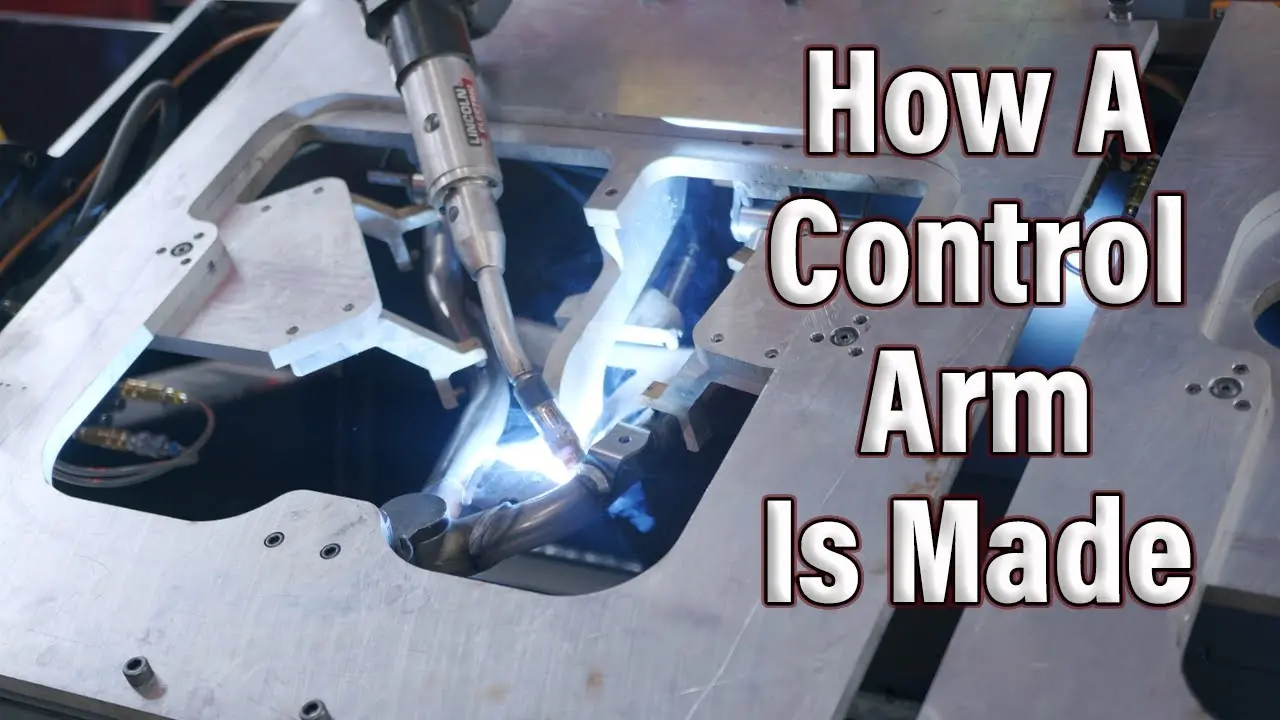
Manufacturing processes directly influence part quality. CNC machining ensures precise tolerances critical for suspension geometry—often within ±0.05 mm—which affects alignment and tire wear. Forging and heat treatment enhance material strength and fatigue life by refining grain structure and relieving stresses. In-process inspections with coordinate measuring machines (CMM) verify dimensions at key stages. For instance, a control arm's mounting points must be exact to maintain proper suspension alignment. Automated machining centers also reduce human error and increase consistency. Buyers should inquire about the machining processes and tolerance controls used.
Automated Testing: Fatigue, Hardness, and Tensile
Testing validates that parts meet durability and safety standards. Fatigue testing simulates real-world load cycles—often millions of cycles—to ensure parts can withstand road-induced stresses without failure. Hardness testing verifies heat treatment effectiveness, ensuring the material has the required strength and wear resistance. Tensile testing measures material strength and ductility, confirming it can absorb energy without fracturing. Automated systems allow for 100% inspection of critical parts, meaning every component is tested, not just samples. This is crucial for safety-critical suspension parts. Buyers should ask whether parts are 100% inspected and what specific tests are performed.
Industry Standards and Certifications: ISO, TÜV, and Beyond
Standards and certifications provide a framework for quality, but they have limitations. ISO 9001 ensures a quality management system is in place, but it doesn't guarantee product-specific performance. TÜV certifications involve third-party testing and validation of product safety, offering higher assurance. IATF 16949 is specific to automotive quality management, incorporating additional requirements like PPAP and continuous improvement. Buyers should verify that certifications are current and relevant to the product. For example, a manufacturer may hold ISO 9001 but lack IATF 16949, which is often required by OEMs. Always ask for copies of certificates and confirm their scope.
Challenges in Quality Control and How Manufacturers Address Them
Maintaining consistency across high-volume production is a major challenge. Variability in raw materials, tool wear, and environmental conditions can affect part quality. Detecting non-visible defects like micro-cracks requires advanced techniques such as ultrasonic testing or magnetic particle inspection. Manufacturers invest in employee training and foster a culture of quality, empowering workers to stop production if they spot issues. Continuous improvement processes like Six Sigma help reduce variability by identifying and eliminating root causes. For example, statistical process control (SPC) monitors key characteristics in real-time, allowing immediate corrective action. Buyers should look for manufacturers that demonstrate proactive quality management.
The Role of Automation and AI in Quality Assurance
Automation and AI are transforming quality control. Automated visual inspection systems use AI to detect surface defects like scratches or porosity that human eyes might miss. Machine learning algorithms predict equipment maintenance needs and process deviations, preventing defects before they occur. Data analytics enable real-time monitoring and traceability, linking every part to its production parameters. Automation reduces human error and increases inspection speed, making 100% inspection feasible. For instance, AI-powered systems can inspect thousands of parts per hour with greater accuracy than manual checks. Buyers should consider whether a manufacturer leverages these technologies, as they indicate a commitment to cutting-edge quality.
What Buyers Should Verify: A Practical Checklist
When evaluating suspension parts manufacturers, ask for:
- Material certifications and traceability documentation.
- Details on testing procedures and whether parts are 100% inspected.
- Current certifications like IATF 16949 and TÜV product certifications.
- Case studies or examples of quality control in action.
Additionally, visit the manufacturing facility if possible, or request virtual tours. Look for cleanliness, organization, and adherence to procedures. Ask about their non-conformance and corrective action processes. A manufacturer that openly discusses challenges and solutions is more trustworthy than one that only highlights successes.
By following this checklist, buyers can make informed decisions and choose suppliers that prioritize quality at every step—from raw material to road.
FAQ
What is the most important quality test for suspension parts?
Fatigue testing is critical because it simulates real-world load cycles and ensures the part can withstand repeated stress without failure. However, a combination of material verification, dimensional inspection, and hardness testing is essential for overall quality.
How can I verify a manufacturer's certifications?
Ask for copies of their certificates and verify them with the issuing body. Check that the certification scope matches the product you're buying. For automotive parts, IATF 16949 is often more relevant than ISO 9001 alone.
Why is 100% inspection important for suspension parts?
Suspension parts are safety-critical. 100% inspection ensures that every part, not just a sample, meets specifications. Automated testing makes this feasible without slowing production.
What should I look for when visiting a manufacturing facility?
Look for cleanliness, organization, and adherence to procedures. Ask about their quality control processes and how they handle non-conformance. A transparent manufacturer will openly discuss challenges and solutions.