Inside a Suspension Factory: How Automotive Chassis Components Are Manufactured and Tested

The durability and performance of suspension components are determined by the precision of manufacturing and rigorous testing, not just the brand label. Whether you're a mechanic, DIYer, or wholesale buyer, understanding how control arms and ball joints are made helps you choose parts that last. Here's an insider's look at the process—and why it matters for your purchasing decision.
From Raw Material to Road-Ready: The Manufacturing Journey of Suspension Components
Suspension components like control arms and ball joints are manufactured through a precise sequence of forging, casting, machining, welding, and surface treatment. Each step directly affects durability and performance, which is why understanding the process is critical for anyone buying replacement parts.
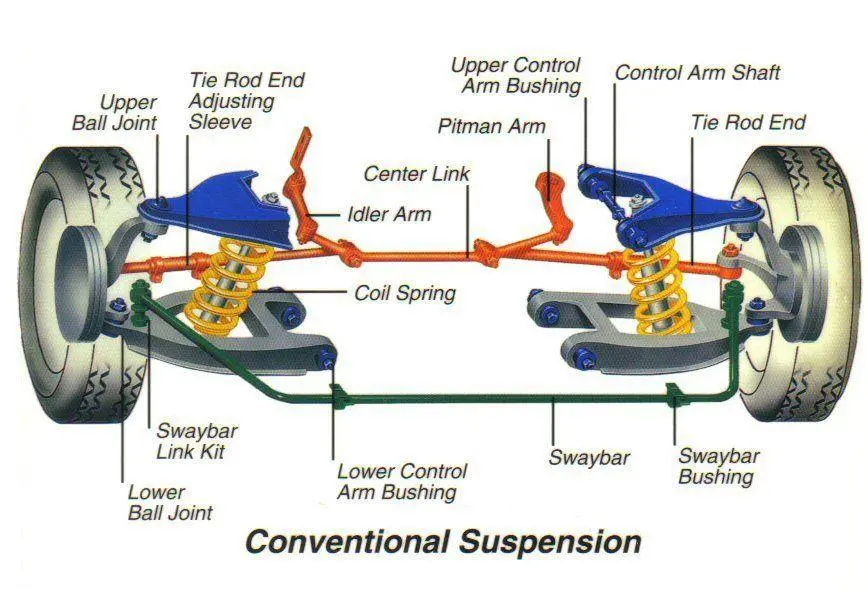
Control arms connect the wheel hub to the vehicle's frame, allowing vertical wheel movement while maintaining alignment. Ball joints act as pivot points between the control arm and steering knuckle, enabling steering and suspension articulation. Both must withstand extreme loads, corrosion, and fatigue over years of service.
The journey begins with raw material selection. Steel, aluminum, and rubber compounds are chosen based on the component's role. For example, forged steel control arms offer high strength for heavy-duty applications, while aluminum provides weight savings for performance vehicles. Rubber bushings are formulated to absorb vibration and allow controlled movement.
Manufacturing starts with either forging or casting. Forging heats steel billets and shapes them under high pressure, creating a dense grain structure that enhances strength. Casting pours molten metal into molds, allowing complex shapes at lower cost but with less inherent strength. After forming, CNC machining precisely cuts mounting holes, ball joint seats, and other critical surfaces to tolerances within 0.01 mm. Welding, often robotic MIG or TIG, joins stamped or forged parts into assemblies. Finally, surface treatments like e-coating or powder coating protect against corrosion.
Precision at every stage is non-negotiable. A control arm with a misaligned ball joint seat will cause premature wear and poor handling. That's why reputable manufacturers invest in high-end CNC equipment and rigorous inspection.
Materials Matter: How Steel, Aluminum, and Rubber Determine Suspension Quality
Material selection is the single biggest factor in suspension component performance and longevity. Steel offers superior strength and fatigue resistance, making it the default for control arms in trucks and SUVs. Aluminum, while lighter, requires thicker sections to match steel's strength, which can negate weight savings. Rubber compounds in bushings and ball joint boots must balance stiffness for handling with compliance for comfort.
Steel control arms are typically made from high-strength low-alloy (HSLA) steel, which provides excellent yield strength and impact resistance. They are heavier but more forgiving under extreme loads. Aluminum control arms, often used in performance cars, reduce unsprung weight, improving ride and handling. However, aluminum is more susceptible to fatigue and corrosion, so design and coating are critical.
Rubber bushings are formulated with specific durometers (hardness) and damping properties. Softer rubber absorbs more vibration but can feel vague; harder rubber improves precision but transmits more harshness. The rubber compound must also resist oil, ozone, and temperature extremes. Ball joint boots protect the grease-filled joint from contaminants; a torn boot leads to rapid wear.
Material choice also dictates manufacturing processes. Steel can be welded easily, while aluminum requires specialized techniques like friction stir welding. Rubber must be molded and bonded to metal sleeves, requiring precise temperature and pressure control. These factors influence cost and final quality.
When comparing parts, check the material grade and manufacturing method. A forged steel control arm with a zinc-rich coating will outlast a cheap cast aluminum one in most applications. For bushings, look for OEM-grade rubber compounds, not generic polyurethane that may squeak or transmit noise.
Precision in Production: CNC Machining, Forming, and Welding in Suspension Manufacturing
CNC machining, forming, and welding are the core processes that turn raw materials into precise suspension components. CNC machining ensures tolerances and surface finishes that directly affect fit and function. Forming methods—forging vs. casting—determine strength and weight. Welding quality is critical for structural integrity.
CNC machining centers mill, drill, and bore control arms and ball joint housings to exact dimensions. Tolerances are typically ±0.05 mm for mounting holes and ±0.02 mm for ball joint seats. Surface finish, measured in Ra (roughness average), must be smooth to prevent stress concentrations. High-quality manufacturers use 5-axis CNC machines that can machine complex geometries in one setup, reducing errors.
Forging involves heating steel to around 1200°C and pressing it into a die. The resulting grain flow follows the part's shape, making it stronger than cast or machined parts. Casting, where molten metal is poured into a mold, allows intricate shapes but can have internal porosity. For control arms, forging is preferred for critical load-bearing areas, while casting may be used for brackets or covers.
Welding joins stamped steel plates or forged lugs to form control arms. MIG (metal inert gas) welding is common for its speed, while TIG (tungsten inert gas) offers better control for thinner materials. Robotic welding ensures consistent quality, but manual welding may be used for complex joints. After welding, parts are heat-treated to relieve stress and improve hardness.
Heat treatment and surface finishing are the final steps. Heat treatment, such as quenching and tempering, adjusts the steel's hardness and toughness. Surface finishing includes shot blasting to clean and strengthen the surface, then e-coating or powder coating for corrosion resistance. These processes are essential for longevity, especially in regions with road salt.
When evaluating a manufacturer, ask about their CNC capabilities, welding certifications, and heat treatment processes. A part that skips these steps may look fine but will fail prematurely.
Rigorous Testing: How Suspension Components Are Validated for Durability and Safety
Suspension components undergo a battery of tests to ensure they meet performance and safety standards. In-house testing includes dimensional inspection, material testing, non-destructive testing, durability testing, and performance evaluation. These tests simulate years of road use and extreme conditions.
Dimensional inspection uses coordinate measuring machines (CMM) to verify that every hole, surface, and angle matches the CAD model. Material testing checks hardness, tensile strength, and chemical composition. Non-destructive testing, such as magnetic particle or ultrasonic inspection, detects cracks or internal flaws without damaging the part.
Durability testing is where components are pushed to failure. Fatigue testing applies cyclic loads to simulate road vibrations and impacts. Salt spray testing exposes parts to a corrosive salt fog to evaluate rust resistance. Road simulation uses hydraulic actuators to reproduce the actual loads a car experiences on rough roads, testing the entire suspension assembly.
Performance testing measures how the component behaves under load. Load testing applies static forces to verify strength and deflection. Articulation testing checks the range of motion of ball joints and bushings. Noise, vibration, and harshness (NVH) evaluation ensures the component doesn't produce unwanted sounds or vibrations.
Quality control measures include statistical process control (SPC), where data from every part is monitored to detect trends. Traceability is maintained through serial numbers and batch records, allowing any issue to be traced back to raw materials and processes. Certifications like ISO/TS 16949 demonstrate a commitment to quality.
When buying aftermarket parts, ask if they have been tested to OEM standards. Many cheap parts skip durability testing, leading to early failure. A reputable manufacturer will provide test data or at least explain their testing procedures.
Factory vs Aftermarket: A Manufacturer's Perspective on Quality and Standards
Factory (OEM) and aftermarket suspension parts differ primarily in manufacturing standards and quality control. OEM parts are made to exact specifications set by the vehicle manufacturer, with strict tolerances and extensive testing. Aftermarket parts vary widely, from cheap knock-offs to high-quality replacements that meet or exceed OEM standards.
OEM manufacturers often use higher-grade materials and more rigorous testing because they are liable for warranty claims and safety. They also have access to proprietary designs and data. Aftermarket manufacturers may reverse-engineer parts, which can lead to slight dimensional differences. However, some aftermarket brands specialize in performance upgrades and use superior materials.
Quality control is another differentiator. OEM parts undergo 100% inspection and testing, while aftermarket parts may only be sampled. This means a defective aftermarket part could slip through. Cost considerations also play a role: OEM parts are more expensive due to higher manufacturing costs, but they offer peace of mind.
The 'factory vs aftermarket' label is less important than the manufacturing quality. A well-made aftermarket part from a reputable brand can be as good as OEM. Conversely, a cheap OEM-like part from an unknown brand may be worse. Look for certifications, material specs, and testing evidence.
As a manufacturer, we produce both OEM and aftermarket parts. Our automotive suspension components are made on the same lines, with the same materials and testing, regardless of the label. We believe that quality should be the deciding factor, not the brand.
Cost vs Quality: How Manufacturing Decisions Affect What You Pay
Manufacturing costs directly influence the price and quality of suspension components. Factors like materials, processes, and testing drive costs. Cutting corners on any of these can lower price but also reduce durability and safety.
Materials are a major cost driver. High-strength steel and premium rubber compounds cost more than cheap alternatives. Forging is more expensive than casting but yields stronger parts. CNC machining adds cost but ensures precision. Testing, especially durability testing, is expensive but necessary for reliability.
Cost-cutting measures include using thinner steel, cheaper rubber, skipping heat treatment, or reducing testing. These shortcuts can lead to premature failure, causing safety risks and higher long-term costs for the buyer.
Price ranges for suspension components reflect these differences. Budget parts may cost 30-50% less than OEM but may last only a fraction of the time. Mid-range parts offer a balance of quality and price. Premium parts, often OEM or performance brands, command a premium but provide the best durability and performance.
To assess value, consider the total cost of ownership. A cheap part that fails in 20,000 miles costs more than a quality part that lasts 100,000 miles. Look for signs of quality: material specifications, manufacturing processes, and testing certifications. A reputable manufacturer will be transparent about these.
At our company, we balance cost and quality by optimizing processes without compromising materials or testing. Our quality control ensures that every part meets our standards. We also offer a range of products, from Large suspension bushings to control arms, all manufactured with the same commitment to quality.
FAQ
Q: What is the most important factor in suspension component quality?
A: Material selection and manufacturing precision are equally critical. High-quality steel or aluminum, combined with precise machining and proper heat treatment, ensures durability and performance.
Q: How can I tell if an aftermarket part is good quality?
A: Look for certifications like ISO/TS 16949, ask about materials and testing, and check for reviews from trusted sources. A reputable manufacturer will provide detailed specifications.
Q: Are OEM parts always better than aftermarket?
A: Not necessarily. Some aftermarket parts are made to OEM standards or better. The key is the manufacturing quality, not the label.
Q: How long should suspension components last?
A: It varies by component and driving conditions. Control arms and bushings typically last 50,000-100,000 miles, but quality parts can last longer.
Q: What testing is done on suspension components?
A: Testing includes dimensional inspection, material testing, fatigue testing, salt spray testing, and road simulation. These ensure the part can withstand real-world conditions.