How to Select a Custom Suspension Parts Manufacturer: A Practical Guide for Buyers
When standard suspension components fail to meet specific performance, fitment, or durability requirements, custom manufacturing becomes a necessity. But selecting the right manufacturer is not about finding the cheapest quote—it's about verifying their engineering and quality systems to ensure your parts meet performance and safety standards. This guide helps buyers evaluate potential partners based on engineering capability, material quality, and cost, avoiding common pitfalls.

Why Custom Suspension Parts? The Case for Going Beyond Off-the-Shelf
Custom suspension parts are not a luxury—they are a necessity when off-the-shelf components fail to meet specific performance, fitment, or durability requirements. Whether you are building a race car, upgrading a heavy-duty truck, or restoring a classic, standard parts often compromise on geometry, material, or strength. The decision to go custom should be driven by clear needs: racing demands lightweight and precise geometry, heavy-duty applications require enhanced strength, and classic restorations need exact fitment that may no longer be available. Choosing the right manufacturer is critical to realizing these benefits, as the quality of engineering and production directly impacts safety and performance.
Key Criteria for Evaluating a Custom Suspension Manufacturer
When evaluating a custom suspension manufacturer, prioritize engineering capability, material quality, quality control, and communication over price. A manufacturer with strong engineering can optimize designs for manufacturability and performance, while robust quality systems ensure reliability.
Engineering Capability
Look for manufacturers that use CAD/CAM and finite element analysis (FEA) to validate designs before production. They should offer design for manufacturability (DFM) feedback to avoid costly mistakes. Ask about their engineering team's experience with suspension components and their ability to handle custom geometries.
Material Quality
Inquire about material sourcing and certifications. Reputable manufacturers use certified materials (e.g., SAE or ASTM standards) and can provide material test reports. For example, our automotive suspension components are made from high-grade steel and aluminum, with full traceability.
Quality Control
Check for ISO/TS16949 or IATF 16949 certifications, which indicate a quality management system tailored to automotive. Inquire about inspection processes: in-process checks, final dimensional inspection, and testing. Traceability is crucial—each part should be traceable to its material batch and production records.
Communication and Support
A responsive manufacturer with technical expertise can prevent misunderstandings. They should be willing to discuss design trade-offs, material options, and potential improvements. Evaluate their responsiveness during initial inquiries—this often reflects future collaboration.
Material Selection: Steel vs. Aluminum vs. Composites
Material choice is a trade-off between strength, weight, cost, and application. Steel offers high strength and durability at a lower cost but is heavier. Aluminum is lightweight and corrosion-resistant but may require heat treatment and is more expensive. Composites provide the best strength-to-weight ratio but come with high cost and manufacturing complexity.
- Steel is ideal for heavy-duty applications like off-road or commercial vehicles where strength and cost are paramount.
- Aluminum suits performance cars where weight reduction is critical, such as control arms and knuckles.
- Composites are reserved for racing where every gram counts, but they require specialized manufacturing and are costly.
For example, our Large suspension bushing for Hyundai/KIA uses a steel core with polyurethane for durability, balancing cost and performance.
Manufacturing Processes: Forging, Casting, and CNC Machining
The manufacturing process significantly affects part quality, strength, and cost. Forging produces superior grain structure and strength, ideal for critical components like control arms. Casting is cost-effective for complex shapes but may have porosity issues. CNC machining offers high precision and flexibility but results in material waste and higher cost per part.
- Forging is preferred for safety-critical parts that endure high stress.
- Casting is suitable for brackets and housings where complex shapes are needed.
- CNC machining is used for prototypes, low-volume production, or parts requiring tight tolerances.
Process selection depends on part design, volume, and performance requirements. For instance, a custom control arm for a race car might be CNC-machined from billet aluminum for precision, while a mass-produced arm might be forged for strength and cost.
Quality Control and Testing Standards: Why They Matter
Quality certifications and testing procedures are non-negotiable for safety and reliability. ISO/TS16949 (now IATF 16949) is the automotive industry's gold standard, ensuring consistent quality management. Testing methods include material testing, dimensional inspection, fatigue testing, and performance validation. Traceability and documentation are essential for accountability.
To verify compliance, ask for certificates and audit reports. A manufacturer should be transparent about their testing capabilities. For example, our quality control processes include 100% dimensional inspection and material verification for every batch.
Cost and Lead Time Considerations for Custom Orders
Custom parts require investment in engineering, tooling, and production. Cost drivers include design complexity, material choice, tooling (e.g., molds or dies), and production volume. Lead time components include design, prototyping, testing, and production. Typically, a custom suspension part can take 4-8 weeks from design to delivery, depending on complexity.
To balance cost and lead time with quality, consider:
- Prototyping to validate design before full production.
- Material selection to avoid over-engineering.
- Volume to amortize tooling costs.
Tips for reducing costs: simplify designs, use standard materials, and order in larger quantities. However, never sacrifice quality for cost—suspension failures can be catastrophic.
Common Design Mistakes and How to Avoid Them
Avoid these pitfalls in the design phase:
- Ignoring manufacturing constraints (e.g., draft angles, wall thickness) leads to production issues.
- Over-engineering or under-engineering for the application results in unnecessary cost or premature failure.
- Lack of consideration for fatigue and stress concentrations can cause cracks under cyclic loading.
- Not communicating with the manufacturer early misses opportunities for DFM improvements.
Engage your manufacturer during design to leverage their expertise. For example, a simple change in fillet radius can improve fatigue life significantly.
Case Study: A Successful Custom Suspension Project
A customer needed a heavy-duty control arm for an off-road racing truck. They evaluated several manufacturers based on engineering capability and quality certifications. They chose us because of our FEA analysis and IATF 16949 certification.
We collaborated on design, optimizing the arm's geometry for strength and weight. Using forged steel and CNC machining, we produced a part that withstood extreme loads. The project was completed within 6 weeks, and the customer reported improved durability and performance. This demonstrates the importance of a manufacturer that offers both engineering and manufacturing expertise.
Conclusion: Maximizing Performance with Custom Manufacturing
Custom suspension parts offer significant advantages when standard parts fall short. By evaluating manufacturers on engineering, materials, quality, and communication, you can ensure a successful project. Remember to consider material trade-offs, manufacturing processes, and quality standards. Avoid common design mistakes by collaborating early. With the right partner, custom manufacturing can deliver parts that enhance performance, fitment, and durability.
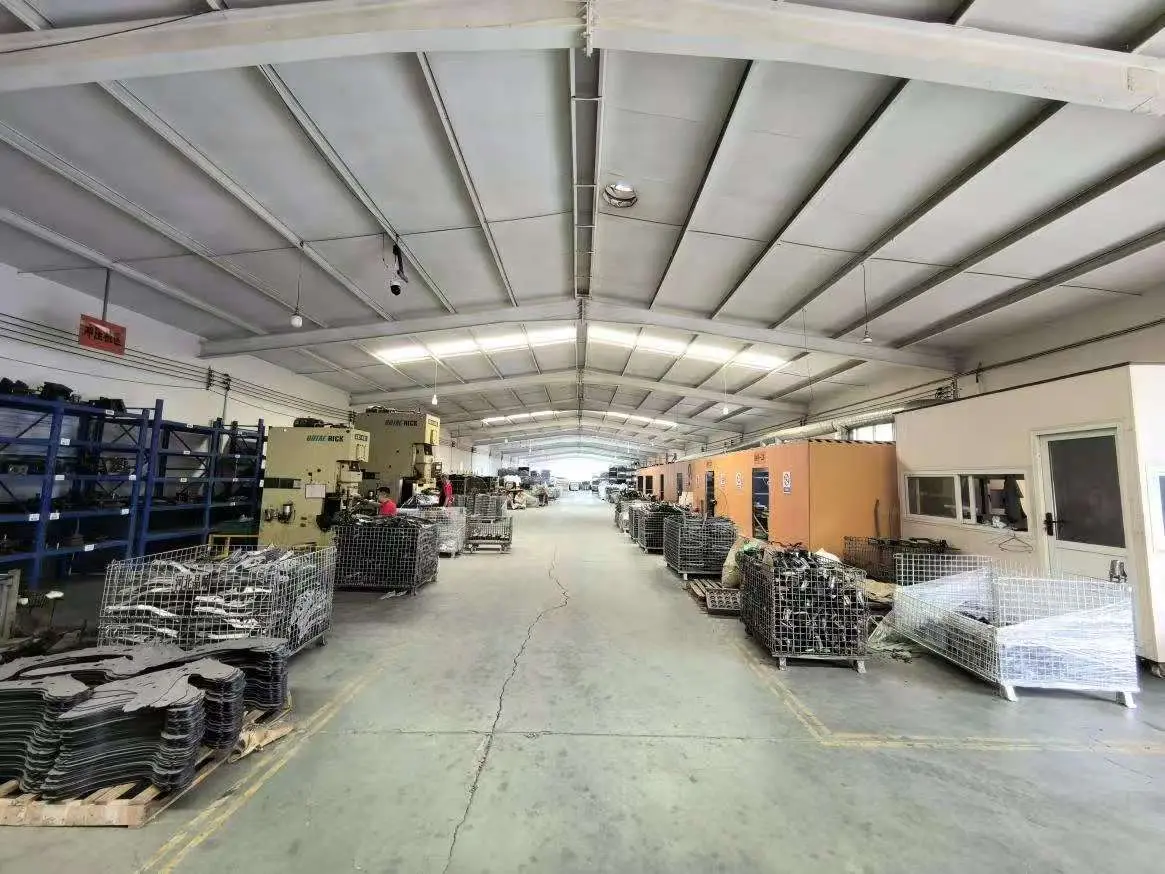
For more information on our capabilities, visit our manufacturing facility or explore our automotive suspension components.