Suspension Manufacturing Process: From Raw Material to Road-Ready Components

How are suspension components made, and why does it matter for your purchasing decision? The answer lies in a complex interplay of metallurgy, precision machining, and rigorous quality control. Whether you're a mechanic, a DIY enthusiast, or a wholesale buyer, understanding this process is essential for selecting parts that ensure vehicle safety and performance. High-quality manufacturing is not just about meeting specifications—it's about engineering confidence into every component.
Raw Material Selection: The Foundation of Suspension Quality
The choice of raw material determines a component's strength, durability, and fatigue life. For coil springs, high-carbon steel alloys such as SAE 5160 are standard due to their excellent hardenability and fatigue resistance. This alloy, containing chromium and vanadium, allows springs to withstand repeated compression without sagging. Shock absorbers require seamless steel tubing for the pressure cylinder to ensure leak-proof integrity under high pressure. Piston rods are made from high-strength alloys and hard chrome-plated to reduce friction and resist wear. Control arms are typically forged or stamped from steel, aluminum, or composites. Forged steel offers superior strength for heavy-duty applications, while aluminum reduces unsprung weight for better ride quality. Material certifications and traceability are critical quality indicators—a reputable manufacturer will provide mill certificates and maintain lot traceability to ensure consistency. When sourcing suspension parts, always verify that the supplier uses certified materials and can provide documentation.
Step-by-Step Manufacturing of Coil Springs
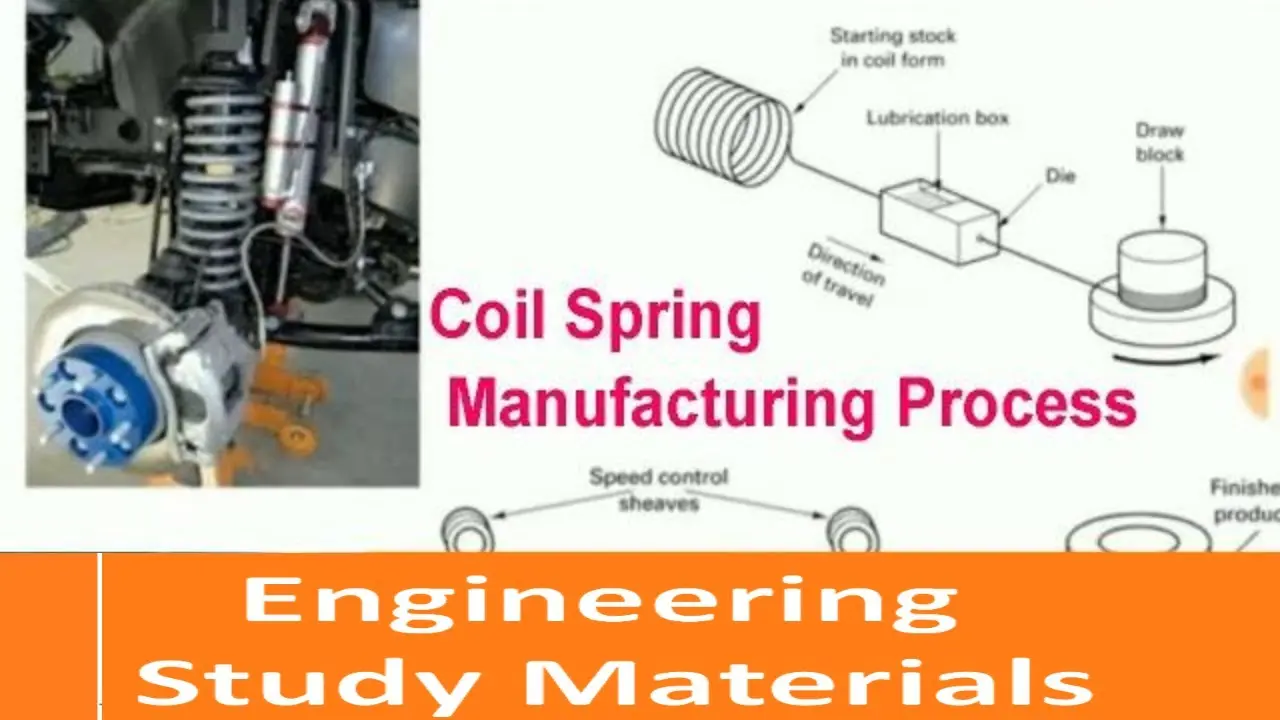
Coil spring production begins with wire drawing, where steel rod is pulled through dies to achieve the exact diameter required. The wire is then fed into CNC-controlled coiling machines that shape it into springs with precise pitch and diameter. These machines can adjust coiling speed and tension to produce consistent geometry, essential for predictable spring rates. After coiling, springs undergo heat treatment—quenching and tempering—to achieve the required hardness and fatigue strength. Quenching rapidly cools the steel to harden it, while tempering reduces brittleness and relieves internal stresses. Next, shot peening bombards the spring surface with small steel shots, inducing compressive residual stresses that significantly improve fatigue life by preventing crack initiation. Finally, springs are preset (compressed to solid height) to prevent sagging under load, followed by load testing to verify the spring rate and crack detection using magnetic particle or ultrasonic methods. Each step is monitored with statistical process control to ensure every spring meets specifications.
Shock Absorbers: Manufacturing for Consistent Damping
Shock absorber manufacturing focuses on precision and sealing integrity to deliver consistent damping performance. The process starts with tube forming and welding: precision-drawn seamless tubing is cut to length and formed into the pressure cylinder. Seamless tubing is preferred because it eliminates weld seams that could leak under high pressure. The piston rod is manufactured from high-strength steel, ground to a smooth finish, and hard chrome plated. Chrome plating provides a wear-resistant surface that ensures smooth operation and long service life. The valve assembly is the heart of the shock absorber, consisting of precision-machined pistons and stacks of thin shims. The shims are carefully selected and stacked to achieve the desired damping characteristics—rebound and compression curves are tuned by varying shim thickness and arrangement. Sealing is critical: multi-lip seals and nitrogen gas filling prevent oil leakage and aeration, maintaining consistent performance. Each shock absorber is then tested on a dynamometer to verify damping forces at various speeds, ensuring it matches the design specifications.
Control Arms: Forging, Stamping, and Precision Machining
Control arms are manufactured through forging or stamping, each with distinct advantages. Forged arms are formed by heating a steel billet and pressing it into a die under high pressure, aligning the grain structure to enhance strength. This process yields a part that can handle higher loads, making it ideal for heavy-duty and performance applications. Stamped arms, on the other hand, are cut from sheet metal and pressed into shape, offering a cost-effective solution for standard vehicles. After forming, the ball joint and bushing interfaces are machined using CNC equipment to achieve precise tolerances—often within ±0.05 mm. These interfaces are critical for proper suspension geometry and alignment. Welding and assembly are performed by robotic welders to ensure consistent, high-quality joints. Robotic welding provides repeatable penetration and reduces human error. Finally, the arm undergoes corrosion protection, such as e-coating or powder coating, and is inspected using a coordinate measuring machine (CMM) to verify critical dimensions. CMM checks ensure that each arm meets the exact specifications required for proper vehicle fit and function.
Quality Control and Testing: Ensuring Safety and Performance
Quality control in suspension manufacturing is multi-layered, starting with material testing. Spectrochemical analysis verifies the chemical composition of incoming steel, while hardness testing ensures it meets specifications. Dimensional inspection uses CMMs and optical comparators to check tolerances on critical features. Performance testing is component-specific: shock absorbers are tested on dynamometers to measure damping forces over a range of speeds, springs undergo fatigue testing to simulate millions of cycles, and control arms are subjected to load testing to verify structural integrity. Non-destructive testing methods, such as magnetic particle or ultrasonic inspection, detect surface and subsurface cracks that could lead to failure. These tests are not just for compliance—they are integral to the manufacturing process. For buyers, understanding these procedures is crucial. When selecting a supplier, ask about their testing protocols and whether they provide test reports. A manufacturer that invests in comprehensive quality control is more likely to deliver reliable components.
Advanced Manufacturing Technologies: Automation and 3D Printing
Modern suspension manufacturing leverages automation and robotics to enhance precision and consistency. CNC machines and robotic welding ensure repeatable quality, reducing human error and increasing production speed. Real-time monitoring with IoT sensors tracks process parameters such as temperature, pressure, and torque, allowing immediate adjustments to maintain quality. 3D printing, or additive manufacturing, is increasingly used for prototyping and custom low-volume parts. It enables rapid iteration of designs and the creation of complex geometries that are difficult or impossible with traditional methods. For example, 3D printing can produce intricate valve components or lightweight lattice structures for control arms. While not yet used for mass production, 3D printing accelerates development and allows for on-demand production of specialty parts. These technologies benefit buyers by ensuring consistent quality and enabling faster innovation. When evaluating manufacturers, consider their investment in automation and advanced technologies as a sign of their commitment to quality.
Environmental and Sustainability Considerations in Suspension Manufacturing
Sustainability is becoming a key differentiator in suspension manufacturing. Material recycling is a major focus: steel and aluminum scrap from stamping and machining processes is collected and recycled, reducing waste and conserving resources. Energy efficiency is another priority, with modern furnaces and heat treatment processes designed to lower energy consumption. For example, induction heating is more energy-efficient than traditional gas furnaces. Waste management is critical, particularly for cutting fluids and coatings that can be hazardous. Proper disposal and recycling of these materials prevent environmental contamination. Certifications such as ISO 14001 indicate a manufacturer's commitment to environmental management. For buyers, choosing a supplier with sustainable practices not only reduces environmental impact but also often correlates with better process control and efficiency. Ask potential suppliers about their environmental policies and certifications to ensure they align with your values.
Conclusion
Understanding the suspension manufacturing process empowers buyers to make informed decisions. From raw material selection to advanced manufacturing and rigorous testing, each step is designed to ensure safety and performance. When sourcing suspension components, prioritize manufacturers that demonstrate transparency in materials, quality control, and sustainability. Our automotive suspension components are manufactured with precision and undergo stringent testing to meet OEM standards. Visit our manufacturing facility to see our processes in action, or learn more about our quality control procedures. For more information about our company and commitment to excellence, see about our company.