Suspension Geometry Explained: How Camber, Caster, and Toe Affect Your Ride

Suspension geometry determines how your tires contact the road, directly influencing tire wear, handling, and ride comfort. Whether you're replacing control arms, installing a lift kit, or just buying new tires, understanding these angles helps you make informed decisions and avoid costly mistakes.
The Three Key Angles: Camber, Caster, and Toe
Camber
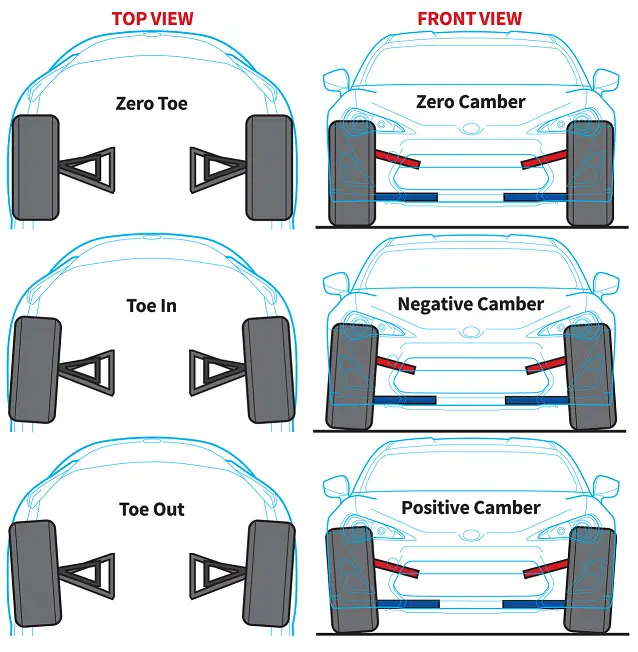
Camber is the inward or outward tilt of the wheel from vertical when viewed from the front. Negative camber (top leans inward) increases cornering grip by keeping more tire contact patch on the road during turns. However, excessive negative camber causes inner edge wear and reduces straight-line braking performance. For most street vehicles, a front camber of -0.5° to -1.5° is typical; rear camber is usually slightly less. Positive camber (top leans outward) is rare on modern vehicles but can occur with worn components or improper lift installation.
Caster
Caster is the angle of the steering axis relative to vertical when viewed from the side. Positive caster (steering axis tilts toward the driver) improves straight-line stability and steering returnability. Most modern cars run 3° to 5° of positive caster. More caster increases steering effort but provides better feedback and stability at speed. Too little caster makes the car wander and feel vague.
Toe
Toe is the angle of the wheels relative to the vehicle's centerline when viewed from above. Toe-in (front of tires point toward each other) promotes straight-line stability and is typical at 0.1° to 0.2° for front wheels. Excessive toe-in causes feathering (scalloped wear). Toe-out (front of tires point away) makes the car more responsive but can make it twitchy and increase tire wear.
How Suspension Geometry Affects Handling and Ride Quality
Camber directly influences cornering grip. Negative camber increases the tire's contact patch during cornering, allowing higher lateral forces. However, too much negative camber reduces the contact patch during straight-line driving, causing inner edge wear and longer braking distances. Caster affects steering feel and stability; more caster increases the self-centering force, making the car track straighter but requiring more effort to turn. Toe affects straight-line stability and tire wear; toe-in creates a slight drag that stabilizes the car, but excessive toe-in causes rapid tire wear. Ride quality is also affected by geometry through suspension travel and compliance. For example, excessive negative camber can make the ride feel harsh over bumps because the tire's edge is more prone to impact.
Suspension Geometry for Different Vehicle Types
Trucks and SUVs
Trucks have higher ride heights and load capacities, which alter geometry. When you lift a truck, camber and toe change because the control arms move relative to the frame. Many lift kits include camber correction bushings or adjustable control arms to restore proper alignment. Ignoring this leads to premature tire wear and poor handling.
Off-Road Vehicles
Off-road vehicles prioritize articulation and suspension travel. Geometry must accommodate large wheel travel without binding or causing extreme camber changes. Long-travel suspensions often use custom control arms and links to maintain optimal geometry throughout the travel range. For serious off-road use, consider adjustable arms to fine-tune alignment.
Performance Cars
Performance cars use aggressive camber and caster settings to maximize cornering grip. For example, track cars may run -2.5° to -3.5° of front camber and 6° to 7° of caster. These settings improve turn-in and mid-corner grip but sacrifice tire wear and straight-line stability. Street performance cars often compromise with -1.5° to -2.0° camber.
Lift and Lowering Kits
Lift kits raise the ride height, which typically increases positive camber and reduces caster. Lowering springs do the opposite. Both require alignment corrections. Many kits include adjustable camber arms or bolts to bring angles back into spec. Always plan for alignment adjustments when modifying ride height.
Common Myths and Misconceptions About Suspension Geometry
Myth: More negative camber always improves handling.
Reality: Excessive negative camber reduces the tire contact patch during straight-line driving, increasing wear and reducing braking performance. There's an optimal range for each vehicle and use case.
Myth: Toe-out improves cornering.
Reality: Toe-out can make the car feel twitchy and increase tire wear. While it may improve initial turn-in, it reduces stability and can cause excessive inner edge wear.
Myth: Caster doesn't affect tire wear.
Reality: Caster influences camber during turns. When you steer, the wheel gains negative camber due to caster. Incorrect caster can cause uneven tire wear, especially on the inside edges.
Myth: Aftermarket parts automatically improve geometry.
Reality: Aftermarket parts only improve geometry if they are designed for your vehicle and installed correctly. Poorly designed or incompatible parts can worsen alignment and handling.
How to Measure and Adjust Suspension Geometry: A Practical Guide
Tools You Need
To measure camber and caster, you can use a digital camber gauge or a bubble gauge. For toe, you can use toe plates or a tape measure. A full alignment machine is ideal, but DIY methods can get you close.
Step-by-Step Measurement
- Ensure the vehicle is on level ground and tires are properly inflated.
- Measure camber: Place the gauge against the wheel hub or rim. Record the angle.
- Measure caster: Turn the wheels 20° left and right, and take readings at each position. The difference gives you caster.
- Measure toe: Use toe plates or a tape measure across the front and rear of the tires. The difference indicates toe.
Adjusting Angles
- Camber: Use camber bolts, adjustable control arms, or shims. Camber bolts are easiest but have limited range. Adjustable control arms offer more range and precision.
- Caster: Often adjusted by moving the control arm or using caster/camber plates. On some vehicles, caster is not adjustable without aftermarket parts.
- Toe: Adjust the tie rod ends. Turn the inner tie rod to lengthen or shorten the assembly.
When to Seek Professional Help
If you're not comfortable with DIY alignment, or if your vehicle has non-adjustable factory settings, take it to a professional alignment shop. They have the equipment and experience to get it right. Always get a professional alignment after any suspension work.
Troubleshooting Geometry-Related Issues: Tire Wear and Handling Problems
Tire Wear Patterns
- Inner edge wear: Excessive negative camber or toe-out.
- Outer edge wear: Positive camber or toe-in.
- Feathering (scalloped edges): Toe misalignment.
- Center wear: Overinflation.
- Both edges wear: Underinflation.
Handling Symptoms
- Pulling to one side: Could be camber or toe imbalance, or a brake issue.
- Wandering: Low caster or loose steering components.
- Poor returnability: Low caster or sticky steering column.
- Steering wheel off-center: Toe misalignment.
Diagnostic Steps
- Check tire pressure and condition.
- Inspect suspension components for wear or damage.
- Measure alignment angles.
- Compare to factory specs.
- Adjust or replace parts as needed.
Solutions
- Adjust camber, caster, or toe to spec.
- Replace worn bushings, ball joints, or tie rods.
- Install correction kits if factory adjustment is insufficient.
Choosing the Right Suspension Parts: What to Consider for Geometry
When selecting suspension components, consider adjustability, compatibility, and quality. Adjustable parts like camber bolts, control arms, and camber plates allow fine-tuning. Ensure parts are designed for your specific vehicle and intended use—street, track, or off-road. Quality matters: reputable brands use proper engineering and materials. For example, our automotive suspension components include control arms and bushings for Hyundai and KIA vehicles, with OEM-level fitment. If you're replacing bushings, check our Large suspension bushing options. Always know your target alignment specs before purchasing parts, so you can choose the right adjustability range.
Frequently Asked Questions
Q: What is the ideal camber for daily driving?
A: For most street cars, -0.5° to -1.0° front camber is a good balance of handling and tire wear. Check your owner's manual for factory specs.
Q: Can I adjust suspension geometry myself?
A: Yes, with the right tools and knowledge. However, a professional alignment is recommended for accuracy, especially after major suspension work.
Q: How often should I check my alignment?
A: Every 12,000 miles or if you notice uneven tire wear or handling issues. Also after any suspension component replacement or ride height change.
Q: Do I need a camber kit for my lifted truck?
A: Often yes. Lifting changes camber and toe, and a camber kit or adjustable control arms can bring them back into spec.
Conclusion
Suspension geometry is not just for race cars—it affects every vehicle's tire life, handling, and safety. By understanding camber, caster, and toe, you can diagnose issues, choose the right parts, and make informed decisions. Whether you're a DIYer or a buyer, always prioritize proper alignment and quality components. For reliable suspension parts, explore our automotive suspension components and ensure your vehicle performs at its best.