Suspension Components Explained: A Manufacturer’s Guide to Wear, Replacement, and Safety

Your vehicle's suspension is a critical safety system that affects tire wear, braking, and handling. Understanding how each component works and when to replace it can prevent costly damage and keep you safe on the road. This guide from a manufacturer's perspective will help you make informed decisions about suspension maintenance and replacement, balancing safety, performance, and cost.
Key Suspension Components and Their Functions
Every part in your suspension is engineered for a specific role. Here’s what you need to know:
Control Arms, Ball Joints, and Bushings
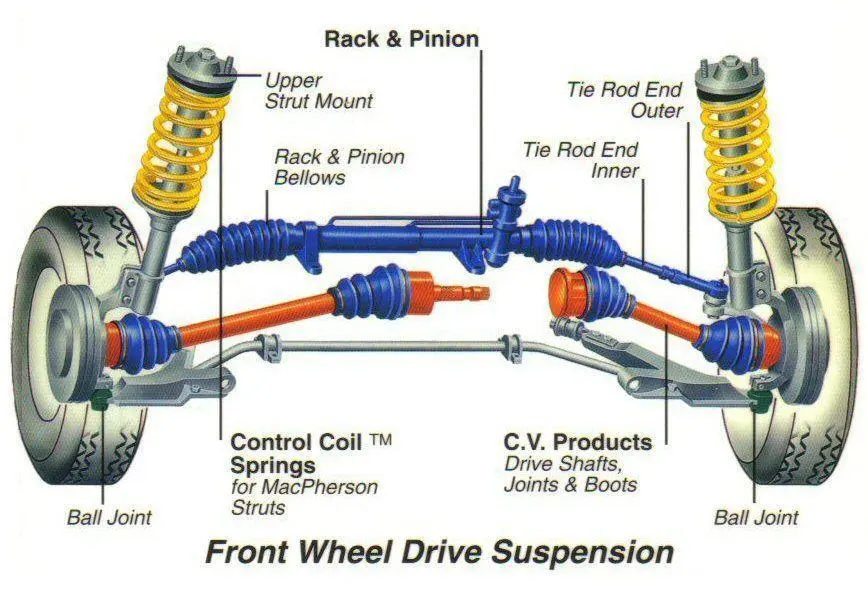
- Control arms connect the wheel hub to the vehicle's frame, allowing vertical movement while keeping the wheel aligned.
- Ball joints act as pivot points between the control arm and steering knuckle, enabling steering and suspension travel.
- Bushings are rubber or polyurethane cushions that isolate road noise and vibration while allowing controlled movement.
Over time, bushings crack and ball joints wear, leading to play and misalignment. This can cause uneven tire wear and vague steering. From a manufacturing standpoint, these components are designed with specific tolerances to maintain alignment and handling. When they wear, the geometry changes, and you'll feel it in the driver's seat.
Struts and Shocks
Shocks and struts control spring motion, damping oscillations to keep tires planted. Shocks are standalone units; struts are structural components that also support the vehicle's weight. Both use hydraulic fluid and gas to absorb energy. Leaking seals or worn internals reduce damping, causing excessive bouncing and poor handling. In our manufacturing experience, the most common failure mode is seal wear leading to fluid loss, which dramatically reduces performance.
Sway Bars and Links
Sway bars (anti-roll bars) reduce body roll during cornering by transferring force between wheels. Links connect the bar to the suspension. Worn links cause clunking noises and increased body roll. These parts are often overlooked but are critical for stability.
Springs
Springs support vehicle weight and absorb impacts. Coil springs are common, but leaf springs and torsion bars exist. Sagging or broken springs alter ride height and alignment, affecting handling and tire wear.
Suspension Geometry Basics: Camber, Caster, and Toe
Suspension geometry refers to angles that affect tire contact and handling. The three critical angles are:
- Camber: The inward or outward tilt of the wheel from vertical. Negative camber (top leans in) improves cornering grip but causes inner edge wear if excessive.
- Caster: The angle of the steering axis from vertical, viewed from the side. Positive caster aids straight-line stability and steering return.
- Toe: The difference in distance between the front and rear of the tires. Toe-in or toe-out affects tire wear and straight-line tracking.
Worn bushings, ball joints, or struts can alter these angles, leading to uneven tire wear, pulling, and instability. Regular alignment checks are essential, especially after component replacement. As a manufacturer, we design these components to maintain factory geometry, but wear and tear will eventually take its toll.
Symptoms of Worn Suspension Components: What to Look For
Early detection saves money. Common symptoms include:
- Clunking or knocking noises over bumps
- Uneven or rapid tire wear
- Excessive bouncing after a bump
- Vehicle pulling to one side
- Nose diving during braking
Visual inspection tips:
- Check for leaking fluid on shocks/struts (oil residue indicates seal failure)
- Inspect bushings for cracks, tears, or excessive play
- Look for torn ball joint boots and play when moving the wheel
- Examine springs for cracks or sagging
DIY checks:
- Bounce test: Press down on a corner; if it bounces more than once or twice, damping is weak.
- Visual: Park on level ground and check ride height for sagging.
OEM vs. Aftermarket Suspension Parts: Making the Right Choice
OEM (Original Equipment Manufacturer) parts are designed to exact specifications, ensuring perfect fit and performance. They often cost more but offer reliability. Aftermarket parts vary widely in quality; reputable brands may match or exceed OEM, while cheap options may fail prematurely.
Consider your driving needs: daily commuting, towing, off-road, or performance. For safety-critical components like ball joints and tie rods, prioritize quality. Check warranty and support; OEM typically offers a limited warranty, while premium aftermarket brands may offer longer coverage.
From our perspective as a manufacturer, we ensure our aftermarket parts meet or exceed OEM standards through rigorous quality control. We've seen the consequences of using substandard parts—premature failure and even safety hazards. So, choose wisely.
Maintenance Intervals and Replacement Guidance
Mileage is a rough guide, but driving conditions and part quality matter. Inspect suspension at every tire rotation or oil change (every 5,000-7,500 miles). Replace parts in pairs (e.g., both front struts) for balanced performance. Follow manufacturer recommendations for alignment after replacement.
Choosing the Right Parts for Your Driving Needs
Assess your driving conditions and budget. Consult a trusted mechanic or parts specialist. Prioritize safety-critical components. For Hyundai/KIA vehicles, consider our range of automotive suspension components including control arms and bushings, designed to meet OEM standards.
FAQ
Q: How often should suspension parts be replaced?
A: It varies; inspect regularly and replace when worn, not just by mileage.
Q: Can I replace just one shock absorber?
A: It's best to replace in pairs to maintain balanced handling.
Q: What causes uneven tire wear?
A: Misalignment, worn components, or improper inflation.
Q: Are aftermarket parts as good as OEM?
A: Quality varies; choose reputable brands that meet or exceed OEM specs.
For more information, explore our manufacturing facility and quality control processes, or learn about our company.