MacPherson Strut Operation: Engineering, Failure Diagnosis, and Replacement Decisions

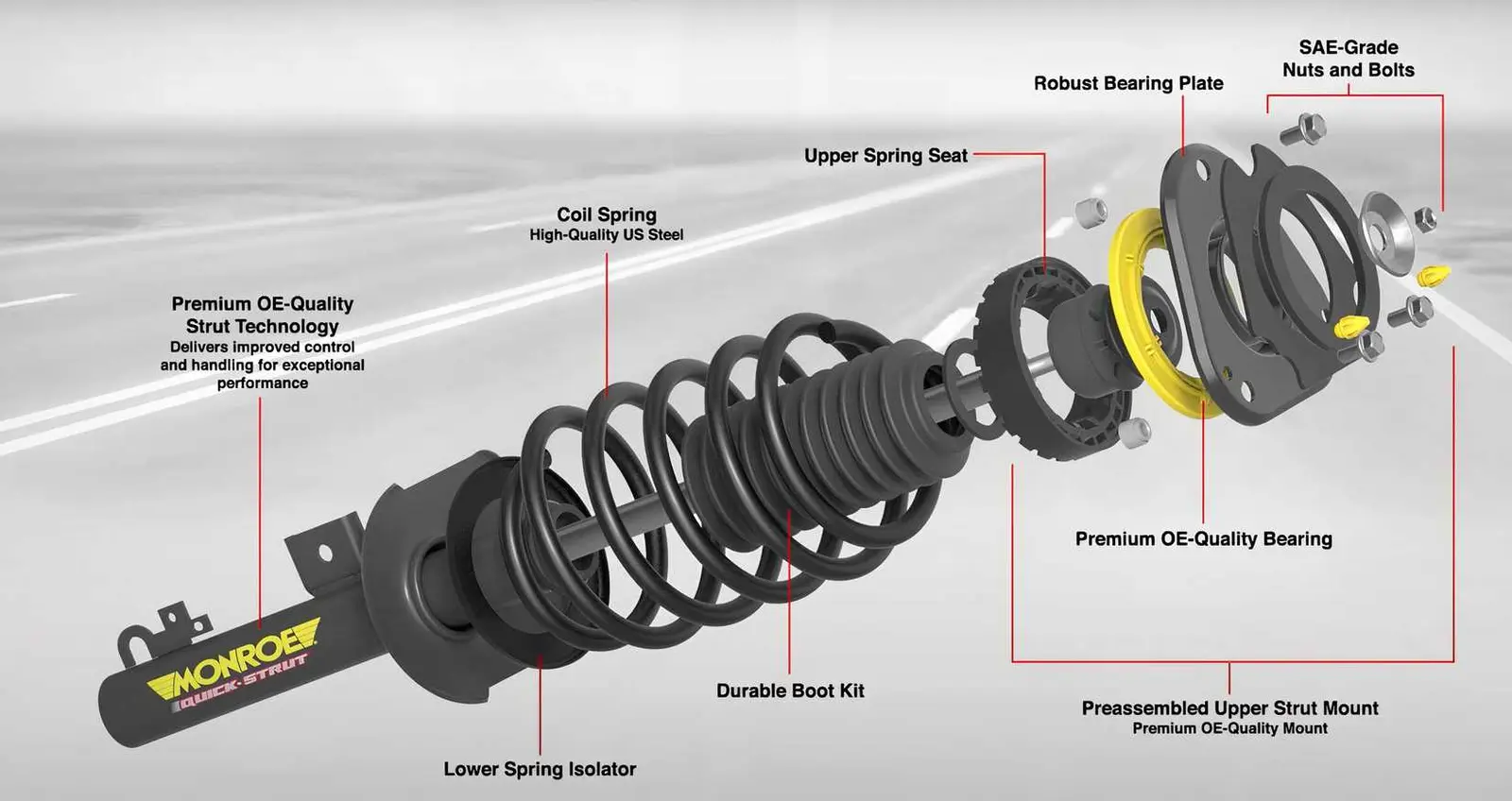
A MacPherson strut combines a shock absorber and coil spring into a single unit, serving as a structural link between the wheel and the vehicle body. Its operation is central to ride comfort, handling, and safety. Recognizing how it works and when it fails is essential for any driver, mechanic, or parts buyer.
How a MacPherson Strut Works: Compression and Rebound
During compression, the wheel moves upward over a bump, compressing the coil spring, which absorbs impact energy. Simultaneously, the shock absorber (damper) resists this motion by forcing hydraulic fluid through internal valves, converting kinetic energy into heat. This controlled resistance prevents excessive bouncing. During rebound, the spring extends, releasing stored energy, and the damper again controls the motion with different valving to manage spring expansion, ensuring the tire maintains road contact. The strut bearing at the top mount allows the assembly to rotate with steering while supporting vehicle weight. Wear in this bearing can cause steering stiffness or noises.
Engineering Principles: Forces, Geometry, and Trade-offs
The MacPherson strut handles vertical loads from weight and road impacts, lateral forces during cornering, and longitudinal forces during braking and acceleration. The top mount and lower control arm define camber and caster angles. Because the strut serves as both damper and locating link, it couples these functions—simpler and lighter than a double wishbone but with less precise camber control during travel. This can reduce tire contact patch in hard cornering and increase scrub radius, affecting steering feel and torque steer in front-wheel-drive vehicles.
MacPherson Strut vs. Double Wishbone: Real Differences
Double wishbone suspension uses two control arms for independent control of camber, toe, and roll center, offering better tire contact and handling, especially in high-performance or heavy vehicles. However, it is more complex, heavier, and costlier. MacPherson struts are lighter, cheaper, and space-efficient, dominating mass-market vehicles. For most daily driving, a well-functioning MacPherson strut is adequate; enthusiasts may notice differences in steering precision and stability.
Symptoms of Strut Failure and Diagnosis
Common symptoms include excessive bouncing after bumps, nose dive under braking, uneven tire wear, fluid leaks, and knocking noises. Perform the bounce test: press down firmly on the body over each wheel and release; if it bounces more than once or twice, the strut is likely worn. Inspect for oil leaks, physical damage, or rust. Check tire wear patterns: cupping or scalloped edges signal a worn strut. Listen for popping sounds when turning, indicating a worn bearing. Mileage is not the only factor; poor roads, heavy loads, and extreme temperatures shorten life. If symptoms appear, inspect promptly to avoid further damage.
Maintenance Tips to Extend Strut Life
Regularly inspect for leaks, damage, and worn bushings or mounts during routine maintenance. Maintain proper wheel alignment and rotate tires to reduce uneven stress. Avoid overloading the vehicle. Drive carefully over speed bumps and potholes to reduce impact forces. These practices maximize strut lifespan and ensure consistent ride quality.
Choosing Replacement Struts: Quality, Fit, and Value
Prioritize quality, fit, and value. OEM struts match exact specifications, but reputable aftermarket brands can offer equal or better performance. Research brand reputation and warranty coverage. Ensure the strut fits your vehicle's year, make, and model; using the wrong part can cause poor handling or safety hazards. Consider total cost of ownership, including installation and lifespan. If related parts like control arms or bushings are worn, replace them simultaneously to avoid future labor costs. Our automotive suspension components include control arms and bushings for suspension overhauls.
Replacement: DIY vs. Professional Installation
Replacing a MacPherson strut requires special tools like a spring compressor and a thorough understanding of suspension geometry. Improper installation can lead to catastrophic failure. The coil spring is under extreme tension and can cause serious injury. DIY saves labor costs but carries risks. Professional installation offers expertise, proper tools, and often a warranty. Consider your skill level, tools, and job complexity. If DIY, follow the service manual precisely and use quality parts. If professional, ask about experience and guarantees. Our quality control ensures components meet strict standards, and our manufacturing facility provides insight into production. Learn more about our company to understand our commitment to reliability.
FAQ
How often should MacPherson struts be replaced?
There is no set interval; replace when symptoms of wear appear, typically between 50,000 and 100,000 miles, but driving conditions and load affect lifespan.
Can I replace just one strut?
It's recommended to replace struts in pairs (both front or both rear) to maintain balanced handling and ride.
What causes a MacPherson strut to fail prematurely?
Poor road conditions, overloading, misalignment, and lack of maintenance can accelerate wear.
Are aftermarket struts as good as OEM?
Reputable aftermarket brands can match or exceed OEM performance, but quality varies; research and choose trusted brands.
How do I know if my strut bearing is worn?
Symptoms include popping or creaking noises when turning, and steering stiffness. Inspect the bearing for wear or damage.
Can I drive with a leaking strut?
A leaking strut indicates seal failure, reducing damping and compromising handling and safety. Replace it promptly.
What is the difference between a strut and a shock absorber?
A strut is a structural component that also serves as a damper, while a shock absorber is only a damper and does not support weight.
How does a MacPherson strut affect alignment?
The strut's top mount and lower control arm set camber and caster angles; worn struts can cause misalignment and uneven tire wear.
What tools are needed for DIY strut replacement?
You'll need a spring compressor, jack stands, basic hand tools, and a torque wrench. Safety is critical due to spring tension.
How long does a professional strut replacement take?
Typically 2-4 hours per pair, depending on vehicle and shop workload.