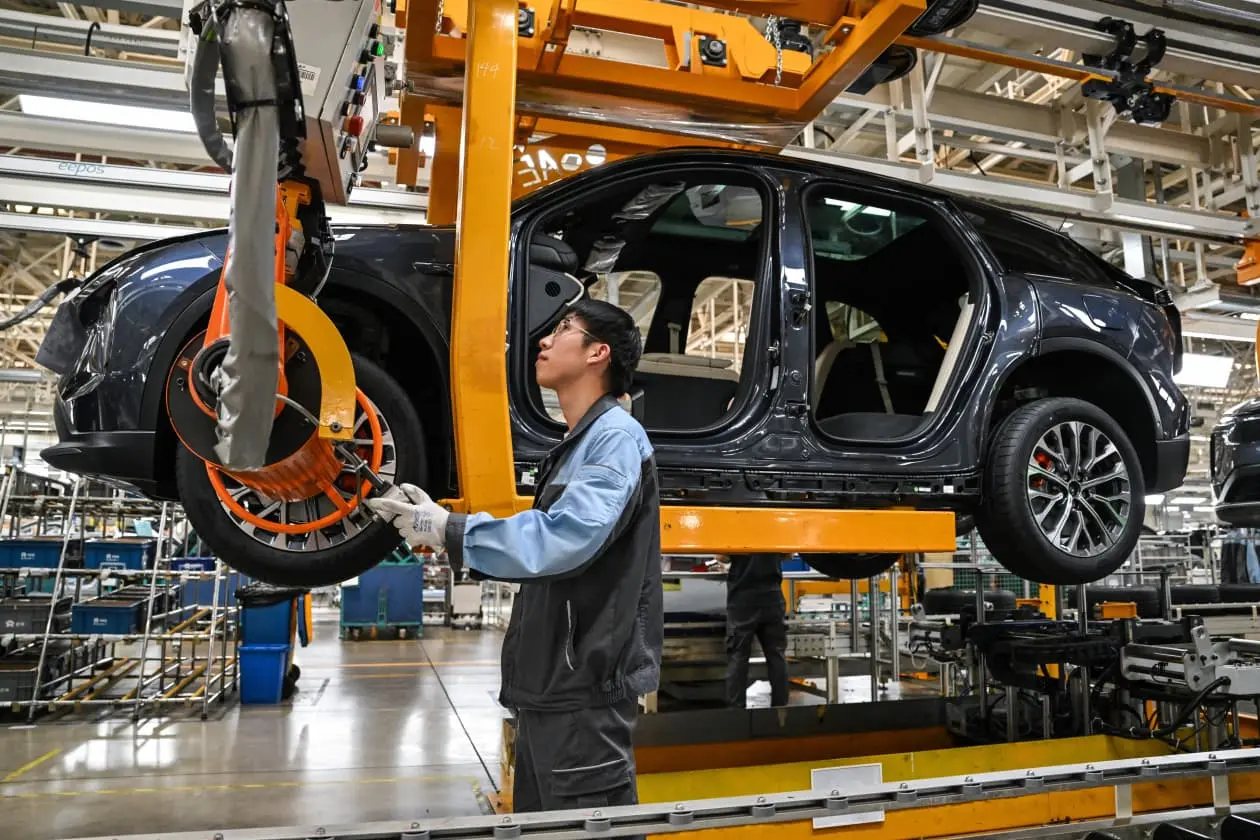
Inside a Suspension Factory: How Performance Suspension Components Are Designed, Manufactured and Tested

The quality of a suspension component is determined by the precision of its manufacturing and the rigor of its testing, not just its design. This article takes you inside a modern suspension factory to reveal the step-by-step process—from design and material selection to manufacturing, testing, and the differences between OEM and aftermarket parts. Understanding this process helps you make informed purchasing decisions, whether you're a mechanic, a DIY enthusiast, or a parts buyer.
The Blueprint: How Performance Suspension Components Are Designed
Design begins with vehicle-specific requirements: load, geometry, and performance targets. Engineers start with the vehicle's specifications—suspension type, weight, intended use (street, track, off-road), and performance goals. These parameters dictate the component's shape, size, and material requirements.
CAD modeling and finite element analysis (FEA) simulate stress, fatigue, and deflection. Using computer-aided design (CAD) software, engineers create a 3D model of the component. Finite element analysis (FEA) then simulates real-world forces—bumps, cornering, braking—to identify stress concentrations and potential failure points. This virtual testing allows for design optimization before any metal is cut.
Design for manufacturability (DFM) ensures the part can be produced consistently with tight tolerances. DFM considers the manufacturing process—whether forging, casting, or machining—to ensure the design can be replicated with precision and without defects. This includes designing for proper draft angles in castings, avoiding overly tight tolerances that increase cost, and ensuring the part can be fixtured securely during machining.
Material Selection: Balancing Strength, Weight, and Cost
Steel: high strength, cost-effective, but heavier; common in OEM parts. Most factory suspension components use steel alloys because they offer excellent strength and fatigue resistance at a reasonable cost. For example, control arms often use stamped or forged steel, providing durability for daily driving.
Aluminum: lighter, corrosion-resistant, but more expensive; used in performance and luxury applications. Aluminum components reduce unsprung weight, improving ride quality and handling. They are common in high-performance vehicles and some modern OEM designs. However, aluminum is more costly and may require additional treatments to prevent galvanic corrosion when paired with steel fasteners.
Composites: offer weight savings and specific stiffness, but cost and manufacturing complexity are higher. Carbon fiber and fiberglass composites are used in racing and high-end aftermarket parts. They offer exceptional strength-to-weight ratios but are expensive and require specialized manufacturing processes like autoclave curing. For most buyers, steel or aluminum is the practical choice.
Forging vs. Casting vs. CNC Machining: How Manufacturing Processes Affect Quality
Forging: aligns grain structure, yielding superior strength and fatigue resistance; used for critical parts like control arms and knuckles. Forging involves heating a metal billet and shaping it under high pressure. This process aligns the grain flow of the metal, resulting in a part that is stronger and more resistant to fatigue than cast or machined parts. Forged control arms, for example, can withstand the repeated stresses of rough roads and track use.
Casting: allows complex shapes at lower cost, but may have porosity and lower strength; suitable for less critical components. Casting involves pouring molten metal into a mold. It can produce complex geometries at a lower cost than forging, but the resulting part may have internal porosity (tiny air pockets) that reduces strength. Cast components are often used for brackets or housings where loads are lower.
CNC machining: provides high precision and surface finish, often used for final dimensions and features. Computer numerical control (CNC) machining removes material from a solid block or pre-form to achieve exact dimensions and surface finishes. It is used to machine critical features like ball joint bores, mounting holes, and mating surfaces. CNC machining can be used on forged or cast blanks to achieve the final precision.
Heat Treatment and Surface Finishing: The Hidden Steps That Prevent Failure
Heat treatment (quenching, tempering) adjusts hardness and toughness to resist fatigue. After forming, components undergo heat treatment to optimize their mechanical properties. Quenching rapidly cools the metal to harden it, while tempering reheats it to reduce brittleness and increase toughness. This process is critical for suspension parts that must absorb energy without cracking.
Surface treatments like zinc plating or powder coating protect against corrosion. Zinc plating provides sacrificial corrosion protection, while powder coating offers a durable, chip-resistant finish. These treatments are essential for components exposed to road salt, moisture, and debris.
Shot peening can introduce compressive stresses to improve fatigue life. Shot peening involves bombarding the surface with small spherical media, creating a layer of compressive stress that resists crack initiation and propagation. This is often applied to springs, connecting rods, and other highly stressed components.
Quality Control: How Manufacturers Ensure Precision and Consistency
Dimensional inspection using CMM (coordinate measuring machines) verifies tolerances. CMMs use a probe to measure the part's dimensions against the CAD model, ensuring that every critical feature falls within specified tolerances—often within micrometers. This is essential for components that must fit precisely with other suspension parts.
Non-destructive testing (NDT) methods like ultrasonic or magnetic particle inspection detect internal flaws. Ultrasonic testing uses high-frequency sound waves to detect internal cracks or voids, while magnetic particle inspection reveals surface and near-surface defects in ferromagnetic materials. These tests catch flaws that could lead to premature failure.
Statistical process control (SPC) monitors production consistency. SPC involves measuring key characteristics at regular intervals and plotting the data on control charts. This allows manufacturers to detect trends or variations before they result in out-of-spec parts, ensuring that every batch meets the same high standard.
Fatigue, Corrosion, and Vehicle-Level Testing: Proving Performance Before It Reaches Your Garage
Fatigue testing simulates millions of load cycles to predict lifespan. Components are mounted on test rigs that apply cyclic loads—simulating bumps, potholes, and cornering—for millions of cycles. This accelerated testing predicts the part's fatigue life and helps engineers validate design changes.
Corrosion testing (salt spray) ensures resistance to rust and degradation. Components are placed in a salt spray chamber for hundreds of hours to simulate years of exposure to road salt. This test verifies the effectiveness of surface treatments and helps prevent premature corrosion failures.
Vehicle-level validation includes on-road and track testing to assess real-world behavior. Prototype vehicles equipped with the new components are driven on public roads and test tracks to evaluate ride comfort, handling, noise, and durability. This final validation ensures the components perform as intended in real-world conditions.
OEM vs. Aftermarket: What Really Differs in Manufacturing and Testing?
OEM parts are made to exact vehicle specifications with strict QC and testing. Original Equipment Manufacturer (OEM) parts are produced by the vehicle manufacturer or their approved suppliers, following the exact design and testing standards. They are guaranteed to fit and perform as intended, but often come at a premium price.
Aftermarket parts vary widely: some meet or exceed OEM standards, others cut corners. Aftermarket manufacturers range from reputable companies that invest in R&D and testing to those that produce low-cost copies without proper validation. The key is to research the manufacturer's reputation and look for evidence of testing and quality control.
Look for certifications (ISO, TS16949) and evidence of testing when choosing aftermarket. Certifications like ISO 9001 (quality management) and IATF 16949 (automotive quality) indicate that a manufacturer follows recognized quality standards. Additionally, look for parts that come with test data or warranties, which are signs of confidence in the product.
Conclusion: Why Understanding the Process Matters
Understanding how suspension components are designed, manufactured, and tested empowers you to make better purchasing decisions. Whether you're replacing a worn control arm or upgrading for performance, knowing the differences in materials, processes, and quality control helps you choose parts that are safe, durable, and worth your money. Always prioritize quality over price, and don't hesitate to ask manufacturers about their testing and certification processes. For a wide range of high-quality automotive suspension components, including Large suspension bushings and control arms, visit our manufacturing facility page to see our commitment to quality.