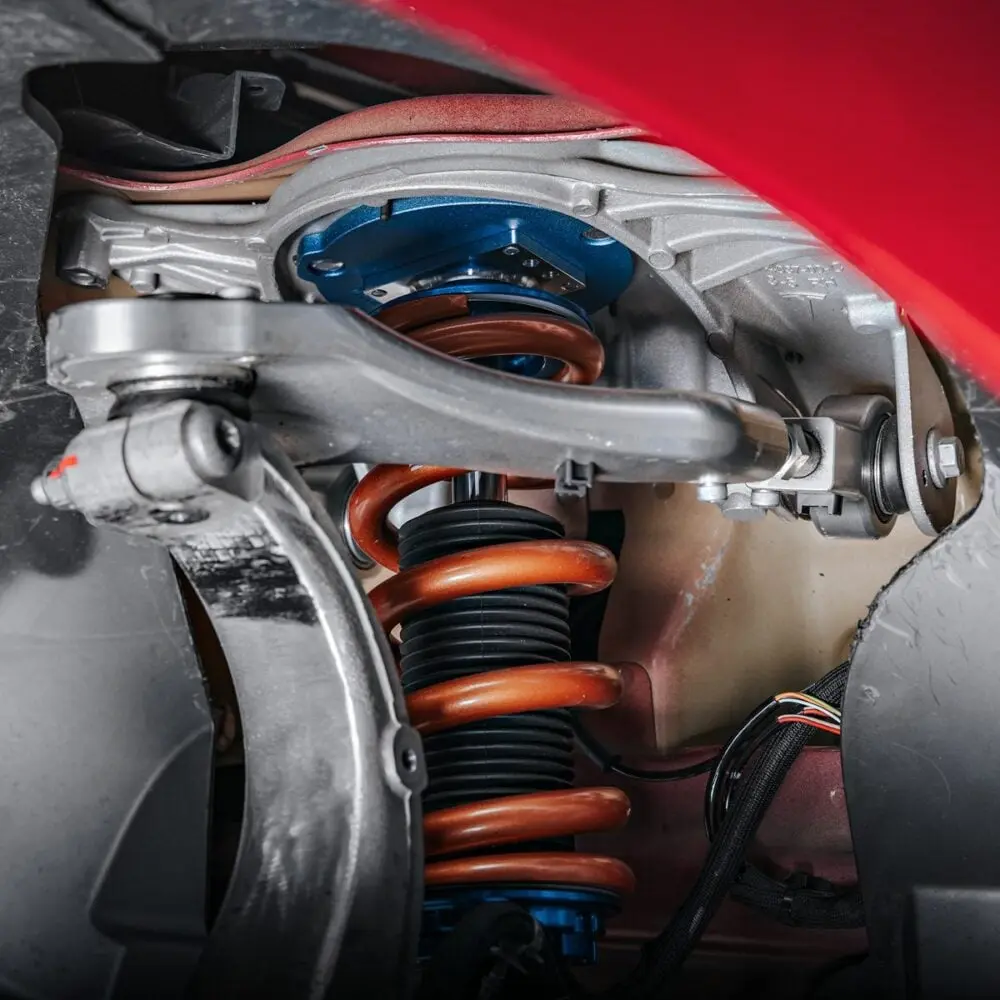
How to Choose Aftermarket Control Arms: Geometry, Material, and Adjustability
Choosing aftermarket control arms isn't about picking a part—it's about matching geometry, material, and adjustability to your vehicle's specific suspension setup and intended use. The right arm corrects geometry for your ride height, uses a bushing type that balances comfort and performance, and offers the adjustability you need for alignment. Here's how to make that choice without guesswork.
Start with Your Suspension Setup: Why Control Arm Choice Depends on Ride Height and Alignment
Before you even look at control arms, you must know your vehicle's current ride height and suspension modifications. Aftermarket control arms are not one-size-fits-all; they are designed to correct geometry for specific ride height changes. If you've lowered your car with springs or coilovers, or lifted your truck, the stock control arms are no longer operating at their intended angles. This alters the suspension geometry, affecting roll center, anti-dive, and alignment specs.
Roll center is the imaginary point around which the vehicle's body rolls during cornering. Control arm length and mounting points directly influence its location. When you lower a car, the roll center drops, increasing body roll and reducing grip. Aftermarket control arms with revised mounting points can raise the roll center back to an optimal position, improving cornering stability.
Anti-dive geometry controls how the front suspension compresses under braking. Incorrect control arm angles can cause excessive nose dive, reducing braking performance and stability. Properly designed arms for your ride height can restore anti-dive characteristics.
Alignment specs—camber, caster, and toe—are also directly affected. Lowering typically increases negative camber, which can cause uneven tire wear. Adjustable control arms allow you to correct camber and caster to factory or performance specs. For lifted trucks, caster correction is often needed to maintain straight-line stability and steering return.
Action: Measure your ride height and note any suspension modifications. Determine if you need geometry correction or just a direct replacement. This will narrow your control arm search significantly.
Material Matters: Steel, Aluminum, or Tubular? Strength, Weight, and Durability Trade-offs
The material of the control arm affects weight, strength, and durability—each with trade-offs that suit different applications.
Stamped steel is what most OEM arms are made of. It's heavy but durable and inexpensive. For a daily driver that stays at stock ride height, a stamped steel replacement is a cost-effective choice. However, its weight increases unsprung mass, which can degrade ride quality and handling response.
Cast aluminum arms are lighter and stiffer than steel, reducing unsprung weight and improving suspension response. They are common on performance vehicles. The downside is that aluminum can be more brittle and prone to cracking under extreme impacts, making them less ideal for off-road use. They are also more expensive.
Tubular steel arms offer a balance of strength and weight. They are lighter than stamped steel but stronger than aluminum in some respects. Tubular arms often provide more clearance for larger wheels or exhaust components and can be designed with adjustable mounting points. However, they may require welding for installation or modification, and the quality varies widely depending on the manufacturer.
Action: Consider your driving environment. For street and track, aluminum or tubular arms offer performance benefits. For off-road, tubular steel with heavy-duty construction is often preferred for its strength and clearance. For a stock daily driver, stamped steel is sufficient.
Bushing Types: Rubber, Polyurethane, and Spherical – Balancing Comfort, Noise, and Performance
Bushings are the pivot points that connect the control arm to the frame and knuckle. They absorb road vibrations and allow controlled movement. The type of bushing you choose directly impacts ride comfort, noise, and handling precision.
Rubber bushings are the OEM standard. They provide excellent noise isolation and comfort, but they are soft and can deflect under load, leading to imprecise handling and alignment changes during cornering. They also degrade over time with exposure to oil and heat.
Polyurethane bushings are stiffer than rubber, reducing deflection and improving handling response. They transmit more road noise and vibration into the cabin, which some drivers find harsh. They also require periodic lubrication to prevent squeaking. Polyurethane is a good middle ground for street performance.
Spherical bearings (heim joints) offer zero deflection and maximum articulation. They provide the most precise suspension geometry under load, making them ideal for track or off-road use where maximum control is needed. However, they are very harsh, transmitting every road imperfection, and they require regular maintenance to prevent wear and corrosion. They also can be noisy.
Action: Decide how much NVH (noise, vibration, harshness) you can tolerate. For a daily driver, stick with rubber or high-quality polyurethane. For a weekend track car or off-road rig, spherical bearings may be worth the trade-off.
Ball Joints: OEM-Style, High-Angle, and Serviceable – Matching Joint Design to Your Suspension Travel
Ball joints connect the control arm to the steering knuckle and allow the wheel to pivot and move vertically. The type of ball joint you need depends on your suspension travel and steering requirements.
OEM-style ball joints are direct replacements with limited articulation. They are suitable for stock ride height and normal driving. They are inexpensive and have a predictable lifespan.
High-angle ball joints are designed for lifted or lowered vehicles where the suspension travel is increased. They allow greater articulation without binding, which is crucial for off-road trucks or vehicles with extreme camber. They often feature a larger ball and socket to handle the increased stress.
Serviceable ball joints can be disassembled and rebuilt, extending their lifespan. They are common on performance and off-road vehicles where maintenance is expected. They may require periodic greasing or replacement of internal components.
Action: If your vehicle is lifted or lowered, choose high-angle ball joints to prevent premature wear and binding. For a stock vehicle, OEM-style is fine. If you plan to keep the vehicle long-term and don't mind maintenance, serviceable joints offer long-term value.
Adjustability: Camber, Caster, and Toe – When Do You Really Need Adjustable Arms?
Adjustable control arms allow you to fine-tune alignment angles—camber, caster, and toe—to compensate for suspension modifications or to optimize handling for specific driving conditions.
Camber is the tilt of the wheel from vertical. Negative camber improves cornering grip but causes inner tire wear. Lowering a car often increases negative camber beyond factory specs, requiring adjustable arms to bring it back into range.
Caster affects steering stability and return. Lifted trucks often lose caster, leading to wandering steering. Adjustable arms can correct this.
Toe is the angle of the wheels relative to the vehicle's centerline. It affects tire wear and straight-line stability. While toe is usually adjusted via tie rods, some control arms offer toe adjustment as well.
When do you need adjustable arms? If you've lowered or lifted your vehicle more than about 1-2 inches, or if you're tracking your car and want to dial in alignment for specific conditions, adjustable arms are necessary. For a stock-height daily driver, non-adjustable arms are fine and less expensive.
Action: Check your alignment specs after any suspension modification. If camber or caster is out of factory range, you need adjustable arms. If you're a track enthusiast, adjustable arms are a worthwhile investment for fine-tuning.
Compatibility with Other Suspension Components: Coilovers, Lift Kits, and Sway Bars
Control arms don't operate in isolation. They must be compatible with your coilovers, lift kit, sway bars, and other suspension components.
Coilovers: When you install coilovers, the spring and shock are replaced with a single unit. Control arms must clear the coilover body, especially when adjusting ride height. Some control arms are designed with specific clearances for popular coilover brands.
Lift kits: Lifting a truck changes the suspension geometry. You may need longer control arms or arms with relocated mounting points to maintain proper angles and prevent binding. Some lift kits include control arms, but if not, you'll need to select arms that are compatible with the lift height.
Sway bars: Sway bar end links attach to the control arm or strut. If you change control arms, the end link mounting point may change, requiring adjustable end links or relocation brackets. Check for interference between the control arm and sway bar.
Other components: Brake lines, ABS sensors, and wiring harnesses may route near the control arm. Ensure the new arms don't interfere with these. Some control arms have provisions for mounting brake line brackets.
Action: List all your suspension modifications and check the control arm manufacturer's compatibility notes. If in doubt, contact the manufacturer or a suspension specialist.
Installation Considerations: Modifications, Clearance, and Alignment Requirements
Installing aftermarket control arms can be straightforward or require significant modifications, depending on the design.
Modifications: Some tubular or adjustable arms require cutting or welding to install, especially if they have adjustable mounting brackets. Others are direct bolt-on. Assess your skill level and tools before purchasing.
Clearance: Test fit the control arm before final installation. Check for clearance with the frame, exhaust, oil pan, and other components. Some arms may require minor clearancing with a grinder.
Alignment: After installation, a professional alignment is mandatory. The alignment technician will set camber, caster, and toe to your vehicle's specifications or your desired settings. This is critical for tire wear and handling.
Special tools: You may need a ball joint press, torque wrench, and possibly a lift. Some control arms require specific torque specs for the bolts and ball joint nut.
Action: Read the installation instructions before buying. If you're not comfortable with welding or cutting, choose a bolt-on design. Budget for a professional alignment after installation.
Making the Final Choice: A Decision Framework for Your Specific Application
Now that you understand the key factors, here's a step-by-step framework to choose the right control arms:
Step 1: Determine your vehicle's ride height and suspension modifications. Measure the ride height and list any springs, coilovers, lift kits, or other changes.
Step 2: Define your performance goals. Are you looking for improved handling, off-road capability, or just replacing worn parts? This will guide material and bushing choices.
Step 3: Choose material and bushing type based on NVH tolerance and performance needs. For street comfort, choose rubber or polyurethane. For track or off-road, consider spherical bearings and tubular steel.
Step 4: Decide on adjustability based on alignment requirements. If you've lowered or lifted more than 1-2 inches, you likely need adjustable arms. For stock height, non-adjustable is fine.
Step 5: Verify compatibility with other components and installation feasibility. Check clearance with coilovers, sway bars, and other parts. Ensure you can handle the installation or budget for a shop.
Step 6: Compare options from reputable brands, focusing on geometry and build quality over price. Look for arms with proper ball joint angles, bushing quality, and warranty. Don't sacrifice quality for a lower price.
By following this framework, you'll select control arms that improve your vehicle's performance and durability without unnecessary compromises.
FAQ
Q: Can I install aftermarket control arms on a stock vehicle?
Yes, but they may not provide any benefit unless you're addressing a specific issue like worn bushings or alignment problems. For stock ride height, OEM replacement arms are often sufficient.
Q: How do I know if I need adjustable control arms?
If your vehicle is lowered or lifted more than about 1-2 inches, or if you're tracking your car and want to fine-tune alignment, adjustable arms are recommended. Check your alignment specs after any suspension modification.
Q: What's the difference between upper and lower control arms?
Upper control arms connect the top of the knuckle to the frame, while lower control arms connect the bottom. Both control wheel movement and alignment. Some vehicles have only lower arms (MacPherson strut).
Q: How long do aftermarket control arms last?
Lifespan varies based on material, bushing type, and driving conditions. Rubber bushings may last 50,000-100,000 miles, while polyurethane and spherical can last longer but may require maintenance. Ball joints also have a lifespan and should be inspected regularly.
Q: Do I need to replace both sides at the same time?
It's recommended to replace control arms in pairs to maintain balanced handling and alignment. Replacing only one side can cause uneven wear and alignment issues.
Q: Can I install control arms myself?
If you have mechanical experience and the right tools, yes. However, some arms require welding or cutting, and a professional alignment is always recommended after installation.
Q: What should I look for in a quality control arm?
Look for proper geometry, quality bushings and ball joints, durable construction, and a warranty. Check for positive reviews and manufacturer reputation. Avoid cheap arms with poor build quality.
Q: Are tubular control arms better than stamped steel?
Tubular arms are lighter and often stronger, but they may require welding and can be more expensive. Stamped steel is durable and inexpensive but heavier. The best choice depends on your application.
Q: How do control arms affect ride quality?
Control arms with stiffer bushings (polyurethane or spherical) transmit more road noise and vibration, reducing comfort. Rubber bushings provide a smoother ride. The material of the arm itself also affects unsprung weight, which influences ride quality.
Q: Can I use control arms from a different vehicle?
No, control arms are vehicle-specific. They must match the mounting points, ball joint taper, and geometry of your vehicle. Using arms from another model can be unsafe and cause handling issues.