The Evolution of Active Suspension Technology in Modern Vehicles
Active suspension is no longer just a luxury novelty; it is becoming a critical technology for electric and autonomous vehicles. Understanding its evolution helps buyers and mechanics make informed decisions about future-proofing their vehicles.
What Is Active Suspension and How Does It Work?
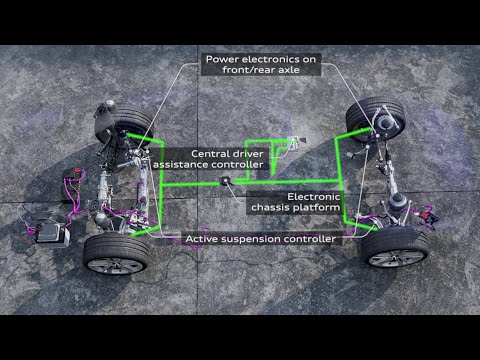
Active suspension systems use sensors, actuators, and a controller to continuously adjust suspension forces in real time, counteracting body motion and maintaining tire contact. Unlike passive systems that only absorb energy, active suspension can add energy to control vehicle motion. Key components include:
- Sensors: Accelerometers, height sensors, and sometimes cameras or LiDAR for road preview.
- Actuators: Hydraulic, pneumatic, or electromagnetic devices that apply force.
- Control Unit: Processes sensor data and commands actuators.
Semi-active systems, such as those using magnetorheological fluids, adjust damping only, while active systems can add force, providing superior control.
The Evolution of Active Suspension: From 1950s Concepts to Modern Systems
The journey of active suspension began in the 1950s with experimental systems from GM and Citroën's hydropneumatic suspension, which was semi-active. Lotus introduced active suspension in Formula 1 in the 1980s, demonstrating its performance potential. Production attempts followed: Toyota Soarer (1989) and Mitsubishi Galant (1987) offered early active systems, and Mercedes-Benz introduced Active Body Control (ABC) in 1999. Modern systems include Bose's electromagnetic suspension (2000s), Audi's predictive active suspension (2010s), and current offerings from Bentley, Mercedes, and Porsche. Key enablers have been advances in microprocessors, sensors, and actuator technology, making systems faster, lighter, and more reliable.
Active vs. Semi-Active vs. Adaptive Suspension: What's the Difference?
Understanding the differences between these terms is crucial for buyers and mechanics.
- Passive Suspension: Fixed spring and damper settings with no electronic control.
- Semi-Active Suspension: Adjustable damping (e.g., magnetorheological or solenoid valves) but cannot add energy; examples include GM's Magnetic Ride Control.
- Active Suspension: Can add force to the suspension (e.g., hydraulic actuators) to control body motion; examples include Mercedes ABC and Audi's active suspension.
- Adaptive Suspension: Often used interchangeably with semi-active, but sometimes refers to systems that adjust spring rates (e.g., air springs) or damping.
Clarifying these terms helps in selecting the right system for specific needs.
Benefits and Drawbacks: Is Active Suspension Worth It?
Active suspension offers superior ride comfort, reduced body roll, improved handling and stability, better tire contact for safety, and adaptability to driving conditions. However, it comes with high costs and complexity.
Cost-Benefit Comparison
| Factor | Passive | Semi-Active | Active |
|--------|---------|-------------|--------|
| Initial Cost | Low | Moderate | High |
| Ride Comfort | Baseline | Improved | Superior |
| Handling | Baseline | Improved | Superior |
| Maintenance | Low | Moderate | High |
| Complexity | Low | Moderate | High |
Replacement parts for active systems can be expensive: actuators $500-$2,000 each, sensors $100-$500, control units $500-$1,500, with labor adding $200-$500. Real-world performance studies show improvements in ride comfort and handling, but benefits may be marginal for average drivers. Weighing these pros and cons helps in deciding whether to invest.
Maintenance and Repair: What Buyers and Mechanics Need to Know
Common issues with active suspension include sensor failures, actuator leaks, control unit malfunctions, and wiring problems. Diagnostic tips include using OBD-II codes and manufacturer-specific diagnostic tools, and checking for uneven tire wear or ride height issues. Replacement costs are significant, as noted above. Preventive maintenance includes regular inspections, fluid checks for hydraulic systems, and software updates. Understanding these aspects helps in budgeting and avoiding unexpected failures.
Diagnosing Common Failures
- Sensor Failure: Look for warning lights, erratic ride height, or poor ride quality. Use a scan tool to read codes.
- Actuator Leaks: Check for fluid leaks around actuators; inspect lines and seals.
- Control Unit Malfunction: Symptoms include unresponsive suspension or system errors; may require reprogramming or replacement.
The Future: Active Suspension in Electric and Autonomous Vehicles
Active suspension is becoming critical for electric and autonomous vehicles. EVs face challenges like heavy battery packs that increase unsprung weight and affect ride comfort; active suspension can compensate. Autonomous driving benefits from sensors and actuators that enable proactive adjustments based on road preview (e.g., cameras and LiDAR), improving ride comfort and safety. Integration with ADAS can enhance stability during emergency maneuvers. Examples include Tesla's adaptive suspension, Mercedes EQS with road surface scanning, and prototype systems from suppliers like ZF and Continental.
Should You Consider Active Suspension? A Buyer's Guide
Assess your driving needs: if you prioritize comfort and performance, active suspension may be worth it; if you drive mostly on smooth roads, semi-active may suffice. Consider total cost of ownership, including potential repair costs and higher insurance premiums. Check vehicle compatibility: retrofitting is complex and expensive; buying a vehicle with factory active suspension is more practical. Future-proofing: if you plan to keep your vehicle for a long time, consider how active suspension will age and whether it will be supported. This guide helps in making an informed purchase decision.
Conclusion
Active suspension technology has evolved significantly, offering remarkable benefits in ride comfort and handling. However, it comes with costs and complexities. As electric and autonomous vehicles become mainstream, active suspension will play an increasingly important role. By understanding the technology, its history, and practical considerations, buyers and mechanics can make informed decisions that align with their needs and budgets.
FAQ
Q: Can I retrofit active suspension to my existing vehicle?
A: Retrofitting is complex and expensive, often requiring major modifications. It's usually more practical to buy a vehicle with factory-installed active suspension.
Q: How long do active suspension components last?
A: Lifespan varies, but actuators and sensors may need replacement after 60,000-100,000 miles, depending on usage and maintenance.
Q: Is active suspension worth the extra cost?
A: It depends on your priorities. If you value ride comfort and handling, and drive on varied roads, it can be worthwhile. For mostly highway driving, semi-active may suffice.