Control Arm Bushing Replacement: Decide Serviceable vs. Complete Arm Before You Buy
Before you buy a single bushing or book any labor, verify whether your control arm allows separate bushing replacement. This serviceability check determines your entire cost, tool, and labor equation—a serviceable arm opens the door to bushing-only replacement, while a sealed arm forces complete arm replacement. [MODEL_ANALYSIS]
Control arm designs fall into two categories: serviceable (the bushing is a separate, replaceable component) and sealed or non-serviceable (the bushing is bonded or staked into the arm, requiring complete arm replacement). This distinction varies by vehicle make, model, and even trim; the same platform can use different arm designs across model years. [MODEL_ANALYSIS]
How to Confirm Your Bushing Is Serviceable
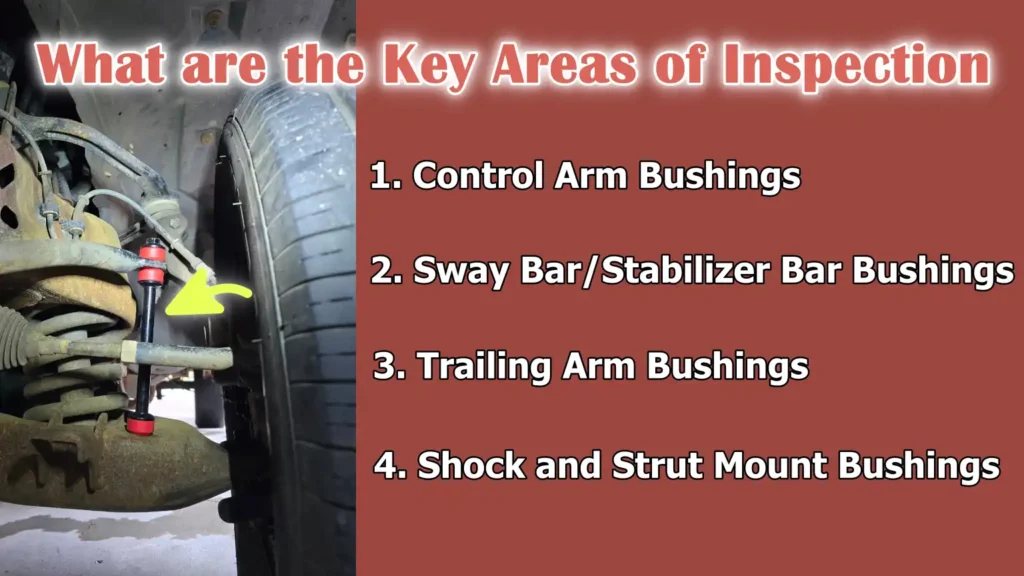
The fastest verification path is physical inspection. Look at the arm for a visible bushing seam, retaining ring, or bolt-on bracket. If the bushing appears swaged, staked, or bonded into the arm with no mechanical retention, assume non-serviceable until proven otherwise. [MODEL_ANALYSIS]
Parts catalogs and OEM parts diagrams are the definitive source. If the bushing has its own part number and the arm is listed separately, it is serviceable. If only the complete arm is listed, it is not. For Hyundai and Kia platforms, our catalog separates bushings and control arms by OEM number. For example, on a 2015 Hyundai Elantra, the rear trailing arm bushing is part number 55215-3X000, listed separately from the arm—confirming serviceability on that application. [FACT_FROM_DATABASE]
Action step: Before purchasing, locate your vehicle's OEM parts diagram or a trusted catalog. Confirm the bushing part number exists separately. If it does not, skip to the complete arm decision framework below.
Confirm the Bushing Is Actually Bad: Pry Test and Visual Inspection
A clunk or wander does not automatically mean the bushing is the culprit. Confirm failure with a pry test before spending money. With the vehicle safely lifted and the suspension at ride height (or on a drive-on lift), insert a pry bar between the control arm and its mounting point and apply force. Visible movement beyond a few millimeters indicates bushing wear. [MODEL_ANALYSIS]
Visual inspection complements the pry test. Look for cracked, torn, or separated rubber. Excessive cracking on the outer sleeve or rubber-to-metal separation is a failure indicator. [MODEL_ANALYSIS]
Differentiate bushing noise from ball joint, sway bar link, and strut mount noise. Bushing clunks typically occur over sharp bumps at low speed, while ball joint noise is more consistent and may be accompanied by steering vagueness. [MODEL_ANALYSIS]
If the bushing passes the pry test and shows no cracking, the symptom source is elsewhere. Do not replace bushings as a guess. This step prevents unnecessary replacement and ensures your repair budget targets the actual failed component.
Bushing-Only vs. Complete Arm: The Decision Framework
Use this decision table to map your specific situation to a recommended action. The table combines serviceability status, mileage, rust condition, and ball joint condition—the four factors that determine whether bushing-only replacement is viable or complete arm replacement is more cost-effective. [MODEL_ANALYSIS]
| Serviceability | Mileage | Rust Condition | Ball Joint Condition | Recommended Action |
|----------------|---------|----------------|----------------------|---------------------|
| Serviceable | <120k | No rust | Good (no play, boot intact) | Bushing-only replacement |
| Serviceable | >120k | No rust | Good | Bushing-only, but inspect ball joint closely; consider complete arm if ball joint shows any wear |
| Serviceable | Any | Moderate rust | Good | Complete arm (avoids pressing old arm, includes new hardware) |
| Serviceable | Any | Severe rust | Any | Complete arm (only rational choice) |
| Serviceable | Any | Any | Any play, boot damage, or roughness | Complete arm |
| Sealed/Non-serviceable | Any | Any | Any | Complete arm (mandatory) |
On high-mileage vehicles (typically over 120,000 miles), the ball joint is often near the end of its service life. Replacing only the bushing means paying labor twice when the ball joint fails shortly after. [MODEL_ANALYSIS]
Rust condition is the second major factor. In rust belt regions, the control arm mounting bolts and ball joint studs may be seized. Bushing-only replacement requires removing the arm anyway, and seized hardware can double labor time. Complete arm replacement often includes new hardware and avoids pressing the old arm. [MODEL_ANALYSIS]
Ball joint status is the third factor. If the ball joint has any play, boot damage, or roughness, replace the complete arm. Pressing a new bushing into an arm with a worn ball joint is a false economy. [MODEL_ANALYSIS]
The cost crossover point is when the combined cost of bushing parts, pressing labor (DIY tool acquisition or shop press time), and rust remediation exceeds the cost of a loaded arm (bushing and ball joint pre-installed). At that point, the complete arm is the more cost-effective path. [MODEL_ANALYSIS]
Tools, Time, and the Real Cost of DIY Bushing Replacement
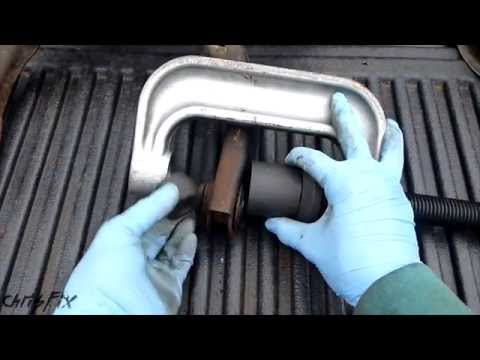
Minimum tool list for bushing-only replacement: floor jack, jack stands, socket set, torque wrench, pry bar, penetrating oil, and a bushing press or puller kit specific to the bushing diameter. [MODEL_ANALYSIS]
Press vs. puller kit: a hydraulic shop press (20-ton minimum) is the fastest extraction method but costs $200–$500; a dedicated bushing puller kit costs $100–$300 and works on-vehicle but can be slow and may fail on severely seized bushings. [MODEL_ANALYSIS]
Shop rental or loaner programs: some auto parts stores loan bushing press kits for a deposit; this eliminates tool acquisition cost but requires a second trip and may not include the correct adapter for your bushing size. [MODEL_ANALYSIS]
Realistic time per side: 1–2 hours for a clean, serviceable arm with proper tools; 3–5 hours per side in rust belt conditions with seized bolts and corroded bushing sleeves. [MODEL_ANALYSIS]
Break-even calculation: if tool acquisition exceeds the shop labor quote for bushing-only replacement, DIY only makes sense if you will use the tools again or if the shop quote includes rust remediation you can avoid. For example, if a bushing press kit costs $300 and a shop charges $200 per side for pressing, DIY becomes cost-effective only if you are doing both sides yourself or if the shop quote includes additional rust remediation you can avoid. [MODEL_ANALYSIS]
For Hyundai/Kia applications, our Rear Trailing Arm Bushing and Large suspension bushing are available for direct purchase, allowing you to compare part cost against complete arm assemblies. [FACT_FROM_DATABASE]
Rust Belt Reality: How Seized Hardware Changes Labor Time and Total Cost
Seized control arm mounting bolts often require cutting, heating, or drilling; this can add 1–3 hours per side and may necessitate replacing the bolt and nut. [MODEL_ANALYSIS]
A seized ball joint stud, if the ball joint is being replaced with the arm, can require a pickle fork, air hammer, or cutting. If reusing the ball joint, a seized stud may prevent removal without damage. [MODEL_ANALYSIS]
Corroded bushing sleeves can fuse to the arm. Extraction may require burning out the rubber and cutting the sleeve, adding significant time. [MODEL_ANALYSIS]
Cost impact: in severe rust cases, the labor to replace bushings alone can exceed the cost of a complete arm with new hardware, making the complete arm the only rational choice. [MODEL_ANALYSIS]
Rubber vs. Polyurethane: How Material Choice Affects the Serviceability Decision
If you have a serviceable arm and choose bushing-only replacement, material choice affects NVH and re-torque interval. Rubber bushings are the OEM standard. They absorb vibration and noise, provide a compliant ride, but degrade over time and may not last as long under heavy loads. [MODEL_ANALYSIS]
Polyurethane bushings are stiffer, more durable under stress, and available in different durometers, but transmit more road noise and vibration (NVH) into the cabin; they can also squeak if not lubricated properly. Polyurethane bushings may require re-torquing after 100–500 miles as they compress slightly. [MODEL_ANALYSIS]
For daily drivers, rubber is usually the better choice for comfort and noise isolation. Polyurethane is better for track use, heavy towing, or off-road applications where durability and precision matter more than NVH. [MODEL_ANALYSIS]
Cost: polyurethane bushings often cost more than rubber, and installation may require additional hardware or modification; the performance benefit may not be noticeable in normal driving. [MODEL_ANALYSIS]
Alignment After Replacement: Why It Is Mandatory and What It Costs
Replacing control arm bushings changes the position of the control arm relative to the subframe, altering camber, caster, and toe. Driving without alignment can cause rapid and uneven tire wear, poor handling, and steering pull. [MODEL_ANALYSIS]
Alignment cost: typically $75–$150 for a two-wheel alignment, $100–$200 for four-wheel; some shops include alignment in the replacement service, but many do not. [MODEL_ANALYSIS]
Consequences of skipping alignment: uneven tire wear (often on the inner or outer edge), reduced fuel economy, and compromised safety due to unpredictable handling. [MODEL_ANALYSIS]
Alignment is required whether you replace bushings only or the complete arm; the geometry changes in both cases. [MODEL_ANALYSIS]
After the Job: Torque Specs, Settling, and When to Recheck
Torque specs: control arm bolts must be tightened to OEM specification with the suspension at ride height (loaded), not with the suspension hanging. Tightening at full droop can tear the bushing or cause premature failure. [MODEL_ANALYSIS]
Settling: after installation, drive the vehicle gently for a few miles to settle the suspension, then recheck torque on critical fasteners. [MODEL_ANALYSIS]
Recheck interval: re-torque control arm bolts after 100–500 miles, especially if polyurethane bushings were installed, as they may compress slightly. [MODEL_ANALYSIS]
Warning: do not use impact wrenches on control arm bolts unless specified; over-torquing can damage the bushing or strip threads. [MODEL_ANALYSIS]
Cost Breakdown: Parts, Labor, Tools, and Alignment
Use this table to compare total cost per side and per vehicle for both DIY and shop paths. Prices are typical U.S. ranges and vary by region and platform; verify current pricing in our catalog. [MODEL_ANALYSIS]
| Path | Parts (per side) | Labor (per side) | Tools (one-time) | Alignment (per vehicle) | Total per side (DIY) | Total per side (Shop) |
|------|------------------|------------------|------------------|--------------------------|----------------------|-----------------------|
| Bushing-only | $20–$60 | $0 (DIY) or $100–$200 (shop press) | $100–$500 (press/puller) | $75–$200 | $120–$560 (incl. tools) | $195–$460 |
| Complete arm | $80–$250 | $0 (DIY) or $100–$200 (shop install) | $0–$100 (basic tools) | $75–$200 | $155–$550 | $255–$650 |
Note: DIY totals include tool acquisition if not already owned. Shop totals exclude alignment unless included by the shop. Rust remediation can add 1–3 hours per side ($100–$300) in either path. [MODEL_ANALYSIS]
FAQ
Q: Can I replace just the bushing without replacing the whole control arm?
A: Only if your control arm is serviceable. Check for a separate bushing part number in OEM diagrams. If the bushing is bonded or staked, you must replace the complete arm.
Q: How much does control arm bushing replacement cost?
A: Parts cost varies: bushing-only $20–$60 per side, complete arm $80–$250 per side. Labor: 1–2 hours per side clean, 3–5 hours rust belt. Alignment: $75–$200. Total per side: $150–$400 DIY, $300–$800 shop. These are typical U.S. ranges; verify current pricing in our catalog. [MODEL_ANALYSIS]
Q: Do I need an alignment after replacing control arm bushings?
A: Yes. Replacing bushings alters suspension geometry. Skipping alignment causes uneven tire wear and poor handling.
Q: How long do control arm bushings last?
A: Typically 60,000–100,000 miles, but road conditions, driving habits, and bushing material affect lifespan. Inspect every 30,000 miles.
Q: Can I drive with a bad control arm bushing?
A: A severely worn or separated bushing can allow the arm to shift under load, causing unpredictable handling or tire contact. If you feel clunking, wandering, or uneven wear, limit driving to the shortest safe distance to a repair facility. [MODEL_ANALYSIS]