2CV Suspension Design: Geometry, Maintenance, and Upgrade Guide

The Citroen 2CV's interconnected suspension is a masterclass in efficient design, offering a ride quality that still impresses today. Understanding its geometry and maintenance is key to preserving its legendary comfort and ensuring reliability. This guide helps you diagnose issues, perform repairs, and decide between original parts and modern upgrades.
How the 2CV Interconnected Suspension Works
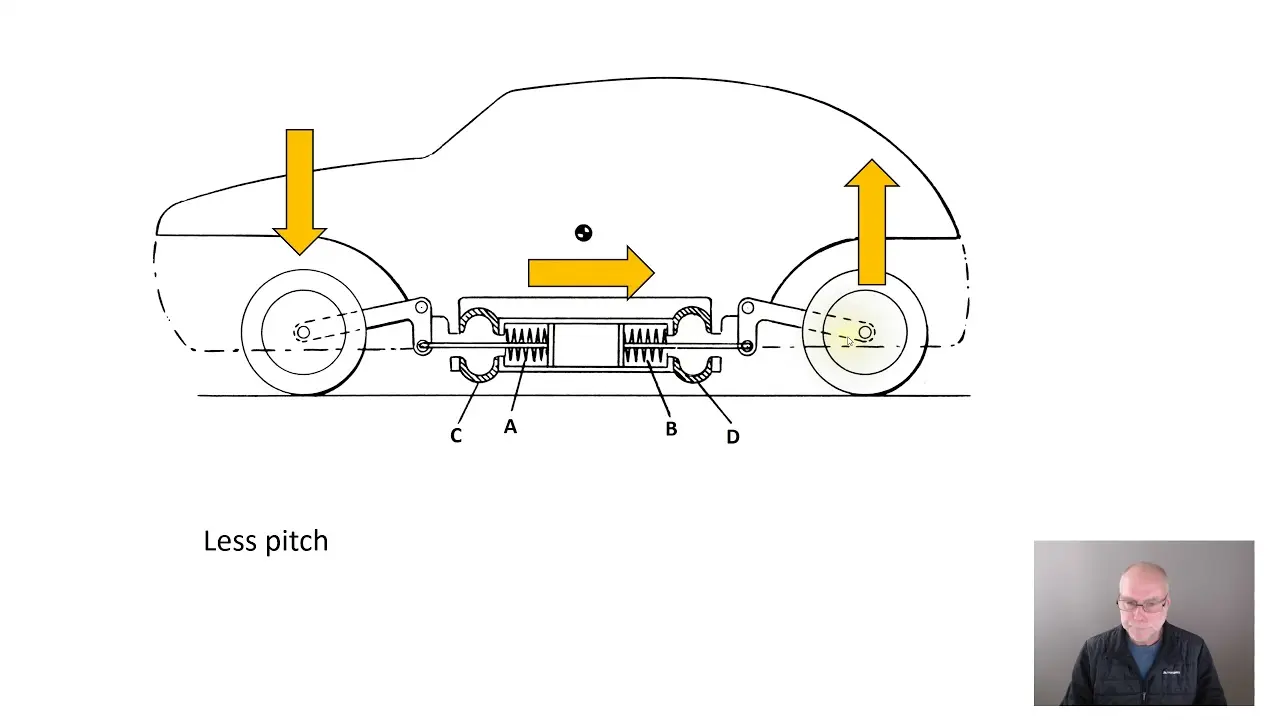
The 2CV uses a unique interconnected suspension where the front and rear wheels on each side are linked. This design minimizes body pitch and roll, allowing for soft springs without compromising stability.
Geometry and Linkage
Each wheel is mounted on a trailing arm that pivots on a central chassis point. The front and rear arms on each side are connected by a long coil spring running longitudinally. When a front wheel hits a bump, the arm compresses the spring, transferring force to the rear arm, pushing it down. This counteracts body pitch. The system uses knife-edge bearings at the pivot points, which are hardened steel edges that allow low-friction movement.
Springing and Damping
Unlike conventional cars with separate springs and shock absorbers, the 2CV uses interconnected coil springs as the sole springing medium. Damping is provided by friction dampers—stacks of friction pads that resist movement. These are located at each wheel and are adjustable for wear. Rubber bump stops prevent metal-to-metal contact on severe impacts.
Contrast with Conventional Independent Suspension
In a conventional independent suspension, each wheel is sprung and damped independently. This simplifies design but often results in a trade-off between ride comfort and handling. The 2CV's interconnected system reduces pitch and roll, allowing softer springs without compromising stability. However, a bump on one wheel affects the opposite wheel on the same side, which can feel unusual to drivers accustomed to independent setups.
2CV vs. Conventional Independent Suspension: A Comparative Analysis
Ride Comfort
The 2CV excels in ride comfort, especially over rough surfaces. Low unsprung mass (lightweight trailing arms and small wheels) and long wheel travel allow it to absorb large bumps without transmitting shock to the cabin. Conventional independent suspensions often use stiffer springs to control body movement, resulting in a harsher ride.
Handling Characteristics
The interconnected system reduces body roll and pitch, keeping tires in better contact with the road. However, the 2CV's high center of gravity and narrow track mean it still leans in corners, but in a controlled manner. Conventional independent suspensions can be tuned for flatter cornering, but often at the expense of ride comfort.
Maintenance Complexity
The 2CV's suspension is remarkably simple, with fewer moving parts and no complex multi-link geometry. Main components are trailing arms, springs, and friction dampers. Modern independent suspensions have numerous bushings, ball joints, and control arms that wear and require alignment. The simplicity of the 2CV design makes it easier to maintain, but friction dampers require periodic adjustment and pad replacement.
Trade-offs
The 2CV's design leads to unique tire wear patterns. The interconnected system can cause the rear tire to scrub slightly during cornering, a trade-off for stability. Alignment is critical; wear in knife-edge bearings can cause uneven tire wear. Conventional suspensions offer more precise alignment but require more frequent checks.
Maintaining and Repairing Friction Dampers: A Step-by-Step Guide
Friction dampers are the most maintenance-intensive part of the 2CV suspension. They use friction between pads to resist movement. Over time, pads wear, reducing damping effectiveness and causing squeaks.
Symptoms of Worn Friction Dampers
- Squeaking or groaning over bumps
- Excessive bouncing after a bump
- Knocking sounds from the suspension
- Poor handling, especially in corners
Step-by-Step Procedure for Adjusting or Replacing Pads
- Safety First: Chock the wheels and support the car on jack stands.
- Access the Damper: The friction damper is near each wheel, attached to the trailing arm. Remove the wheel for better access.
- Inspect the Pads: Look for wear indicators. If friction material is less than 2mm thick, replace them.
- Adjust Tension: If pads are still good, adjust tension by tightening the central bolt. Turn clockwise to increase damping, counterclockwise to decrease. Correct setting is typically 2-3 turns from fully loose.
- Replace Pads: If replacement is needed, remove the damper assembly. Note the order of washers and pads. Install new pads, ensuring they are clean and dry. Reassemble and adjust tension.
- Test: Reinstall the wheel and lower the car. Test drive and listen for squeaks.
Part Numbers
Common replacement pads are available from Citroën (part number 16 073 412) or aftermarket suppliers like FPS West. Always verify compatibility with your model year.
Diagnosing Suspension Issues: Squeaks, Hard Ride, and Knocking
Common Symptoms and Causes
- Squeaking: Usually from friction dampers needing lubrication or pad replacement. Also check for worn knife-edge bearings.
- Knocking: Often due to loose or worn knife-edge bearings, or worn trailing arm bushings.
- Hard Ride: Could indicate over-tightened friction dampers, or worn springs that have sagged.
- Uneven Tire Wear: Check alignment and condition of knife-edge bearings.
Diagnostic Checklist
- Visual Inspection: Look for oil leaks, damaged springs, or worn bushings.
- Knife-Edge Bearings: Check for play by jacking up the wheel and trying to move it side-to-side. Any play indicates worn bearings.
- Damper Test: Push down on the bumper and release. The car should return to rest without excessive bouncing. If it bounces more than twice, dampers are weak.
- Bushing Check: Inspect trailing arm bushings for cracks or deterioration.
Repair vs. Replace
If knife-edge bearings are worn, they must be replaced. Springs rarely fail but can sag over time; replace if ride height is uneven. Friction damper pads are consumable and should be replaced when worn. Bushings are also replaceable.
Modern Upgrades and Replacement Options: Enhancing Safety and Reliability
Aftermarket Options
- Telescopic Dampers: Some owners convert to telescopic dampers for better damping consistency. This requires a conversion kit that replaces friction dampers. Pros: Better performance, less maintenance. Cons: Alters original design, may affect ride quality.
- Polyurethane Bushings: Replace rubber bushings with polyurethane for improved durability and response. Pros: Longer life, better handling. Cons: Can transmit more noise and vibration.
- Upgraded Springs: Stiffer springs can reduce body roll but sacrifice ride comfort. Choose based on your driving style.
Safety-Related Upgrades
When upgrading suspension, consider improving brake lines to braided stainless steel for better pedal feel. Also inspect steering components for wear.
Choosing Suppliers
Purchase from reputable suppliers like FPS West or Der Franzose. Ensure parts are compatible with your model year. For bushings, consider high-quality options from our automotive suspension components range.
Step-by-Step Guide to Replacing Suspension Components: From Knife Edges to Springs
Tools and Safety
- Jack and jack stands
- Socket set, torque wrench
- Pry bar, hammer
- Safety glasses and gloves
Replacing Knife-Edge Bearings
- Support the car and remove the wheel.
- Disconnect the trailing arm from the chassis. This may require removing the spring and damper.
- Remove the old bearing by pressing or tapping out.
- Install new bearing, ensuring it is seated properly.
- Reassemble and torque to specification (typically 30-40 Nm).
Replacing Springs
- Support the car and remove the wheel.
- Compress the spring using a spring compressor.
- Disconnect the spring from the trailing arms.
- Install new spring and release compressor slowly.
- Ensure the spring is seated correctly.
Replacing Friction Dampers
- Remove the damper assembly from the trailing arm.
- Disassemble and note the order of parts.
- Install new pads or the complete damper.
- Adjust tension as described earlier.
Torque Specifications
- Knife-edge bearing bolt: 35 Nm
- Trailing arm pivot bolt: 50 Nm
- Spring retaining bolts: 25 Nm
Common Pitfalls
- Not supporting the car properly can be dangerous.
- Over-tightening friction dampers causes a hard ride.
- Forgetting to align the suspension after replacement can cause tire wear.
By understanding the 2CV's suspension design and following these guidelines, you can maintain its legendary ride quality and ensure safe, reliable operation for years to come.
FAQ
Q: Why does my 2CV squeak over bumps?
A: Squeaking is often from friction dampers needing adjustment or pad replacement. Check the pads for wear and lubricate the damper mechanism if needed.
Q: Can I convert my 2CV to telescopic dampers?
A: Yes, conversion kits are available. They offer better damping consistency and less maintenance, but alter the original design and may affect ride quality.
Q: How often should I adjust my friction dampers?
A: It depends on driving conditions and pad wear. Check them annually or if you notice excessive bouncing or squeaking.
Q: What causes a hard ride in a 2CV?
A: Over-tightened friction dampers are a common cause. Also check for sagged springs or worn bushings.
Q: Are polyurethane bushings worth it?
A: They offer longer life and better handling, but can transmit more noise and vibration. Consider your priorities.
Q: Where can I buy quality suspension parts?
A: Reputable suppliers include FPS West and Der Franzose. Always verify compatibility with your model year.
Q: Do I need to align the suspension after replacing components?
A: Yes, it's crucial to prevent uneven tire wear. Have a professional alignment done after any suspension work.
Q: What are knife-edge bearings and why do they matter?
A: They are hardened steel pivots that allow low-friction movement of the trailing arms. Worn bearings cause play and uneven tire wear, so replace them if worn.