Toyota Corolla Control Arm Symptoms: Diagnosis, Costs, and Replacement Decisions
If your Corolla clunks over bumps, wanders at speed, or eats tires unevenly, the control arms are the likely culprit. These symptoms point to worn bushings or ball joints—critical components that link your wheels to the chassis. This guide helps you confirm the diagnosis, understand the risks, and make an informed replacement decision.
Common Symptoms of a Bad Control Arm on a Corolla
The most frequent signs of a bad control arm in a Corolla are clunking or knocking noises from the front suspension, uneven tire wear, steering wheel vibration, loose or wandering steering, and squeaking or creaking sounds. These symptoms typically worsen over bumps or during turns and indicate worn bushings or ball joints.
- Clunking or knocking noises: A worn control arm bushing or ball joint creates play that results in a metallic clunk when the suspension articulates—over speed bumps, potholes, or during sharp turns. The noise is often more pronounced on the side with the damaged component.
- Uneven or rapid tire wear: When the control arm allows excessive movement, the wheel alignment shifts, causing accelerated wear on the inner or outer edges of the tire. If you notice feathered or scalloped tread, inspect the control arms.
- Steering wheel vibration: At highway speeds, a loose control arm can cause the wheel to shimmy or vibrate, especially when braking or accelerating. This is due to the wheel not being held firmly in its intended path.
- Loose or wandering steering: Excessive play in the control arm makes the steering feel vague, with the car drifting or requiring constant correction. This is a safety concern as it reduces driver control.
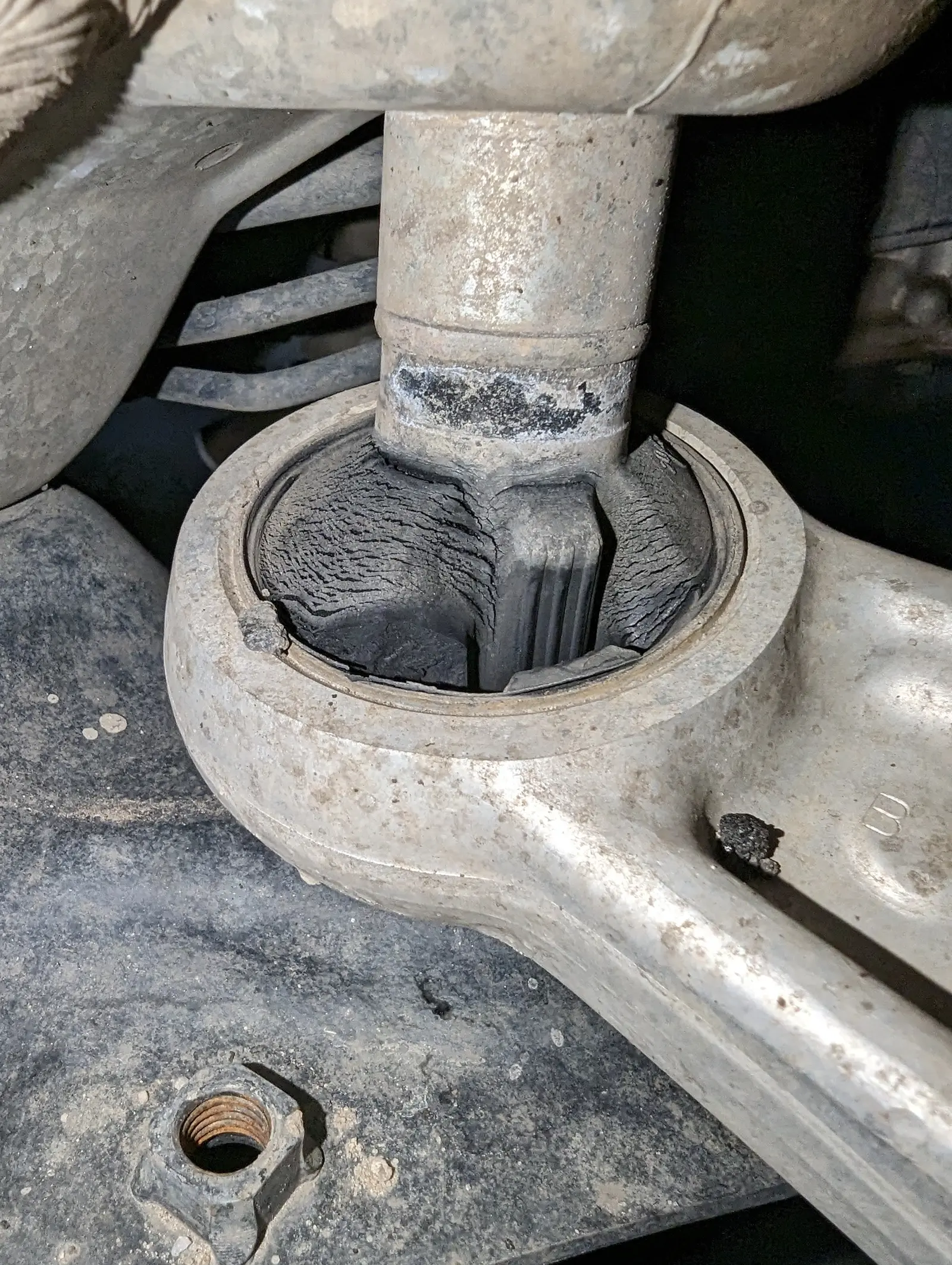
- Squeaking or creaking sounds: Dried-out or cracked bushings can produce a squeak or creak when the suspension moves. This is often heard when going over driveways or uneven surfaces.
If you experience any of these, inspect the control arms promptly. Ignoring them can lead to more severe damage and costly repairs.
Visual Inspection: How to Check Your Control Arms
To confirm a bad control arm, perform a visual inspection of the bushings and ball joints, and check for play using a pry bar. This helps you distinguish between bushing wear and ball joint wear, which affects the repair approach.
- Raise the vehicle safely: Use a floor jack and jack stands. Never work under a car supported only by a jack.
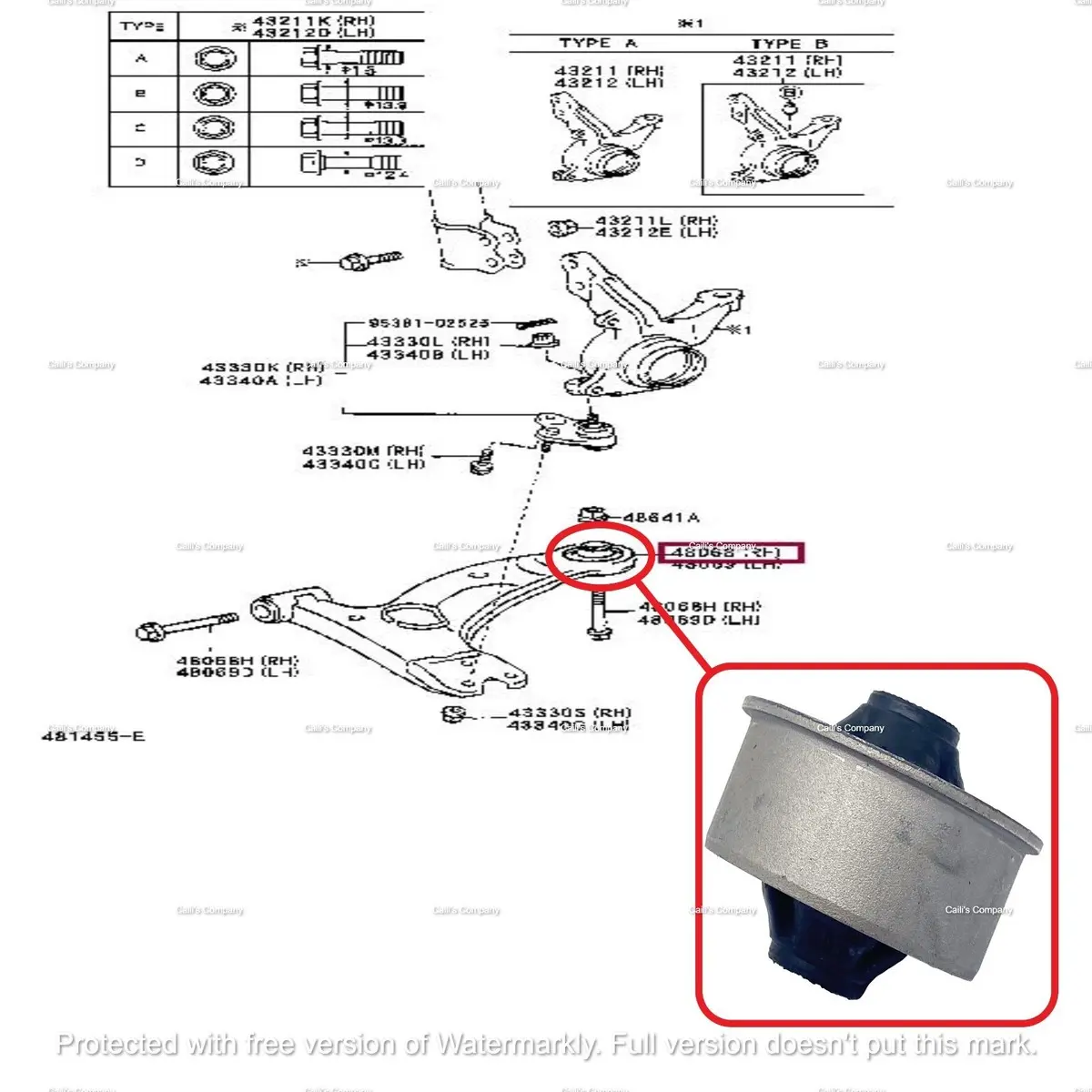
- Locate the control arm: On most Corollas, the lower control arm is a metal arm running from the frame to the steering knuckle. It has two bushings at the frame end and a ball joint at the knuckle end.
- Inspect the bushings: Look for cracks, tears, or fluid leakage. A healthy bushing is firm and intact. If you see rubber deterioration or the bushing is separated from the metal sleeve, it's worn.
- Check the ball joint: With the wheel off, grasp the ball joint and try to move it up and down. Any noticeable play indicates wear. Also, check the rubber boot for cracks or grease leakage.
- Use a pry bar: Insert a pry bar between the control arm and the frame, and gently pry. Excessive movement (more than a few millimeters) indicates worn bushings.
- Inspect the control arm itself: Look for bends, cracks, or rust damage. A bent arm must be replaced.
Ball joint play is a safety-critical issue—if it separates, the wheel can collapse, causing loss of control. If you find any play, replace the control arm immediately.
What Causes Control Arm Failure?
Control arms fail primarily due to normal wear and tear, impact damage, corrosion, and poor-quality replacement parts. Understanding these causes helps you prevent premature failure.
- Normal wear and tear: Over time, the rubber bushings and ball joint grease deteriorate from constant flexing and exposure to heat and contaminants. High-mileage Corollas (100,000+ miles) are especially prone.
- Impact damage: Hitting potholes, curbs, or speed bumps at speed can bend the control arm or damage the bushings. Even a single severe impact can cause immediate failure.
- Corrosion: In regions with road salt, moisture can cause the control arm to rust, weakening the metal and accelerating bushing deterioration.
- Poor-quality parts: Aftermarket control arms with inferior bushings or ball joints may fail prematurely. Choosing reputable brands is crucial.
Can You Drive with a Bad Control Arm?
Driving with a bad control arm is unsafe and can lead to loss of control, tire blowouts, and additional suspension damage. It's not recommended to drive any distance beyond a short trip to a repair shop.
- Ball joint separation: If the ball joint fails completely, the wheel can detach from the suspension, causing immediate loss of control.
- Unpredictable steering: Excessive play makes the car wander, increasing the risk of accidents, especially at highway speeds.
- Accelerated tire wear: Misalignment from a bad control arm causes rapid, uneven tire wear, which can lead to blowouts.
- Damage to other components: A loose control arm can stress the strut, tie rods, and sway bar links, leading to more expensive repairs.
Replacement Options: OEM vs Aftermarket
When replacing control arms, you have two main options: OEM (Original Equipment Manufacturer) parts or aftermarket parts. Your choice affects cost, quality, and fitment.
- OEM parts: Made by Toyota or its suppliers, these guarantee exact fit and factory quality. They are more expensive but offer peace of mind and are often the choice for warranty repairs.
- Aftermarket parts: Quality varies widely. Reputable brands like Moog, AC Delco, and Delphi offer control arms that meet or exceed OEM specifications at a lower price. However, cheap, no-name brands may use inferior bushings or ball joints, leading to premature failure.
Consider the warranty: OEM parts typically come with a limited warranty, while aftermarket brands may offer longer warranties. Also, check availability—OEM parts may require ordering, while aftermarket parts are often in stock.
For a Corolla, aftermarket options are popular and can be reliable if you choose a trusted brand. Look for parts with solid construction, quality bushings, and a good warranty.
Step-by-Step Guide to Replacing a Corolla Control Arm
Replacing a control arm on a Corolla is a DIY-friendly job if you have basic mechanical skills and tools. Here's a step-by-step guide:
- Safety first: Park on a level surface, chock the rear wheels, and loosen the lug nuts on the front wheels. Raise the front of the car with a jack and support it on jack stands. Wear eye protection.
- Remove the wheel: Take off the lug nuts and remove the wheel to access the control arm.
- Disconnect the ball joint: Use a ball joint separator tool to detach the ball joint from the steering knuckle. Do not use a pickle fork as it can damage the boot.
- Remove the control arm bolts: There are typically two bolts securing the control arm to the frame. Remove them with a socket and breaker bar. Note their positions for reinstallation.
- Remove the control arm: Carefully lower the control arm out of the vehicle. You may need to pry it gently if it's stuck.
- Install the new control arm: Position the new control arm in place and hand-thread the bolts. Torque the bolts to the manufacturer's specification (usually around 80-100 ft-lbs for the frame bolts).
- Reattach the ball joint: Insert the ball joint stud into the knuckle and tighten the castle nut to spec. Install a new cotter pin.
- Reinstall the wheel: Put the wheel back on, tighten the lug nuts, and lower the car.
- Get an alignment: After replacing a control arm, a wheel alignment is necessary to ensure proper tire wear and handling.
Note: If you're replacing one side, consider replacing the other side as well, as it likely has similar wear.
Cost of Replacement: Parts and Labor
The total cost to replace a control arm on a Toyota Corolla typically ranges from $200 to $600 per side, including parts and labor. Here's a breakdown:
- Parts: OEM control arms cost between $100 and $250 per side. Aftermarket parts range from $50 to $150. Some aftermarket arms come with new ball joints and bushings pre-installed, which is convenient.
- Labor: Expect 1.5 to 3 hours of labor at a shop rate of $80 to $120 per hour. This translates to $120 to $360.
- Alignment: After replacement, a wheel alignment is recommended and costs an additional $50 to $100.
DIY savings: If you do it yourself, you save on labor but still need to pay for parts and alignment. A DIY replacement can cost as little as $100 to $250 per side.
When to Seek Professional Help
If you're not comfortable with suspension work or lack the proper tools, seek professional help. Control arm replacement requires specific tools like a ball joint separator and a torque wrench. Also, if the bolts are rusted or seized, a shop with professional equipment can handle it safely.
Signs you should not DIY: If you don't have jack stands, a torque wrench, or experience with suspension components, it's safer to hire a mechanic. Additionally, if the control arm is severely corroded or the ball joint is seized, professional intervention is wise.
Preventive Maintenance Tips
To extend the life of your control arms, follow these preventive measures:
- Regular inspections: During tire rotations or oil changes, visually inspect the control arm bushings and ball joints for wear.
- Avoid potholes and curbs: Slow down over rough roads and avoid hitting curbs when parking.
- Maintain proper tire pressure: Under-inflated tires increase stress on suspension components.
- Apply rust protection: In areas with road salt, consider undercoating or rust-proofing to prevent corrosion.
FAQs
Q: How long do control arms last on a Toyota Corolla?
A: There's no set interval, but they typically last 80,000 to 120,000 miles depending on driving conditions and maintenance.
Q: Can I replace just the bushings instead of the whole control arm?
A: In some cases, yes, but it's often more cost-effective to replace the entire control arm, especially if the ball joint is also worn.
Q: Will a bad control arm affect my alignment?
A: Yes, a worn control arm can cause misalignment, leading to uneven tire wear and poor handling.
Q: Is it safe to drive with a bad control arm?
A: No, it's unsafe. A failed ball joint can cause loss of control.
Conclusion
Bad control arms in a Toyota Corolla present clear symptoms—clunking, uneven tire wear, vibration, and loose steering. Inspect the bushings and ball joints to confirm the issue. Replacement is essential for safety, and you can choose between OEM and aftermarket parts based on budget and quality. The cost is manageable, and DIY replacement is possible with the right tools. Regular inspections and careful driving can extend the life of your control arms. Don't delay—address control arm issues promptly to keep your Corolla safe and reliable.