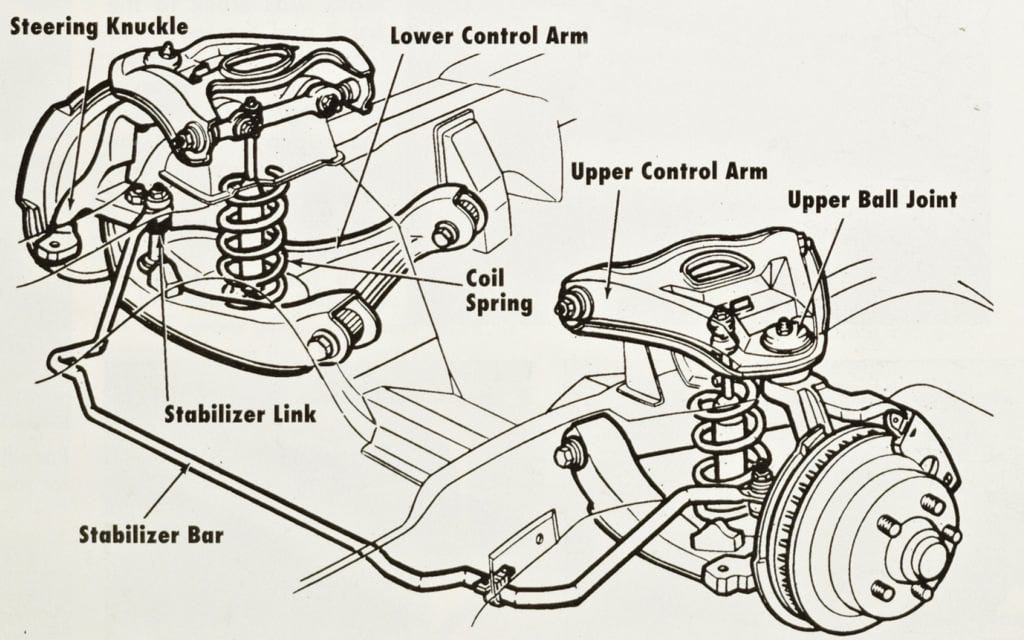
Why 'Tested' Is Not a Specification: How Design Intent Dictates Which Suspension Tests Matter

A suspension part that has been 'tested' tells you almost nothing about whether it will perform in your application. What matters is what was tested, against what duty cycle, and for which design intent. A comfort-tuned bushing and a heavy-load bushing will not be validated by the same protocol. A part can pass its own test suite and still be wrong for a different application because the test was built around a different load profile, road environment, or service life expectation. 'Tested' is a process claim, not a fitness-for-application claim. The buyer's job is to map the test regime to their real-world duty cycle.
Design intent falls into four broad categories: comfort, load-carrying, handling/performance, and durability. Each shifts the priority of test regimes. A comfort bushing prioritizes low NVH and compliance; its validation will focus on dynamic stiffness and isolation. A load-carrying bushing prioritizes static stiffness and fatigue life under heavy loads; its validation will focus on ultimate strength and cyclic endurance. A handling bushing prioritizes precise deflection control; its validation will focus on rate linearity and hysteresis. A durability bushing prioritizes long service life; its validation will focus on accelerated aging and environmental cycling.
When a supplier claims a part is 'tested,' the buyer must ask: tested for what? The three test categories—bench/rig, durability/endurance, and vehicle-level validation—provide the structure for evaluating any claim. Each category answers a different question and cannot substitute for the others.
The Three Test Categories a Suspension Part Moves Through — and What Each One Can and Cannot Prove
Bench/rig testing isolates a component or subassembly under controlled inputs. It is useful for verifying rate, travel, and structural behavior. For example, a damper dyno measures force-velocity curves; a bushing rig measures static and dynamic stiffness. But bench testing cannot prove installed-system performance or real-world durability. It does not account for interactions with other components, vehicle dynamics, or environmental variables.
Durability/endurance testing applies a defined duty cycle over time. Its value depends entirely on whether that duty cycle matches the buyer's load profile, road environment, and service life expectation. A test that cycles a bushing 100,000 times at a constant load may not represent the variable amplitude loading seen in real driving. A test that runs at constant temperature may not capture thermal aging. Durability testing can prove that a part survives a specific regime, but it cannot prove that the regime resembles your usage.
Vehicle-level validation confirms behavior in the installed system. It is the closest to real-world evidence, but it is only as relevant as the vehicle, load case, and usage profile it was run against. A part validated on a smooth test track may not perform on broken pavement. A part validated on a lightly loaded vehicle may not perform on a fully loaded one. Vehicle-level testing can reveal NVH issues, handling imbalances, and interference problems that bench tests miss, but it cannot isolate the contribution of a single component.
Each category answers a different question. A supplier citing only one category is giving the buyer a partial picture, not a complete fitness-for-application case. For instance, a bench test showing a bushing's stiffness does not prove it will last 100,000 miles. A durability test showing it survived a million cycles does not prove it will not cause noise in a specific vehicle. A vehicle-level test showing good handling does not prove the part will withstand extreme loads.
How to Read a Supplier's Test or Validation Claim Without Getting Fooled
Separate the claim from the evidence. 'Tested' without a named test, duty cycle, or application is a marketing statement, not a validation statement. Ask for the test scope: what was tested (component, subassembly, or full system), under what inputs, for how long, and against what acceptance criteria. Recognize the difference between a test that was run and a test that was passed against a criterion relevant to the buyer's duty cycle. A test can be run and passed, but if the acceptance criterion was set for a different duty cycle, the pass is meaningless for your application.
Watch for category confusion. A bench result presented as if it were durability evidence, or a durability result presented as if it were vehicle-level validation, is a red flag. For example, a supplier might show a force-velocity curve from a damper dyno and claim 'proven durability.' The dyno test proves performance at a moment in time, not endurance over time. Similarly, a durability test on a rig might be presented as 'vehicle-validated,' but it lacks the system integration of on-vehicle testing.
Ask for the test scope in writing. A credible supplier should be able to provide a test report or summary that includes the test setup, inputs, duration, and acceptance criteria. If they cannot, treat the claim as unverified. Remember that a test report is not a guarantee of fitness for your application; it is evidence that the part met a specific criterion under specific conditions. Your job is to determine whether those conditions resemble yours.
Design-to-Test Linkage: Why a Part That Passes Its Own Test Can Still Be Wrong for Your Application
A test is built around a design intent. When the buyer's duty cycle differs from that intent, the test's pass result does not transfer. Load profile, road environment, service life expectation, and vehicle configuration are the variables that most often diverge between the design duty cycle and the buyer's reality. A part optimized and validated for comfort duty may be structurally adequate but behaviorally wrong for a load or handling application—and vice versa.
Consider a rear trailing arm bushing. A bushing designed for a compact sedan used primarily on smooth highways will be validated for low-amplitude, high-frequency inputs and moderate temperatures. If that same bushing is installed on a heavy SUV used for towing on rough roads, the load profile is entirely different: higher amplitudes, lower frequencies, and greater thermal cycling. The bushing may pass its original test, but it will likely fail prematurely in the new application.
Conversely, a bushing designed for heavy-duty use may be too stiff for a comfort-oriented application, transmitting noise and vibration. It may pass its durability test with flying colors, but it will be behaviorally wrong for the buyer's needs. The buyer's decision is not 'did it pass a test' but 'was the test built around a duty cycle that resembles mine.'
Practical Questions to Ask a Suspension Manufacturer Before You Specify or Stock a Part
Design-intent questions: What duty cycle was this part designed for? How does that compare to my application? Ask for specifics: load range, road conditions, expected service life, and vehicle configuration. If the supplier cannot articulate the design intent, they likely cannot provide meaningful validation.
Test-scope questions: What was tested, under what inputs and duration, against what acceptance criteria, and at which test category? For a bushing, ask about static and dynamic stiffness tests, fatigue cycles, and environmental exposure. For a control arm, ask about ultimate strength, fatigue life, and corrosion resistance. For a damper, ask about force-velocity curves, fade resistance, and seal durability.
Application-fit questions: What vehicle configurations, load profiles, and environments has this part been validated against? If the supplier has only validated on a specific model, ask whether that model's duty cycle matches yours. If you are stocking for a range of vehicles, look for parts with broad validation or clear application-specific validation.
Evidence questions: Can the supplier provide the test scope, duty cycle, and acceptance criteria in writing, not just a 'tested' badge? A test summary or report is ideal. If the supplier cannot provide this, consider the part unverified for your application. For critical applications, such as commercial vehicles or performance use, insist on documented evidence.
Matching Design Intent and Test Evidence to Your Duty Cycle: A Selection Workflow
Step 1: Define your own duty cycle—load profile, road environment, service life expectation, and vehicle configuration—before looking at any part. For a wholesale importer, this means understanding the end users' typical usage. For a mechanic, it means asking the customer about driving conditions and load. For a DIY user, it means honestly assessing how the vehicle is used.
Step 2: Identify the part's design intent from the supplier's own language and product positioning. Look for terms like 'comfort,' 'heavy-duty,' 'performance,' or 'OE replacement.' These indicate the intended duty cycle. If the supplier does not state a design intent, ask.
Step 3: Classify the supplier's test claim by category (bench, durability, vehicle-level) and check whether the test scope matches your duty cycle. If the supplier only provides bench data, you lack durability evidence. If they provide durability data, check the load profile and duration against your expectations. If they provide vehicle-level validation, check the vehicle and usage profile.
Step 4: Decide—specify or stock only when design intent and test evidence both align with your duty cycle; otherwise treat the part as unverified for your application. For example, if you are stocking a rear trailing arm bushing for a fleet of taxis in a hot, dusty environment, you need a part designed for high temperatures and abrasive conditions, with durability testing that reflects those conditions. If the supplier's part is designed for moderate climates and smooth roads, it is unverified for your fleet.
This workflow applies to any suspension component. For control arms, consider the loads and corrosion exposure. For bushings, consider the deflection and fatigue requirements. For dampers, consider the heat rejection and fade resistance. Always match the part's validated duty cycle to your own.
By following this approach, you move from passive acceptance of 'tested' claims to active verification of fitness for your application. That is the difference between stocking parts that work and stocking parts that come back.
---
Related