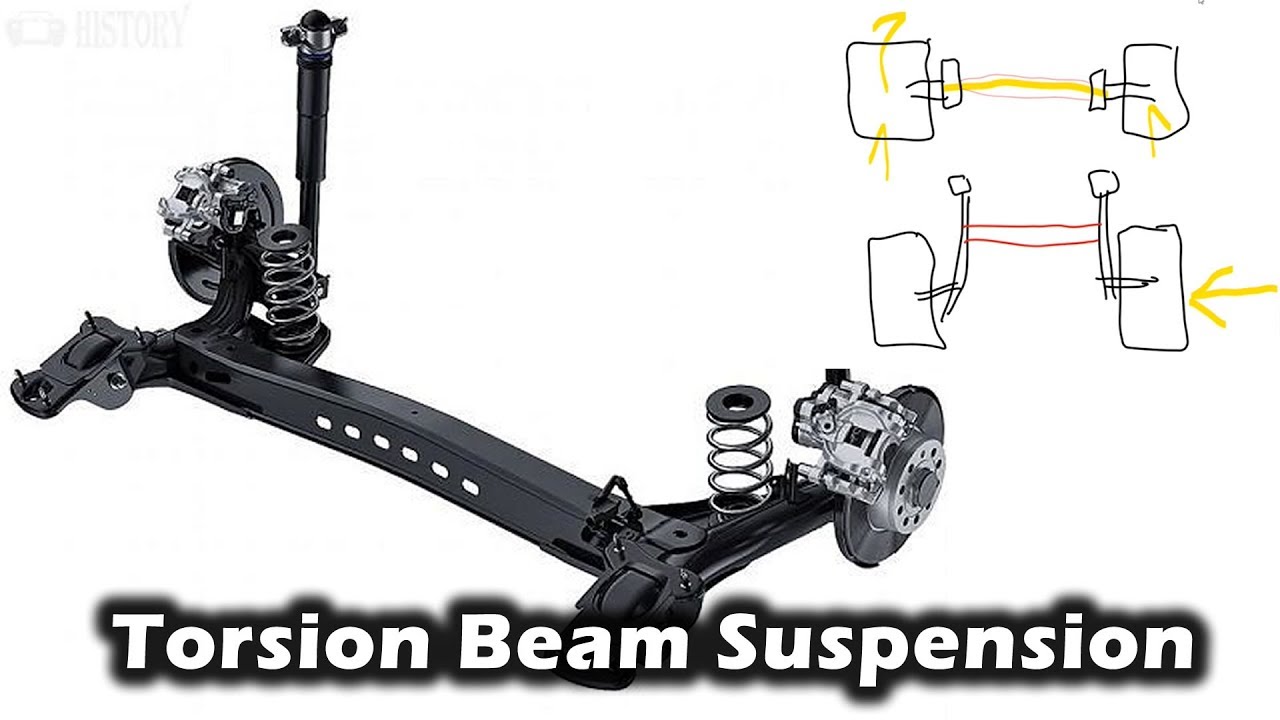
Torsion Beam Rear Suspension: A Decision-Oriented Engineering Breakdown
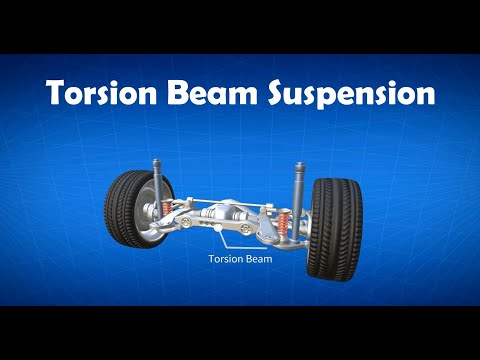
A torsion beam rear suspension is a coupled axle: two trailing arms joined by a transverse beam that twists under cornering load to provide roll stiffness while the arms control fore-aft and lateral wheel location. For most daily-driven vehicles, a well-tuned torsion beam with quality bushings and matched dampers is entirely adequate—and often preferable—to a more complex independent setup. It is not a cost shortcut bolted to a cheaper version of an independent setup; it is a different mechanical architecture with its own stiffness path, compliance behavior, and tuning ceiling.
[SEARCH_EVIDENCE] The recurring searcher question "Is a torsion beam suspension about the same as an independent suspension with a sway bar?" (Quora) exposes the core misconception. It is not. A sway bar links two independently located wheels through a torsion spring; a torsion beam physically couples the two trailing arms through a structural member that also carries vertical, lateral, and braking loads. The coupling changes how camber and toe behave under roll, how bumps transmit into the body, and what adjustments are even possible.
[FACT_FROM_DATABASE] The pivot points where the trailing arms meet the body use dedicated bushings—for example, Rear Trailing Arm Bushing — 55274-D3000 and Rear Trailing Arm Bushing — 55274-2W000 for Hyundai/KIA platforms. These bushings are the primary compliance element in the system, and they are the most under-discussed variable in real-world performance and NVH outcomes.
How It Works: Beam Twist, Trailing Arms, and Bushings
The beam's cross-section, wall thickness, and length set its torsional stiffness. When one wheel rises and the other drops, the beam twists along its axis and resists that motion—this is the roll stiffness. Because the beam also carries structural loads, its stiffness cannot be tuned independently of its strength the way a separate anti-roll bar can. On most production cars, beam stiffness is fixed at the factory.
Beam stiffness is measured as torsional rigidity—typically expressed in newton-meters per degree (Nm/deg)—which quantifies the torque required to twist the beam by one degree. Higher values mean a stiffer beam and more roll resistance. While exact figures vary by platform and are rarely published, the principle is consistent: a stiffer beam reduces roll but can transmit more impact harshness, while a softer beam improves compliance at the cost of body control.
The trailing arm bushings at the body-side pivots determine how much the axle can deflect in toe, camber, and lateral directions under cornering, braking, and impact loads. A soft rubber bushing absorbs NVH but allows toe change under load; a stiffer polyurethane or spherical bushing reduces deflection and improves toe control at the cost of ride harshness and road noise. [MODEL_ANALYSIS] This is the single highest-leverage area for aftermarket improvement on a torsion beam car, because it is the only compliance element most owners can realistically change without replacing the axle. This ranking is a reasoned opinion based on the fact that bushings are the primary wear item and the most accessible tuning point; it is not derived from failure-rate data or toe-deflection figures, which are not available in the supplied database.
Torsion Beam vs Independent Rear Suspension: A Decision Framework, Not a Scorecard
Independent rear suspension (IRS) allows camber and toe to change with suspension travel in a controlled way; torsion beam couples wheel motion, so camber and toe are largely fixed by beam geometry and bushing compliance. That single structural fact drives every practical difference between the two layouts.
[SEARCH_EVIDENCE] The Jalopnik "pros and cons" framing and the Chasing Cars "is there a big difference?" question show that searchers want a fair comparison, not a verdict. The gap in most comparisons is that they do not quantify what "difference" means in daily driving. (Note: specific claims from these sources are not quoted here because the original URLs were not provided; the engineering explanation stands on its own.)
Handling: IRS lets engineers dial in camber gain and toe change to keep the tire contact patch optimal under roll. Torsion beam cannot do this—the beam's twist is the roll response, and camber is essentially fixed. On smooth roads at moderate speeds, a well-tuned torsion beam car can feel composed and predictable. On broken pavement or mid-corner bumps, the coupling becomes noticeable: a bump on one wheel affects the other.
Ride comfort: A torsion beam can ride well with proper bushing tuning, but it transmits more lateral and fore-aft coupling than a well-isolated IRS. The difference is most apparent on rough surfaces and during combined braking-and-turning maneuvers.
Packaging and cost: Torsion beam occupies less vertical and lateral space, has fewer parts, and is cheaper to manufacture and assemble. That is why it dominates compact hatchbacks, some EVs, and cost-sensitive platforms. [MODEL_ANALYSIS] For a buyer or importer, the decision is not "which is better" but "which layout matches the use case"—daily commuting, load carrying, and light performance use do not require IRS-level camber control.
Beam Stiffness, Bushing Materials, and Pivot Design: The Real Levers You Can Change
The performance ceiling of a torsion beam setup is set by three variables: beam stiffness (usually fixed), bushing material and durometer, and pivot design. Of these, bushings are the most accessible and the most impactful for most owners.
Beam stiffness: The beam's cross-section (open C-channel vs closed tube), material thickness, and length determine roll stiffness. This is fixed at the factory on nearly all production cars. Some aftermarket beams or beam stiffeners exist for specific platforms, but they are platform-specific and not a general solution.
Bushing materials: Rubber bushings prioritize NVH isolation and compliance; polyurethane and spherical bearings reduce deflection and improve toe control under load, at the cost of ride harshness and noise. [FACT_FROM_DATABASE] Replacement bushings such as Rear Trailing Arm Bushing — 55274-4T000 and Rear Trailing Arm Bushing — 55274-4Q000 are available for Hyundai/KIA applications, and the choice between OE-equivalent rubber and stiffer aftermarket compounds is a direct trade-off between comfort and response.
Pivot design: The location and orientation of the trailing arm pivot bushing affects anti-squat, toe change under braking, and lateral compliance. A pivot that is angled or offset changes how the axle reacts under load—a detail most aftermarket guides ignore. [MODEL_ANALYSIS] If you are diagnosing a handling complaint, check pivot bushing condition and orientation before assuming the beam itself is the problem.
NVH trade-off: Stiffer bushings improve response but transmit more road noise and impact harshness. The right choice depends on whether the vehicle is a daily driver, a weekend car, or a competition build. For a daily driver, fresh OE-quality rubber bushings are often the best decision; for a weekend car, polyurethane is a reasonable step up.
Alignment Limits on Torsion Beam: What You Can Adjust, What Needs Shims or Aftermarket Arms, and What Is Fixed by Design
On most torsion beam axles, rear camber is fixed by the beam and trailing arm geometry. Adjustment typically requires shims at the hub or aftermarket camber plates/arms, and the range is usually small—often less than one degree. [SEARCH_EVIDENCE] "Can you adjust camber on a torsion beam?" is an implied question from tuning discussions; the honest answer is "sometimes, within limits, and not like an IRS multi-link."
Toe: Rear toe is often adjustable via shims or slotted mounting points on the beam pivot or hub, but the range is limited and may not be enough to correct a bent beam or worn bushings. [FACT_FROM_DATABASE] Worn trailing arm bushings—such as Rear Trailing Arm Bushing — 55274-2S000 or Rear Trailing Arm Bushing — 55274-2H000—can cause toe change under load that no alignment shim can fully correct. Replace bushings before attempting alignment correction.
What is fixed: Beam twist stiffness, roll center height, and anti-squat are set by the beam and pivot design. No bolt-on part changes these without replacing the beam or the entire axle. [MODEL_ANALYSIS] This is the hard limit that separates torsion beam from IRS in terms of tuning potential—and it is why alignment expectations must be set before buying parts.
Real-World Platforms: Why Mazda, VW, and EV Makers Choose Torsion Beam (and When They Don't)
[SEARCH_EVIDENCE] The Mazda 3's switch to a torsion beam (Reddit discussion) is a well-known example: Mazda cited packaging, weight, and NVH benefits, and the car remains competitive in its class. That outcome demonstrates that tuning and bushing design matter more than the label.
Compact hatchbacks (e.g., VW Golf, many B-segment cars) use torsion beam for rear packaging and cost; the beam allows a flat load floor and low cargo height. [MODEL_ANALYSIS] For a parts buyer or importer, this means high-volume, predictable demand for trailing arm bushings and related components across many model years.
EVs: Torsion beam is attractive for battery packaging and cost, but some EVs use IRS for rear motor and suspension packaging. The choice depends on platform architecture, not just cost. [MODEL_ANALYSIS] The pattern: manufacturers choose torsion beam when the use case prioritizes interior space, low cost, and predictable daily behavior—and choose IRS when rear camber control, ride isolation, or performance marketing demands it.
[FACT_FROM_DATABASE] For Hyundai/KIA platforms, the parts catalog includes multiple trailing arm bushing part numbers—for example, Rear Trailing Arm Bushing — 55274-D3000 and Rear Trailing Arm Bushing — 55274-2W000—reflecting the wide application of torsion beam axles across compact and mid-size models.
Aftermarket Tuning: What Works, What Doesn't, and What to Do First
What works: Fresh OE-quality or upgraded bushings (polyurethane for response, rubber for NVH), matched dampers and springs, and a rear anti-roll bar (where available) to fine-tune roll stiffness. [FACT_FROM_DATABASE] Replacement bushings such as Large suspension bushing — 54584-2D000 and Large suspension bushing — 54584-3S100 are available for Hyundai/KIA applications and are a common starting point for refreshing a worn rear axle.
What doesn't work: Attempting independent-style camber adjustment without supporting hardware (shims, aftermarket arms, or hub plates); stiffening the beam itself without addressing bushing compliance; and lowering springs without matching dampers. [SEARCH_EVIDENCE] Tuning discussions around camber adjustment on torsion beam confirm that many users attempt adjustments that the hardware cannot deliver—this section corrects that expectation.
Priority order: (1) Replace worn bushings, (2) match dampers to springs, (3) add or upgrade anti-roll bar if needed, (4) only then consider alignment shims or aftermarket arms if the platform supports them. [MODEL_ANALYSIS] This sequence maximizes the return on each dollar spent and avoids the common mistake of buying alignment parts before fixing the compliance that is actually causing the problem.
Cost Analysis: Manufacturing and Aftermarket Economics of Torsion Beam vs Independent Rear Suspension
Manufacturing: Torsion beam has fewer parts (no upper/lower control arms, fewer bushings, no rear subframe in some cases), lower assembly time, and lower tooling cost—making it significantly cheaper per unit than a multi-link IRS. [MODEL_ANALYSIS] That cost advantage is passed to the consumer in the form of lower vehicle prices and, for wholesalers, lower-cost SKUs. Exact percentage savings vary by platform and are not available in the supplied data; general engineering knowledge suggests a lower part count, but specific figures should not be assumed.
Aftermarket: Torsion beam tuning is generally cheaper (bushings, dampers, springs) but limited in alignment adjustability; IRS offers more adjustment but at higher parts cost and complexity. [FACT_FROM_DATABASE] For Hyundai/KIA, the bushing catalog includes multiple part numbers at different price points—for example, Rear Trailing Arm Bushing — 55274-4T000 and Rear Trailing Arm Bushing — 55274-4Q000—giving buyers options based on vehicle and budget.
Repair: A bent torsion beam often requires replacement of the entire axle, while IRS allows replacing individual arms—a factor in collision repair and used-car value. [MODEL_ANALYSIS] For a shop or DIY user, this means inspecting the beam for bends before ordering bushings; a bent beam will not be fixed by new bushings.
For wholesalers and importers: Torsion beam components are high-volume, lower-cost SKUs with predictable demand; IRS components are more varied and platform-specific. [FACT_FROM_DATABASE] The Hyundai/KIA bushing range—including Rear Trailing Arm Bushing — 55274-2S000 and Rear Trailing Arm Bushing — 55274-2H000—illustrates the volume opportunity in this category.
Decision Guide: When to Keep, Refresh, or Reconsider Your Torsion Beam Setup
Keep and refresh: For daily driving, load carrying, and normal commuting, a torsion beam with fresh bushings and matched dampers is entirely adequate. Prioritize maintenance over conversion. [FACT_FROM_DATABASE] Replacing worn trailing arm bushings—such as Rear Trailing Arm Bushing — 55274-D3000 or Rear Trailing Arm Bushing — 55274-2W000—restores the axle's original compliance and toe control.
Refresh with upgrades: For light performance use, upgrade bushings, dampers, springs, and anti-roll bars in that order; verify alignment limits before buying camber kits. [MODEL_ANALYSIS] If the platform does not support camber adjustment, do not buy camber parts—spend the money on dampers and bushings instead.
Reconsider: Only if the platform supports it and the use case demands IRS-level camber control and ride isolation—and even then, an IRS swap is rarely economically justified. [MODEL_ANALYSIS] The cost of a swap typically exceeds the value of the vehicle for most compact hatchbacks and economy cars.
The One Big Idea: the performance ceiling of a torsion beam is defined by beam stiffness, bushing design, and alignment limits—not by the label—so the right decision is to understand those three variables on your specific platform. [FACT_FROM_DATABASE] For Hyundai/KIA owners, the available bushing range—including Large suspension bushing — 54584-2D000 and Large suspension bushing — 54584-3S100—provides a practical starting point for refreshing a torsion beam rear axle.
Parts Selection
Use this table to identify the right bushing for your Hyundai/KIA application. Always verify fitment by VIN or model year before ordering.
| Part Number | Description | Typical Application |
|-------------|-------------|---------------------|
| Rear Trailing Arm Bushing — 55274-D3000 | Rear trailing arm bushing | Hyundai/KIA platforms |
| Rear Trailing Arm Bushing — 55274-2W000 | Rear trailing arm bushing | Hyundai/KIA platforms |
| Rear Trailing Arm Bushing — 55274-4T000 | Rear trailing arm bushing | Hyundai/KIA platforms |
| Rear Trailing Arm Bushing — 55274-4Q000 | Rear trailing arm bushing | Hyundai/KIA platforms |
| Rear Trailing Arm Bushing — 55274-2S000 | Rear trailing arm bushing | Hyundai/KIA platforms |
| Rear Trailing Arm Bushing — 55274-2H000 | Rear trailing arm bushing | Hyundai/KIA platforms |
| Large suspension bushing — 54584-2D000 | Large suspension bushing | Hyundai/KIA platforms |
| Large suspension bushing — 54584-3S100 | Large suspension bushing | Hyundai/KIA platforms |
FAQ
What are the signs of a worn torsion beam bushing?
Look for clunking or knocking from the rear over bumps, vague or wandering rear-end feel, uneven tire wear (especially inner or outer edge), and visible cracks or deformation in the rubber. A pry bar test can reveal excessive play. If you notice these symptoms, inspect the bushings before assuming the beam or dampers are at fault.
Can I install a rear anti-roll bar on a torsion beam car?
Yes, if an aftermarket bar is available for your platform. A rear anti-roll bar adds roll stiffness without altering the beam's torsional rigidity. It can reduce body roll and tune balance, but it does not change camber or toe behavior. Install it after ensuring bushings and dampers are in good condition.
How do I inspect a torsion beam axle before buying parts?
Follow this sequence: (1) Visually check the beam for bends, cracks, or corrosion—a bent beam cannot be fixed with bushings. (2) Check trailing arm bushings for play, cracks, or separation using a pry bar. (3) Measure rear toe and camber with an alignment gauge; if toe is out of spec and bushings are worn, replace bushings first, then re-check. (4) Only then consider alignment shims or aftermarket arms if the platform supports them.
When should I replace trailing arm bushings?
Replace them if you see cracks, feel excessive play, or notice handling symptoms like rear steer or clunking. There is no fixed mileage interval—driving conditions and bushing material dictate wear. Inspect at every major service or when alignment cannot be brought into spec.
Are polyurethane bushings worth it for a daily driver?
For most daily drivers, fresh OE-quality rubber bushings are the better choice because they preserve NVH isolation. Polyurethane reduces deflection and improves toe control but increases road noise and harshness. If the car is primarily a weekend or track vehicle, polyurethane is a reasonable upgrade.