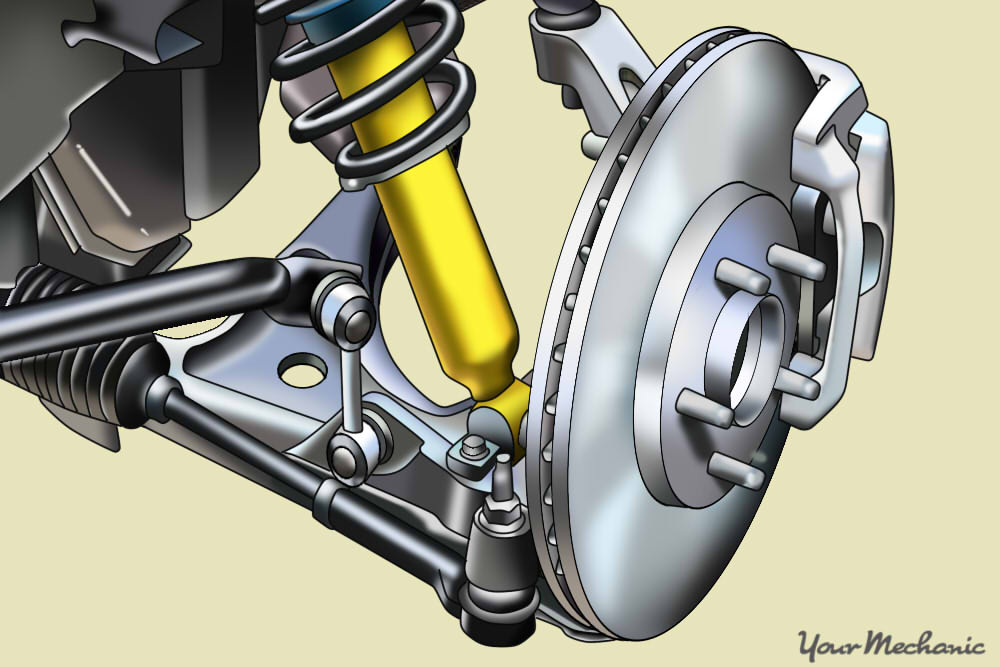
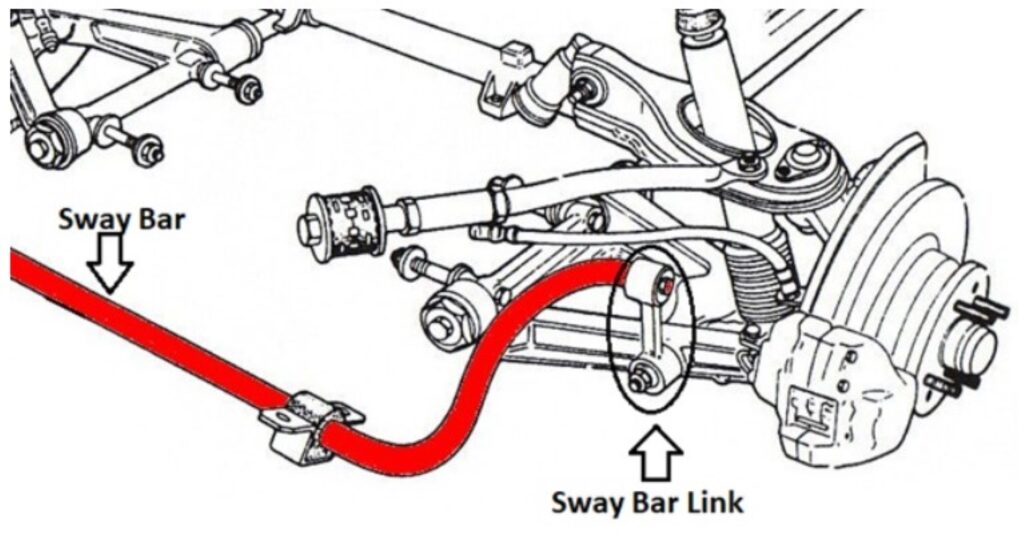
Sway Bar Links vs Sway Bar Bushings: Which One Is Causing That Clunk?
A clunk over bumps points to worn sway bar links or loose hardware; a squeak or groan points to dry or worn bushings; a rattle points to loose end link nuts or severely worn links. That is the starting hypothesis, not the verdict. Noise character alone cannot separate links from bushings — a worn bushing can clunk if the bar moves metal-to-metal inside it, and a loose link can rattle at low speed. The sound gives you a direction to test, not a part to buy.
Match the Noise to the Sway Bar Component
Use this map to form a hypothesis before you raise the vehicle:
- Clunk over bumps: sway bar links, link mounting hardware, or a bushing that has lost its grip on the bar.
- Squeak or groan: sway bar bushings that are dry, cracked, or compressed.
- Rattle at low speed: loose end link nuts or a link with severe ball-socket wear.
| Clue | Sway bar links | Sway bar bushings |
|---|---|---|
| Typical noise | Clunk over bumps; rattle at low speed | Squeak or groan; clunk if the bar moves metal-to-metal |
| Confirming test | Link stud moves in its socket under pry load | Bar shifts inside the bushing under pry load |
| Common miss | Loose link nuts or improper torque | Bushing inner diameter too large for the bar |
| Fix | Replace the link; torque to spec at ride height | Replace bushings matched to the bar's measured diameter |
The next section provides the physical test that confirms or rejects the hypothesis.
The Pry-Bar and Channel-Lock Test: Confirm the Failed Component Before You Buy Anything
With the vehicle safely raised and supported, use a pry bar or large channel locks to load the sway bar and link joints while watching and feeling for movement. A link with worn ball sockets will show play or produce a click. A bushing that has lost its grip on the bar will allow the bar to shift inside the bushing.
Test one side at a time and compare left vs right. Asymmetric movement is a strong indicator of a failed component on that side.
- If the bar moves inside the bushing under light pry load, the bushing is the confirmed suspect even if the noise sounded like a clunk.
- If the link stud moves in its socket, the link is the confirmed suspect.
Do not replace parts based on sound alone. The test result, not the noise, drives the parts decision.
Why New Sway Bar Links Can Still Clunk: Torque, Preload, and Worn Bushings
"Put in new sway bar links and now popping and clunking" is a recurring user problem, indicating that link replacement alone often does not resolve the noise. Three causes dominate:
- Improper torque on link fasteners can leave the joint loose enough to clunk.
- Preloading the suspension incorrectly during installation can distort the link and bushing geometry.
- Worn bushings that were not replaced can continue to allow bar movement and produce the same clunk the reader attributed to the links.
Other components — strut mounts, ball joints, tie rods — can produce noises that mimic sway bar clunk, so a persistent clunk after new links should trigger a broader inspection rather than another link purchase.
The correct next step after new links still clunk is to re-run the pry-bar test on the bushings and inspect torque and preload, not to replace the links again.
Bushing Inner Diameter vs Bar Outer Diameter: The Tolerance That Causes Clunks
A sway bar bushing must grip the bar. If the bushing inner diameter is too large relative to the bar outer diameter, or if the bushing has worn or compressed, the bar can shift inside the bushing and produce a clunk that sounds like a link problem.
Bushing material — rubber vs polyurethane — affects how much the bushing deflects and how much noise it transmits. Rubber is generally quieter and more compliant, while polyurethane is stiffer and can transmit more road noise and squeak if not lubricated.
When replacing bushings, matching the bushing inner diameter to the actual bar outer diameter is a fitment decision, not a generic "one size fits all" purchase. Exact dimensions vary by application, so verify the inner diameter against your bar's measured outer diameter using JS Suspension's catalog fitment data before ordering.
Sway Bar Noise or Something Else? Ruling Out Strut Mounts, Ball Joints, and Tie Rods
Strut mounts, ball joints, and tie rods can all produce clunks over bumps that overlap with sway bar noise. The pry-bar test on the sway bar is the fastest way to rule the sway bar in or out.
- If the sway bar and links show no play under pry load, move the next inspection to strut mounts, ball joints, and tie rods rather than ordering sway bar parts.
- A clunk that occurs during steering input or braking as well as over bumps is more likely to involve ball joints or tie rods than the sway bar alone.
The decision rule is: confirm the sway bar is the source before spending on sway bar parts; if it is not, redirect the diagnosis.
Replace Links, Bushings, or Both? A Cost and Decision Framework
- If the pry-bar test confirms link play only, replace the links.
- If it confirms bar movement inside the bushing only, replace the bushings.
- If both show play, replace both.
Replacing both when only one is confirmed failed adds cost without addressing the noise if the confirmed part was the sole source. Replacing only one when both are worn risks a repeat clunk.
Labor overlap is a practical consideration: if the links and bushings are both accessible in the same job, the incremental labor for doing both may be low, but the parts decision should still be driven by the test result. Parts pricing and labor time vary by vehicle and market, so confirm current figures with your JS Suspension distributor before quoting the job.
Bushing Material and Noise: Rubber vs Polyurethane from a Manufacturer's Perspective
Rubber bushings are generally more compliant and quieter but deflect more under load. Polyurethane bushings are stiffer and more durable under performance use but can transmit more noise and may squeak if not lubricated.
The noise trade-off is a design choice, not a defect. A poly bushing that squeaks is behaving as a stiffer material will, and the fix is lubrication or material reselection, not a different brand.
Material selection should follow the confirmed diagnosis: if the reader wants to eliminate a clunk with minimal noise risk, a rubber or OE-style bushing is the conservative choice. If they want reduced deflection for performance, poly is the choice with a known noise trade-off. JS Suspension catalogs both rubber and polyurethane options by application — check the product data for the exact material and fitment offered for each vehicle.
Your Next Step: Test, Confirm, Then Replace — In That Order
- Raise and support the vehicle safely, then pry-test the sway bar and links one side at a time.
- Confirm which component shows play.
- Replace only the confirmed failed component, torque fasteners correctly, and avoid preloading the suspension during installation.
- If the clunk persists, re-test bushings and inspect strut mounts, ball joints, and tie rods before buying more sway bar parts.
The most expensive mistake is replacing parts based on sound. The cheapest fix is a five-minute pry-bar test that tells you which part to buy.
If you have already replaced links and still have a clunk, the priority order is: re-check link torque, inspect bushings, check preload, then look at other suspension components.

FAQ
Can a bad sway bar bushing sound like a clunk?
Yes. A worn or compressed bushing that has lost its grip on the bar allows metal-to-metal movement, which can clunk over bumps and mimic a link problem.
I replaced my sway bar links and the clunk is still there. What now?
Re-check link fastener torque, inspect the bushings for bar movement under pry load, and verify the suspension was not preloaded during installation. If all three check out, inspect strut mounts, ball joints, and tie rods.
How do I know if I need links or bushings?
Use a pry bar or large channel locks to load the sway bar and link joints one side at a time. Link stud movement in its socket confirms the link; bar movement inside the bushing confirms the bushing.
Do I need to replace both links and bushings at the same time?
Only if both show play under the pry-bar test. Replacing both when only one is confirmed failed adds cost without addressing the noise.
Why do polyurethane bushings squeak?
Polyurethane is stiffer than rubber and can transmit more noise. A squeak is the material behaving as designed; the fix is lubrication or material reselection, not a different brand.
Related