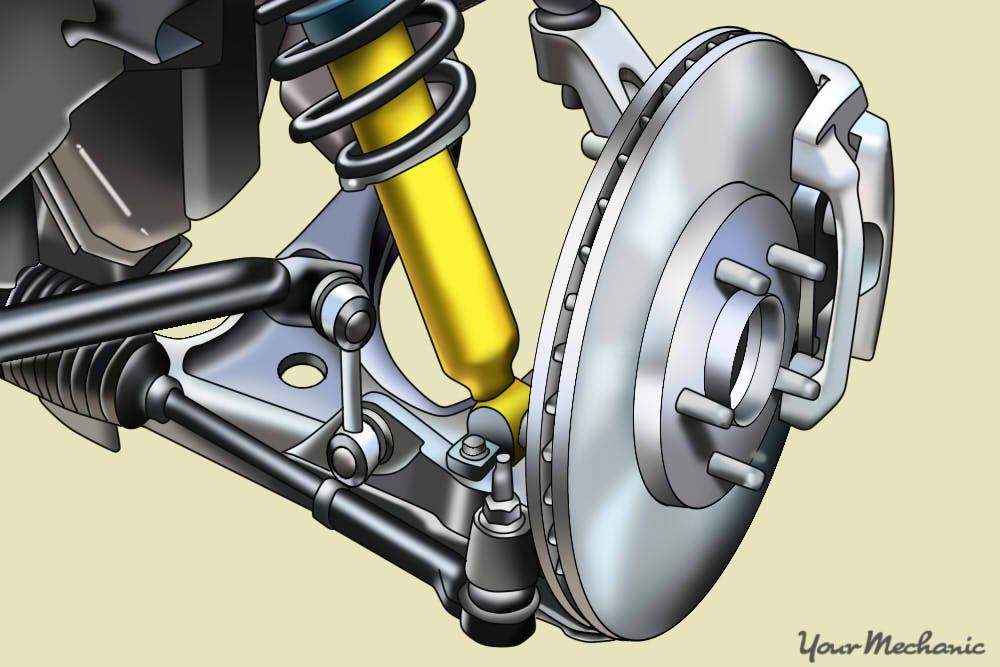
Sway Bar Link Replacement: Confirm the Clunk, Choose the Right Link, Replace It Once
A failed sway bar link produces a rhythmic clunk or knock over low-speed bumps, driveway aprons, and expansion joints — not a constant drone, not a single loud bang. That cadence is your first filter. If the noise tracks road imperfections at parking-lot speeds and fades at highway speed, the link is a prime suspect. If it hums and changes pitch with vehicle speed or cornering load, you are likely hearing a wheel bearing. If it clicks or pops during turns under power, look at the CV axle.
A worn link can also cause vague, loose steering feel and a slight change in body roll, but those symptoms overlap heavily with worn control arm bushings, strut mounts, and tie rod ends. That overlap is why so many DIYers replace links and still have the clunk. The differentiator is not the sound quality alone — it is when the sound occurs and what input triggers it.
Use this decision logic before ordering parts:
- Low-speed, uneven-surface clunk that repeats with each bump: link or sway bar bushing.
- Clunk on turn-in or over a single sharp bump, plus steering vagueness: control arm ball joint or tie rod end.
- Clunk directly under the strut tower, often felt through the body: strut mount bearing.
- Noise that changes with speed, not surface: wheel bearing or tire.
Do not assume the link is the failed part just because the noise sounds like a clunk. Confirm it with the shake test below before you spend money.
The Sway Bar Shake Test: Confirming the Link Is the Failed Part
With the vehicle safely lifted and supported on jack stands, grab the sway bar near the link attachment point and push and pull firmly. Any vertical or lateral play at the link ball joint or bushing indicates a failed link. This is the single most reliable confirmation you can perform without a lift or specialty tools.
While you are under there, inspect the link ball joint boot for cracks, grease loss, or rust-colored residue, and check the sway bar bushings for compression set or cracking at the same time. A torn boot is a confirmed failure even if play is not yet obvious — once grease escapes and water enters, the joint is on a short path to loosening.
If the link feels tight but the clunk persists, inspect control arm ball joints, strut mounts, and tie rod ends before concluding the link is the problem. A link that passes the shake test and shows no boot damage should not be replaced on suspicion alone. Replacing a healthy link adds cost and downtime without solving the noise.
For Hyundai and Kia applications, the front stabilizer link ball joint is a common wear point, and matching the correct OEM-numbered link to the chassis is the difference between a quiet repair and a repeat clunk. If you are sourcing links for a Hyundai or Kia platform, compare the Front Stabilizer Link Ball Joints — 54830-2S000 and Front Stabilizer Link Ball Joints — 54830-0Q000 references against your VIN before ordering.
Can You Drive With a Broken Sway Bar Link?
A broken or disconnected sway bar link does not cause immediate loss of control in most cases, but it does reduce roll stiffness and can change handling predictability, especially in emergency maneuvers or when the vehicle is heavily loaded. The car will still steer and stop. What changes is how it leans and how quickly weight transfers.
Driving with a broken link is a calculated risk. Short, low-speed trips to a shop are generally tolerable. Prolonged driving increases the chance of the sway bar shifting, contacting other components, or accelerating wear on the opposite side link and bushings. A bar that is free to move can also chew into a control arm or axle boot, turning a cheap repair into an expensive one.
If the link has separated completely and the sway bar is hanging or contacting the control arm or axle, do not drive. Secure the bar with wire or a strap, or tow the vehicle. The safety decision should factor in vehicle type, load, road conditions, and distance to the repair location — not a blanket yes or no. A lightly loaded commuter on surface streets is a different risk profile than a loaded SUV on a highway.
Choosing the Right Replacement Link: Metal Ball Joint vs. Rubber Bushing, Greasable vs. Sealed
Metal ball joint links offer more precise articulation and are typically preferred for performance, off-road, or regularly maintained vehicles where greasable fittings can be serviced. They tolerate repeated articulation and heavy sway bar loads better than a simple rubber bushing, and they hold their geometry as the suspension cycles.
Rubber bushing links are quieter and require no maintenance, making them a better fit for low-maintenance daily drivers — but they may wear faster under heavy load or aggressive driving. If your vehicle sees mostly commuting and you will never crawl under it with a grease gun, a sealed rubber-bushing link is the honest choice.
Greasable links allow periodic lubrication to extend service life, but they require access and discipline. Sealed links trade serviceability for convenience and are the better choice when the vehicle will not receive regular undercarriage maintenance. The failure mode of a neglected greasable link is often worse than a sealed link, because the fitting gives a false sense of protection.
OEM versus aftermarket durability varies by design and material quality. Buyers should compare construction — ball joint material, boot quality, bushing durometer — rather than assuming OEM is always longer-lasting or aftermarket is always cheaper-but-worse. A well-built aftermarket link with a proper boot and correct stud geometry can outlast a budget OEM replacement. The decision framework is: match the design to the use case, then compare construction quality within that design category.
One Side or Both? And When Does a Worn Link Justify Replacing the Whole Sway Bar Assembly?
Replace sway bar links in pairs when one side has failed. Both sides have seen identical mileage and load cycles, so the opposite link is likely at or near the same wear stage. Replacing only one side can create uneven roll stiffness and may lead to a second repair shortly after, increasing total cost and downtime.
If the sway bar bushings are compressed, cracked, or missing material, replace them at the same time as the links. Worn bushings can mimic or amplify link noise and reduce the benefit of new links. This is one of the most common missed steps: the links are replaced, the clunk persists, and the bushings were the real culprit all along.
A worn link alone rarely justifies replacing the entire sway bar. But if the bar itself is bent, heavily rusted, or the mounting brackets are damaged, the full assembly should be inspected and potentially replaced. On Hyundai and Kia platforms, the front lower ball joint and control arm bushings are also common wear items that can produce similar noises — if the shake test shows play at the ball joint rather than the link, compare the Front Lower Ball Joint — 54530-0U000 and Front Lower Ball Joint — 54530-S1AA0 references before ordering.
Step-by-Step Sway Bar Link Replacement: Tools, Jacking, and Seized Fastener Tactics
Required tools typically include a socket set, combination wrenches, a torque wrench, penetrating oil, a wire brush, and — for seized fasteners — a breaker bar, impact driver, or nut splitter. A hex or Torx bit that matches the ball stud is the tool most DIYers forget. Without it, the stud spins in its socket and the job stalls.
Safely lift and support the vehicle on jack stands at the manufacturer's recommended lift points. Never work under a vehicle supported only by a jack. Apply penetrating oil to the link fasteners and let it soak before attempting removal. Use a wire brush to clean exposed threads. Apply heat or use a nut splitter only when safe and necessary — heat near a fuel or brake line is a hard no.
If the ball joint stud spins in its socket, use a hex or Torx key to hold the stud while turning the nut. If the nut is rounded or the stud is seized beyond recovery, cut the link off and replace it. Do not reuse a damaged link. Install the new link by hand-threading fasteners first, then torque to the vehicle manufacturer's specification. Do not guess torque values, and do not rely on generic torque charts.
After the Install: Alignment, Torque, and When to Reinspect
Sway bar link replacement does not normally change alignment geometry. But if the repair involved removing or disturbing control arms, struts, or steering components, an alignment check is recommended. If you only touched the links and the sway bar, alignment is not required.
Torque all fasteners to the vehicle manufacturer's specification and recheck torque after a short drive cycle. Under-torquing causes clunks; over-torquing crushes bushings and can strip studs. Inspect the new links and sway bar bushings at every oil change or tire rotation. Look for boot cracks, grease loss, and fastener loosening. Greasable links should be lubricated at the interval recommended by the link manufacturer. Sealed links require only visual inspection.
A sway bar link replacement is a straightforward job when the diagnosis is correct and the fasteners cooperate. The two failure points are misdiagnosis and seized hardware. Confirm the link with the shake test, plan for the counterhold, and torque to spec. That sequence is what separates a repair that lasts from a repeat visit to the same clunk.
FAQ
How do I know if my sway bar link is bad?
A failed link shows vertical or lateral play at the ball joint or bushing when you push and pull the sway bar near the link attachment point with the vehicle safely lifted on jack stands. A torn boot with grease loss or rust-colored residue is also a confirmed failure, even before play develops.
Can I replace just one sway bar link?
You can, but replacing in pairs is the better decision. Both sides have seen identical mileage and load cycles, so the opposite link is likely at or near the same wear stage. Replacing one side can create uneven roll stiffness and may lead to a second repair shortly after.
Do I need an alignment after replacing sway bar links?
No, if you only touched the links and the sway bar. Alignment is recommended only if the repair involved removing or disturbing control arms, struts, or steering components.
What happens if I keep driving with a broken sway bar link?
The car will still steer and stop, but roll stiffness is reduced and handling predictability changes, especially in emergency maneuvers or when loaded. Prolonged driving increases the chance of the sway bar shifting, contacting other components, or accelerating wear on the opposite side link and bushings.
Should I buy greasable or sealed sway bar links?
Choose greasable metal ball joint links if you will service them at the recommended interval and want maximum articulation and load tolerance. Choose sealed links for low-maintenance daily drivers where regular undercarriage service is unlikely. A neglected greasable link can fail worse than a sealed one because the fitting gives a false sense of protection.