Suspension Geometry: Roll Center & Bump Steer – How to Measure and Correct on Lowered Cars
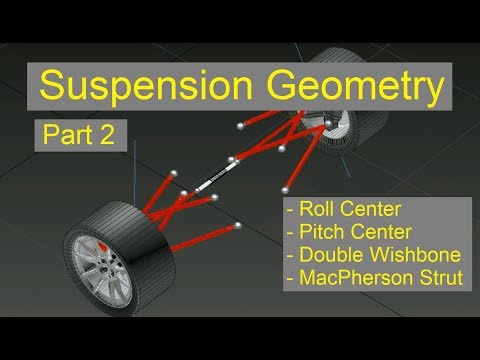
Lowering your car without correcting roll center and bump steer can lead to excessive body roll, unpredictable steering, and premature tire wear. This guide provides a practical, step-by-step approach to measuring and correcting these geometry issues, ensuring your lowered car handles safely and performs at its best.
Roll Center and Bump Steer Explained: What They Are and Why They Matter
What is Roll Center?
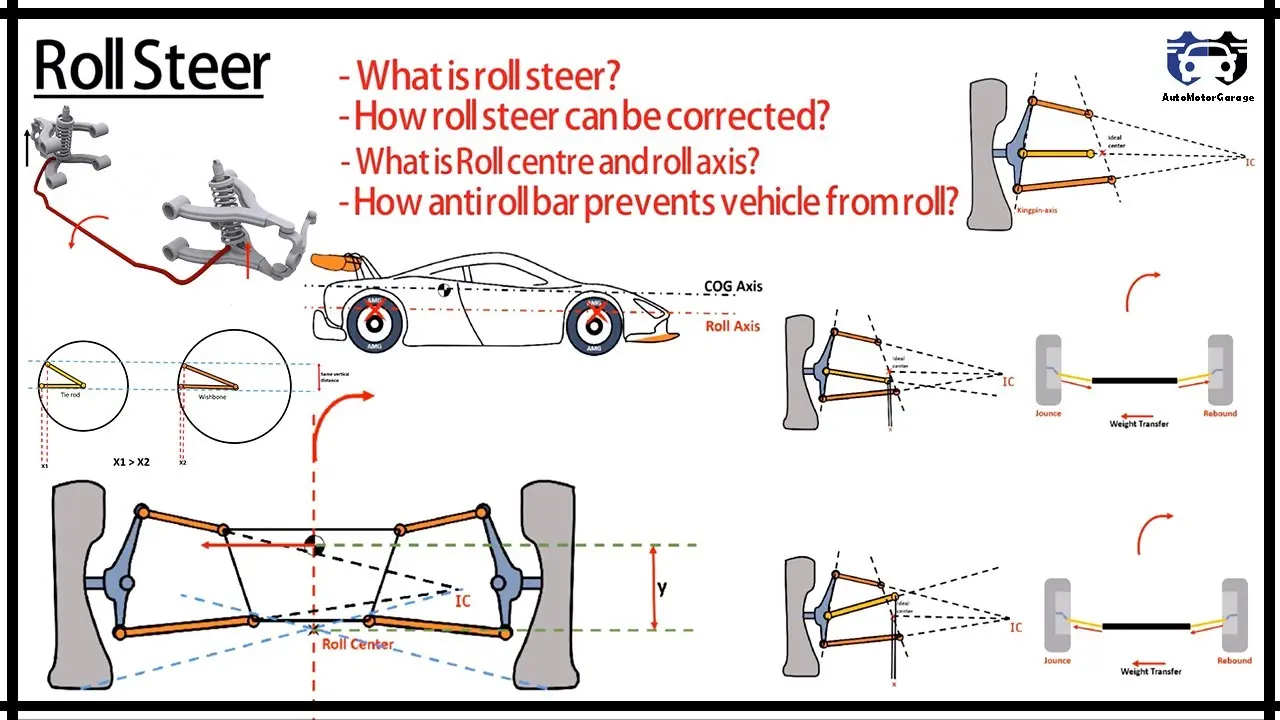
The roll center is an imaginary point, viewed from the front or rear, about which the vehicle body rolls during cornering. Its location relative to the center of gravity (CG) determines the roll moment. If the roll center is below the CG, the body will roll outward in corners. Lowering a car typically drops the roll center, increasing the distance to the CG and thus increasing body roll.
How Roll Center Affects Handling
A lower roll center increases body roll, which can cause the suspension to run out of travel, leading to reduced grip and unpredictable handling. It also shifts weight transfer, making the car feel unstable. Raising the roll center back toward the CG reduces body roll and improves responsiveness.
Roll Center Migration
Roll center is not static; it moves as the suspension compresses and extends. On a lowered car, the roll center may migrate more dramatically, causing inconsistent handling. Understanding this migration is key to diagnosing why a car feels different mid-corner.
What is Bump Steer?
Bump steer is the unwanted change in steering angle as the suspension moves up and down (bumps). It occurs when the tie rod and control arm arcs are not parallel, causing the steering arm to rotate as the suspension compresses. This makes the car pull or wander over uneven surfaces.
Effects on Vehicle Dynamics
Bump steer can cause the car to dart or veer when hitting bumps, requiring constant steering correction. It reduces driver confidence and can be dangerous at high speeds. It also accelerates tire wear and can mask other alignment issues.
How to Measure Roll Center: A Step-by-Step Guide
Measuring roll center involves locating the instant centers of the suspension and drawing lines to the tire contact patches. Here’s a practical method:
- Tools needed: flat surface, jack stands, plumb bobs, chalk or tape, tape measure, and a calculator.
- Preparation: Ensure the car is at ride height with driver weight or equivalent. Place on a level surface.
- Measure suspension pickup points: For the front, measure the upper and lower control arm pivot points (or strut top and lower ball joint for McPherson). Record distances from the ground and from the vehicle centerline.
- Calculate instant centers: For each side, draw lines through the upper and lower pivot points (or strut axis and lower control arm). The intersection is the instant center.
- Determine roll center: Draw a line from each instant center to the opposite tire contact patch. The intersection of these two lines is the roll center. Measure its height from the ground.
Repeat for the rear if applicable. Compare to the CG height (typically around 18-22 inches for passenger cars). If the roll center is significantly lower than stock, correction is needed.
How to Measure Bump Steer: Tools and Procedure
Measuring bump steer requires a dial indicator or a bump steer gauge. Here’s a step-by-step procedure:
- Tools needed: bump steer gauge (or dial indicator with mounting fixture), jack, jack stands, and a way to cycle the suspension.
- Preparation: Secure the car on stands with the suspension at full droop. Remove the springs or disconnect the sway bar to allow free movement.
- Set up the gauge: Attach the gauge to the hub or spindle, with the dial indicator contacting a flat surface on the chassis or a reference plate.
- Cycle the suspension: Use a jack to slowly compress the suspension in increments (e.g., 1 inch at a time). Record the toe change (dial reading) at each height.
- Record data: Plot toe change vs. suspension travel. Ideally, the toe should remain constant (zero bump steer). Any change indicates bump steer.
Interpreting Results: If toe changes more than 0.5° over 2 inches of travel, correction is recommended. Note that bump steer is often worse on lowered cars due to altered geometry.
Correcting Roll Center: Adjustable Parts and Methods
Roll center correction involves raising the roll center back to an optimal height. Common methods include:
- Roll center adjusters: These are extended ball joints or adjustable control arms that raise the pivot points. For McPherson struts, extended lower ball joints are popular. For double wishbone, adjustable upper or lower arms can be used.
- Spindle modifications: Some vehicles can use custom spindles that raise the steering arm and ball joint locations.
- Camber plates: On McPherson struts, adjustable camber plates can slightly alter the strut angle, but they are not a primary roll center correction.
When selecting parts, consider the amount of drop and the intended use. For street cars, a modest correction may suffice; for track use, more aggressive correction may be needed.
Correcting Bump Steer: Kits and Adjustments
Bump steer correction aims to make the tie rod arc match the control arm arc. Options include:
- Adjustable tie rod ends: These allow you to change the tie rod length and angle to align with the control arm.
- Bump steer kits: These typically include relocation brackets or spacers that move the steering rack or tie rod attachment point.
- Rack spacers: On some vehicles, lowering the steering rack can correct bump steer.
Installation usually requires measuring bump steer before and after to fine-tune. For example, if the tie rod is too high, lowering the rack or using a different tie rod end can help.
Suspension Types Compared: McPherson Strut vs. Double Wishbone
McPherson strut and double wishbone suspensions have different characteristics regarding roll center and bump steer.
- McPherson strut: The strut acts as the upper control arm, and the lower control arm is the only lateral link. This design has a higher roll center but is more prone to bump steer because the steering axis is defined by the strut, which can change angle with suspension travel. Correction often involves camber plates and lower control arm adjustments.
- Double wishbone: With two control arms, the geometry can be more precisely controlled. Roll center and bump steer can be optimized through arm lengths and angles. Correction often uses adjustable ball joints or arms.
For lowered cars, double wishbone systems are generally easier to correct, but McPherson struts can be improved with the right parts.
Roll Center and Bump Steer vs. Other Alignment Specs: Camber, Toe, and Caster
Roll center and bump steer do not operate in isolation. They interact with camber, toe, and caster:
- Camber: As the suspension compresses, camber changes. A lowered car may have excessive negative camber, which can be adjusted with camber plates or arms. Roll center affects how much camber changes during roll.
- Toe: Toe settings affect straight-line stability and cornering. Bump steer is essentially unwanted toe change, so proper toe adjustment is critical.
- Caster: Caster affects steering feel and self-centering. It also influences camber gain during cornering.
A holistic alignment is necessary. For example, if you raise the roll center, you may need to adjust camber to maintain tire contact patch. Always perform a full alignment after any geometry correction.
When to Correct and When to Leave It: Expert Advice
Not every lowered car needs roll center and bump steer correction. Here’s a guideline:
- If you lower more than 1-2 inches: Correction is usually necessary to maintain safe handling.
- If you only lower slightly (under 1 inch): The effects may be minimal, and you might not notice a difference.
- If you track your car or drive aggressively: Correction is critical for performance and safety.
- If you are unsure: Consult with a professional suspension shop. They can measure your geometry and recommend the right parts.
Remember, every car is different. A 1-inch drop on a sports car may have less impact than on a truck. Always test drive after any changes to ensure the handling is predictable.
Frequently Asked Questions
Q: How much does it cost to correct roll center and bump steer?
A: Costs vary widely. Roll center adjusters can range from $100 to $500, while bump steer kits may cost $200 to $600. Installation adds labor if you don't DIY.
Q: Can I correct bump steer by adjusting the tie rod ends?
A: Yes, adjustable tie rod ends can help, but they must be set correctly. Measuring bump steer before and after is essential.
Q: Will correcting roll center affect ride quality?
A: It can, as raising the roll center may increase harshness over bumps. However, the handling benefits often outweigh the ride trade-off for performance-oriented drivers.
Q: Do I need to correct both front and rear?
A: Ideally, yes. The front affects steering, but the rear can cause instability if its roll center is too low. Many kits focus on the front, but rear correction may be needed for balanced handling.
Conclusion
Lowering your car can dramatically improve looks and handling, but only if you address suspension geometry. Roll center and bump steer are critical factors that, when ignored, can make your car unsafe and unpredictable. By measuring and correcting these parameters, you can enjoy the benefits of a lowered car without the drawbacks. Whether you're a DIY enthusiast or a professional, understanding these concepts is essential for any serious suspension work.