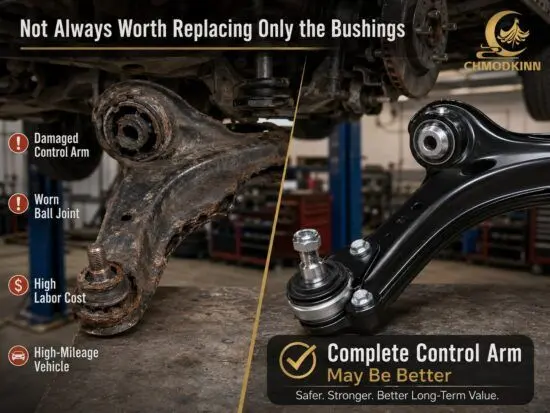
Suspension Bushing Replacement: What Changes After Installation
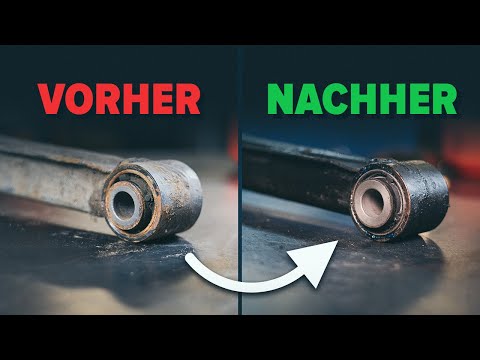
Replacing worn suspension bushings immediately restores ride comfort, sharpens handling, and eliminates clunks and squeaks. The difference is often dramatic: the vehicle feels tighter, more responsive, and quieter. However, the full benefits depend on correct installation techniques—especially torque specs and preload reset—and a proper wheel alignment. This guide explains the post-installation changes, the critical steps to avoid premature failure, and how to choose between rubber and polyurethane bushings.
Immediate Changes After Bushing Replacement: What to Expect
Within the first few miles, you'll notice three key improvements: ride comfort, handling precision, and noise reduction. Worn bushings allow excessive movement in the suspension, transmitting harshness and vibration into the cabin. New bushings dampen these forces, resulting in a smoother, more controlled ride. Steering response becomes immediate and accurate, as the suspension geometry is held firmly in place. Clunks, squeaks, and rattles from worn bushings disappear, restoring a quiet cabin.
However, if you choose polyurethane bushings, expect increased noise, vibration, and harshness (NVH) compared to rubber. Polyurethane is stiffer and transmits more road feedback, which some enthusiasts appreciate but daily drivers may find intrusive. This trade-off is crucial to consider before installation.
The Critical Step: Torque Specs and Preload Reset
The most common cause of premature bushing failure is improper torque or preload. Bushings are designed to operate within a specific range of twist. If you tighten the bolts while the suspension is hanging (unloaded), the bushing is twisted when the vehicle is lowered to the ground. This constant tension tears the bushing, leading to rapid wear and failure.
Always torque bushing bolts to the manufacturer's specifications with the suspension at normal ride height—wheels on the ground. This resets the preload, ensuring the bushing is in its neutral position during normal driving. Use a torque wrench to avoid over-tightening, which can damage the bushing or its mounting. If the bushing has an offset or directional design, ensure correct orientation before tightening.
Step-by-Step Replacement Process: A Technical Guide
Preparation
Gather the necessary tools: jack, jack stands, torque wrench, socket set, bushing press or removal tool, and safety glasses. Purchase the correct replacement bushings—either OEM rubber or aftermarket polyurethane—ensuring they match your vehicle's year, make, and model. For Hyundai and KIA vehicles, our Rear Trailing Arm Bushing and Large suspension bushing are direct replacements.
Removal
- Safely lift the vehicle and support it on jack stands.
- Remove the wheel and any components obstructing access to the bushing.
- Use a bushing press or puller to remove the old bushing. If it's seized, apply penetrating oil and let it soak. Avoid using heat unless absolutely necessary, as it can damage surrounding components.
Installation
- Clean the mounting surface thoroughly to ensure a proper fit.
- If the bushing requires lubrication (check manufacturer instructions), apply a thin coat of rubber grease or polyurethane lubricant.
- Press the new bushing in using a press tool, ensuring it is aligned correctly and seated fully. Do not hammer it in, as this can damage the bushing.
- Reinstall all components, but do not fully tighten the bushing bolts yet.
Final Steps
- Lower the vehicle so the suspension is at normal ride height.
- Torque all bushing bolts to spec using a torque wrench.
- Perform a wheel alignment (see section below).
- Test drive to verify proper operation.
Rubber vs. Polyurethane: Choosing the Right Bushing Material
Rubber bushings are the OEM standard, offering a quiet, comfortable ride and good vibration isolation. They are ideal for daily drivers and those prioritizing comfort. However, rubber degrades over time, especially with exposure to oil, heat, and road salt, leading to cracks and tears.
Polyurethane bushings are firmer, providing better handling and longer lifespan. They resist oil and abrasion, making them suitable for performance or off-road use. The trade-off is increased NVH—you'll feel more road imperfections and hear more noise. Additionally, polyurethane may require periodic lubrication to prevent squeaking.
Decision framework: Consider your priorities. If comfort is paramount and you drive mainly on highways, stick with rubber. If you value precise handling and don't mind a firmer ride, polyurethane is the better choice. Also, check for warranty implications—some manufacturers may not cover aftermarket bushings.
Why Wheel Alignment Is Mandatory After Bushing Replacement
Replacing bushings can alter suspension geometry, even if only slightly. This misalignment leads to uneven tire wear, vehicle pulling, and poor handling. A wheel alignment ensures all four wheels are set to the manufacturer's specifications, maximizing tire life and ensuring predictable handling.
When to get an alignment: Immediately after bushing replacement, or as soon as possible. Driving with misaligned wheels for even a short distance can cause premature tire wear. Find a reputable shop with modern alignment equipment, such as a Hunter machine, to ensure accurate readings.
Break-In Period: What to Expect and How to Drive
New bushings may feel stiff initially and settle after a few hundred miles. During this break-in period, avoid aggressive driving, hard cornering, or carrying heavy loads. This allows the bushings to adapt to their operating position and ensures even wear.
Listen for any unusual noises, such as squeaks or clunks, which may indicate improper installation or insufficient lubrication. If you hear anything, inspect the bushings and torque specs. Some manufacturers recommend re-torquing bolts after break-in—check your service manual.
Long-Term Durability and Maintenance Tips
To maximize the lifespan of your new bushings, regularly inspect them for cracks, tears, or excessive play. Keep suspension components clean and free from debris and corrosive materials, especially if you drive in harsh conditions. Consider upgrading to polyurethane for longer life if you frequently drive on rough roads or off-road.
Follow the manufacturer's maintenance schedule and replace bushings as needed. Using quality parts, like our Rear Trailing Arm Bushing or Control Arm, ensures reliable performance. For more information about our manufacturing and quality control, visit our manufacturing facility and quality control pages.
FAQ
How long do new bushings last?
Rubber bushings typically last 50,000 to 100,000 miles, while polyurethane can last longer, depending on driving conditions.
Can I replace bushings myself?
Yes, with the right tools and mechanical knowledge. However, pressing out old bushings can be challenging without a press. If you're unsure, consult a professional.
Do I need to replace all bushings at once?
It's recommended to replace bushings in pairs (e.g., both front control arms) to maintain balanced handling.
What are signs of worn bushings?
Common symptoms include clunking noises, excessive play in the suspension, uneven tire wear, and vague steering.
Is it okay to drive with worn bushings?
It's not recommended, as it can lead to poor handling and increased wear on other components.
For more information about our products, visit our automotive suspension components page or learn more about our company.