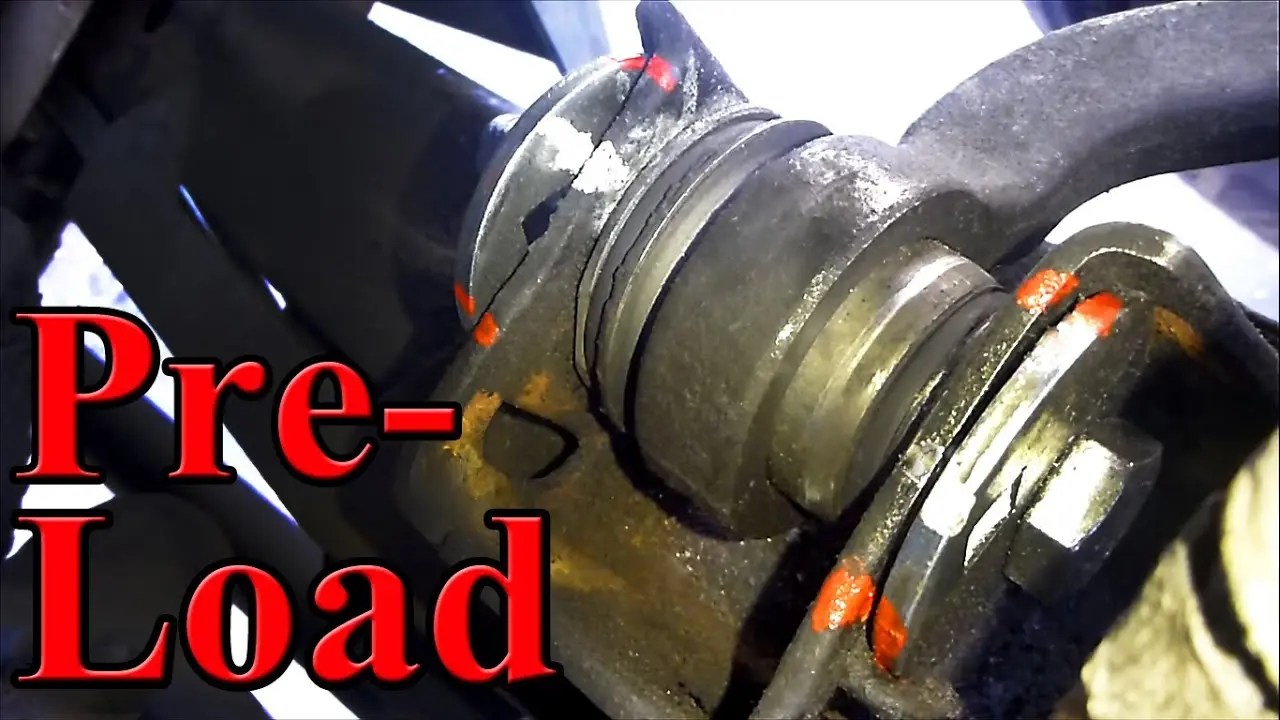
Suspension Bushing Preload: Why Torquing at Ride Height Prevents Memory Steer and Uneven Tire Wear

Preload is not a torque number you look up. It is a condition — torsional stress locked into a suspension bushing when its fasteners are tightened while the suspension hangs at full droop instead of sitting at curb weight. The torque wrench may click at the correct value, but the bushing is now twisted away from its designed neutral angle. Torquing at ride height prevents that stored twist. Get the procedure right and the bushing lasts; get it wrong and you induce memory steer, uneven tire wear, and premature failure that no alignment can fully correct.
Why OEMs Specify Torque at Ride Height
Reader problem: You have the torque spec, but you do not know why the service manual insists on ride height. Decision: Whether to trust the procedure or shortcut it on a two-post lift.
OEMs specify torque at ride height because that is where the bushing sits at its designed neutral angle. Tightening there means suspension travel moves the bushing symmetrically in both directions — compression and rebound each rotate the rubber or sleeve equally from center. The bushing works within its intended range.
Rubber bushings are bonded to inner and outer sleeves during manufacturing. That bond defines a neutral clock position. Tighten the fastener with the suspension at full droop and the rubber is pre-twisted. As the car settles, the rubber fights to return to its molded position, causing memory steer and eventual bond failure. The same torque value that is correct at ride height becomes destructive at droop.
Polyurethane bushings use a rotating sleeve, but the sleeve must still be clamped at ride height. The arm's pivot axis and the bushing's rotation axis need to align at static load. If they don't, the polyurethane binds against the sleeve, generating friction and heat that accelerate wear.
The question "Is preload really necessary on a 2006 Camry?" reflects a common misconception that some vehicles are exempt. The physics applies to any bonded or clamped bushing. Vehicle-specific torque values vary, but the principle — tighten at ride height — does not.
Where to Find Your Spec
There is no universal bushing preload number. Torque values come from three source types:
- OEM service manual (FSM): The factory procedure for your platform, including the ride-height condition and any sequence requirements.
- Technical Service Bulletins (TSBs): Updates or corrections to the original procedure, often for known preload-related complaints.
- Aftermarket bushing manufacturer instructions: Polyurethane and spherical kits frequently specify different torque values and require a bind check after installation.
If you cannot find a spec, do not guess. The procedure — loosen, settle at curb weight, torque to the manufacturer's value — matters more than the number itself.
Rubber vs. Polyurethane vs. Spherical: How Material Changes the Preload Decision
Reader problem: You are choosing a bushing material or have already installed one and need to know how it behaves under preload. Decision: Which material fits your use case and what post-installation check it requires.
Rubber Bushings
Rubber bushings are the most sensitive to preload. Bonded elastomer flex means wrong clocking directly causes memory steer, tearing, and uneven tire wear. Once the rubber bond tears, there is no aftermarket adjustment — replacement is the only fix. Inspect for cracks and separation after any suspension work.
Polyurethane Bushings
Polyurethane bushings rotate on a sleeve, so they tolerate more misalignment than rubber. But they still bind if over-torqued or torqued off-load. After torquing at ride height, cycle the suspension through its travel and check for bind or abnormal resistance. If the arm does not move freely, inspect sleeve length and torque spec. The myth that polyurethane never needs preload attention is false — it simply fails differently.
Spherical Bearings
Spherical bearings do not carry torsional preload but change NVH and service life. Incorrect clocking can limit articulation and accelerate wear. They are best suited to track or performance applications where NVH is acceptable. For street-driven vehicles, rubber or polyurethane is usually the better choice.
The question "How to set preload on upper control arm bushings?" often arises after installing polyurethane or spherical components. The procedure differs from rubber: you are not just torquing a bolt, you are verifying that the sleeve rotates freely through the suspension's travel range.
Step-by-Step: Torquing Bushings at Ride Height
Reader problem: You need to set preload correctly with the tools you have. Decision: Which method — ramps, drive-on lift, or jack stands — actually loads the suspension at curb weight.
Ramps or a drive-on lift are preferred because they load the suspension at curb weight on the tires. This is the most accurate way to simulate ride height. If you do not have ramps, jack stands placed under the control arms can work, but you must ensure the suspension is compressed to its normal ride height, not hanging.
Loosen the fasteners first, then bounce the suspension to settle it. This allows the bushings to find their neutral position. Then torque to spec with the vehicle at curb weight. Do not torque at full droop on a two-post lift — that is the most common cause of preload.
For polyurethane and spherical setups, cycle the suspension through its travel after torque and check for bind or abnormal resistance. If the arm does not move freely, inspect for incorrect sleeve length or over-torque. Re-check after a short test drive.
Practical Notes from the Bay
A crows-foot adapter changes effective torque because it extends the lever arm. If you use one to reach a tight fastener, recalculate the wrench setting or you will under- or over-torque the bushing. Ramps also change the load path compared to a drive-on lift — the tire contact patch is the same, but the approach angle can shift weight distribution slightly. For most passenger cars and light trucks, the difference is negligible, but on lowered vehicles with limited clearance, ramps may be the only way to get under the car at ride height without a drive-on lift.
Diagnosing Preload Symptoms
Reader problem: You have vague steering, memory steer, or uneven tire wear after a bushing job and need to know whether it is preload or something else. Decision: Whether to re-clock the bushing, replace it, or look elsewhere.
Use this table to map symptoms to likely causes and next actions.
| Symptom | Likely Cause | Next Action |
|---------|--------------|-------------|
| Memory steer (car pulls in direction of last steering input) | Rubber bushing twisted off-load | Loosen fasteners, settle at ride height, re-torque. If persists, inspect for torn bond. |
| Uneven tire wear that alignment cannot correct | Bushing holding suspension at wrong angle | Re-clock bushing at ride height. If wear pattern remains, replace bushing. |
| Vague steering | Preloaded bushing fighting return-to-center | Re-check preload. If polyurethane, check for bind. |
| Squeaks or binding after polyurethane install | Sleeve misalignment or over-torque | Cycle suspension, inspect sleeve length and torque spec. |
| Premature bushing failure | Torn rubber bond or worn sleeve | Replace bushing. Re-torque at ride height. |
Memory steer — where the car pulls in the direction of the last steering input — is a classic sign of rubber bushings twisted off-load. The rubber is trying to return to its molded position, and that force steers the car. At parking-lot speed, it feels like the steering wheel has a memory of the last turn.
Uneven tire wear that alignment cannot correct often indicates the bushing is holding the suspension at a different angle than designed. If the camber or toe curve is off because the bushing is preloaded, no alignment spec will fix it. The bushing must be re-clocked.
If symptoms appear after a bushing job, re-check preload before replacing bushings or alignment components. Loosen the fasteners, settle the suspension at ride height, and re-torque. If the symptoms persist, inspect for torn rubber or binding polyurethane.
"I Torqued at Droop Years Ago and Nothing Happened"
Reader problem: You did the job wrong and it seems fine. Decision: Whether to redo it or leave it alone.
Inspect the bushing for bond separation (rubber pulling away from the sleeve), uneven sleeve wear patterns, and uneven inner/outer shoulder contact. If the bushing is intact and you have no symptoms, re-clocking is optional. If you see any of those signs, or if you have memory steer or uneven tire wear, re-clock the bushing at ride height. If the bond is torn or the sleeve is worn, replacement is the only fix.
Designed-In Preload vs. Unintended Torsional Preload
Reader problem: You have heard that some preload is designed in and wonder if your bushing is supposed to be twisted. Decision: Whether to eliminate all preload or only unintended preload.
Caster and camber curves, anti-dive, and anti-squat are designed into the suspension geometry. They are not the same as torsional bushing preload. These are intentional angles and force vectors built into the arm and mounting points to control handling and stability.
The goal is to avoid unintended torsional preload at static ride height, not to eliminate all preload from the system. Some OEM designs intentionally clock the bushing to achieve a specific behavior under load. That is different from the random twist caused by torquing at droop.
Aftermarket bushings may change the designed-in preload characteristics. Stiffer polyurethane can alter the effective spring rate and anti-roll behavior. Checking for bind after installation is critical. If the bushing does not allow the suspension to move freely through its intended range, the geometry is compromised.
The question "What are the preload values for a Honda Civic FN3 Type S?" suggests readers confuse alignment specs with bushing preload. Alignment specs are measured in degrees; bushing preload is a condition, not a number. There is no preload value to look up — only a procedure to follow.
What to Do Next
Reader problem: You suspect preload but do not know the first step. Decision: Re-check preload before alignment, or replace bushings.
If you suspect preload, re-check the torque-at-ride-height procedure before getting an alignment. Alignment cannot correct torsional preload. If the bushing is twisted, the alignment machine will read the resulting angles as if they were static, and the car will still drive poorly.
If bushings are torn or deformed from preload, replacement is required. If they are intact, re-torquing at ride height may resolve symptoms. For polyurethane and spherical setups, verify no bind after re-torque. If bind persists, inspect for incorrect sleeve length or over-torque.
The user question "What happens if you don't preload bushings?" is answered by the consequence chain: memory steer, uneven wear, premature failure. The fix is procedural, not parts-based. Re-clocking the bushing at ride height is the first step. If that fails, replacement is the next.
When replacing bushings, choose the material that matches your use case. Rubber for stock ride and NVH. Polyurethane for performance with some NVH trade-off. Spherical for track use where NVH is secondary. Regardless of material, torque at ride height.
FAQ
Do I really need to torque bushings at ride height?
Yes. Torquing at ride height ensures the bushing sits at its designed neutral angle. Torquing at full droop locks in torsional preload, leading to memory steer, uneven tire wear, and premature failure. If you already torqued at droop, inspect for bond separation or uneven sleeve wear before deciding whether to redo the job.
Can I torque polyurethane bushings off-load?
No. Polyurethane bushings rotate on a sleeve, but if clamped off-load, the sleeve's rotation axis misaligns with the arm's travel arc. This causes binding, squeaks, and uneven wear. Always torque at ride height and check for bind by cycling the suspension through its travel.
What are the symptoms of incorrect preload?
Memory steer (pulling after turns), uneven tire wear that alignment cannot fix, vague steering, and premature bushing failure. If these appear after a bushing job, re-check preload before replacing parts. At parking-lot speed, memory steer feels like the steering wheel remembers the last turn.
How do I torque bushings at ride height without a drive-on lift?
Use ramps or jack stands placed under the control arms to compress the suspension to curb weight. Loosen fasteners, bounce the suspension to settle, then torque to spec. Never torque at full droop on a two-post lift. If you use a crows-foot adapter, recalculate the torque setting.
Is preload the same as alignment?
No. Alignment specs are measured in degrees. Bushing preload is a condition — a torsional stress locked into the bushing. There is no preload value to look up, only a procedure to follow. Alignment cannot correct preload.
Do spherical bearings need preload?
Spherical bearings do not carry torsional preload, but incorrect clocking can limit articulation and accelerate wear. They are best for track use. For street, rubber or polyurethane is usually better. After installation, cycle the suspension and check for bind.