Steering Knuckle Replacement: Confirm the Damage Before You Buy the Part
A steering knuckle only needs replacement when it is structurally compromised — bent, cracked, or has damaged mounting points. It is not a wear item, and the symptoms that send most people down this path (clunks, a pull, uneven tire wear) are far more often caused by ball joints, wheel bearings, tie rod ends, or control arm bushings.
That distinction drives every decision in this guide. A worn ball joint can be adjusted back into spec. A bent or cracked knuckle cannot. Once the geometry is compromised, the part is structurally failed, and no repair procedure restores it to safe service in a street-driven vehicle.
What the Steering Knuckle Actually Does — and Why It Doesn't Wear Out
The knuckle is a forged or cast steel component that carries the wheel hub, brake caliper, and steering arm. It has no wear surface, no bushing, and no service interval. It fails from impact or fatigue, not gradual wear.
This is why the knuckle is often overlooked until proven otherwise. Confirm structural damage through measurement before buying any part.
How to Confirm a Bent or Damaged Knuckle Through Inspection and Measurement
Visual inspection: what to look for
Start with impact evidence. Look for curb strikes, fresh scrapes on the knuckle or wheel, and any visible bend at the steering arm or strut mounting ears. Cracks are rare but possible near welds or high-stress radii. If the vehicle has hit a curb hard enough to bend a wheel, the knuckle is a candidate for inspection.
Measurement: the confirmation step
Use a straightedge, dial indicator, or alignment rack to check camber and caster against the factory spec. A bent knuckle typically shows as a camber or caster reading that cannot be brought into spec with normal adjustment. If the alignment technician runs out of adjustment range on one side, the knuckle is the prime suspect.
A quick field check: place a straightedge across the machined hub face and sight along the strut mounting ears. Any visible gap or misalignment suggests a bend. For a more precise threshold, consult the vehicle's service manual — camber deviation beyond the factory adjustment range (often around ±0.5° to 1.0°, but vehicle-specific) indicates a bent knuckle. Without a published spec, any detectable play or inability to achieve alignment is a fail.
Isolating the knuckle from other components
A worn wheel bearing will show play when the wheel is rocked at 12 and 6 o'clock. A worn tie rod end will show play at 3 and 9 o'clock. A worn ball joint will show play at 12 and 6 o'clock with the suspension loaded or unloaded depending on design. The knuckle itself should not move relative to the strut or hub when these tests are done correctly. If the knuckle passes visual and measurement checks, the problem is elsewhere — do not replace it.
Pass/fail threshold: Any detectable play at the knuckle-to-strut or knuckle-to-hub interface exceeds spec. For a numeric tolerance, refer to the vehicle's service manual; typical maximum allowable play is often less than 0.5 mm, but this is vehicle-specific and must be looked up.
Repair vs. Replace: When a Knuckle Can Be Reused and When It Cannot
A knuckle that is bent, cracked, or has damaged mounting ears or steering arms must be replaced. There is no safe repair procedure for a compromised knuckle in a street-driven vehicle. This is non-negotiable.
A knuckle can be reused if it is verified straight and undamaged, and the reason for the repair is a worn hub, bearing, ball joint, or brake component that mounts to it. In that case, the knuckle is a carrier — you replace the worn component, not the structural part.
Corrosion is a gray area. Surface rust is normal. Heavy scaling that reduces section thickness or compromises the ball joint pinch bolt area may justify replacement even if the knuckle is geometrically straight. If the pinch bolt area is severely corroded, the clamping force that secures the ball joint can be compromised.
The decision is binary: if the knuckle is structurally compromised, replace it. If it is not, reuse it and replace the worn component.
Bare Knuckle vs. Loaded Assembly: Cost, Labor, Tools, and Alignment Trade-Offs
Bare knuckle
Lower parts cost, but requires pressing the old hub and bearing out and the new ones in, or transferring them if reused. This requires a press or hub tool, and risks bearing damage during removal. Best when the existing hub and bearing are known-good and labor rates are low.
Loaded assembly
Higher parts cost, but eliminates bearing and hub pressing, reduces labor time, and often includes a new ball joint. Best when the existing hub and bearing are high-mileage, when labor access is difficult, or when the vehicle is a daily driver that needs to be back on the road quickly.
Alignment implications
The knuckle determines camber and caster, so an alignment is mandatory after either option.
Tool requirements
A bare knuckle swap often needs a shop press or hub grappler. A loaded assembly swap can be done with hand tools in many cases, though rust and seized fasteners can still require impact tools.
What Steering Knuckle Replacement Actually Costs — and Why Regional Rates Matter
Parts cost: a bare knuckle is typically less expensive than a loaded assembly. The spread depends on vehicle make, model, and whether the knuckle is OEM, aftermarket, or used. Exact pricing depends on vehicle and location. As a reference, aftermarket bare knuckles often range from $80 to $250, while loaded assemblies can run $200 to $600, but these are illustrative and not a quote.
Labor cost: book time for a knuckle replacement varies by vehicle. A loaded assembly often carries a lower labor time because it eliminates bearing and hub pressing. Regional labor rates vary widely — urban shops charge more than rural shops, and dealership rates are typically higher than independent shops. Typical labor rates range from $80 to $150 per hour, but confirm locally.
Alignment cost: a four-wheel alignment is mandatory after knuckle replacement and should be budgeted as a separate line item, often $80 to $150.
Total cost formula: (Parts cost) + (Labor hours × Shop rate) + (Alignment cost) = Total. Example: a $150 bare knuckle + 3 hours × $100/hr + $100 alignment = $550. A $400 loaded assembly + 1.5 hours × $100/hr + $100 alignment = $650. In this example, the bare knuckle is cheaper only if the existing hub and bearing are reused without issue. Get quotes for both options in your labor market.
Why an Alignment Is Mandatory — and How the Knuckle Affects Camber, Caster, and Toe
The knuckle is the mounting point for the strut, hub, and steering arm. Its geometry directly sets camber and caster, and indirectly affects toe through the steering arm position.
Even a small deviation in knuckle geometry — from manufacturing tolerance or installation — can push camber or caster out of spec. An alignment is the only way to verify and correct this.
Skipping the alignment can cause uneven tire wear, a pull, and off-center steering. In severe cases, it can accelerate wear on other suspension components.
The alignment should be a four-wheel alignment, not a front-only toe-and-go, because the rear thrust angle affects how the front alignment behaves.
Installation Pitfalls That Turn a Knuckle Job into a Comeback
Ball joint boot damage
When separating the ball joint from the knuckle, a pickle fork or improper tool can tear the boot. If the boot is torn, the ball joint will fail prematurely. Use a proper separator and inspect the boot before reassembly.
Improper torque
The ball joint nut, strut bolts, and brake caliper bolts all have specific torque specs. Under-torquing can cause loosening; over-torquing can strip threads or deform the knuckle. Always use a torque wrench and the factory spec. As a general reference, ball joint nuts often require 40–60 ft-lbs, strut bolts 100–150 ft-lbs, and caliper bolts 80–120 ft-lbs, but these are vehicle-specific and must be verified.
Rust-related seizure
In salt-belt regions, the knuckle-to-strut and knuckle-to-ball joint connections can seize. Penetrating oil, heat, and patience are required. Forcing the parts apart can damage the knuckle or the mating components.
Bearing damage during removal
If reusing the hub and bearing, pressing them out of a bare knuckle can damage the bearing races. If the bearing is high-mileage, replace it rather than risk a premature failure.
OEM vs. Aftermarket vs. Used: Choosing a Knuckle That Fits the Job
OEM
Guaranteed fit and material consistency, but highest cost. Best for late-model vehicles, warranty-sensitive repairs, or when the vehicle is kept long-term.
Aftermarket
Quality varies by manufacturer. Look for knuckles made from the same material and process (forged or cast) as OEM, with a warranty that covers fit and function. Avoid unbranded or no-warranty parts for a structural component. To identify forged vs. cast: forged knuckles typically have smooth, contoured surfaces with no parting lines, while cast knuckles show a visible parting line from the mold and a rougher texture. Forged is generally stronger and more fatigue-resistant, which matters for a safety-critical part.
Used
Lowest cost, but unknown history. A used knuckle may be bent or fatigued from the accident that sent the donor vehicle to the salvage yard. Only consider used if it can be measured for straightness and inspected for cracks before installation.
Warranty considerations
A structural part warranty should cover defects in material and workmanship. Labor reimbursement policies vary — check before buying.
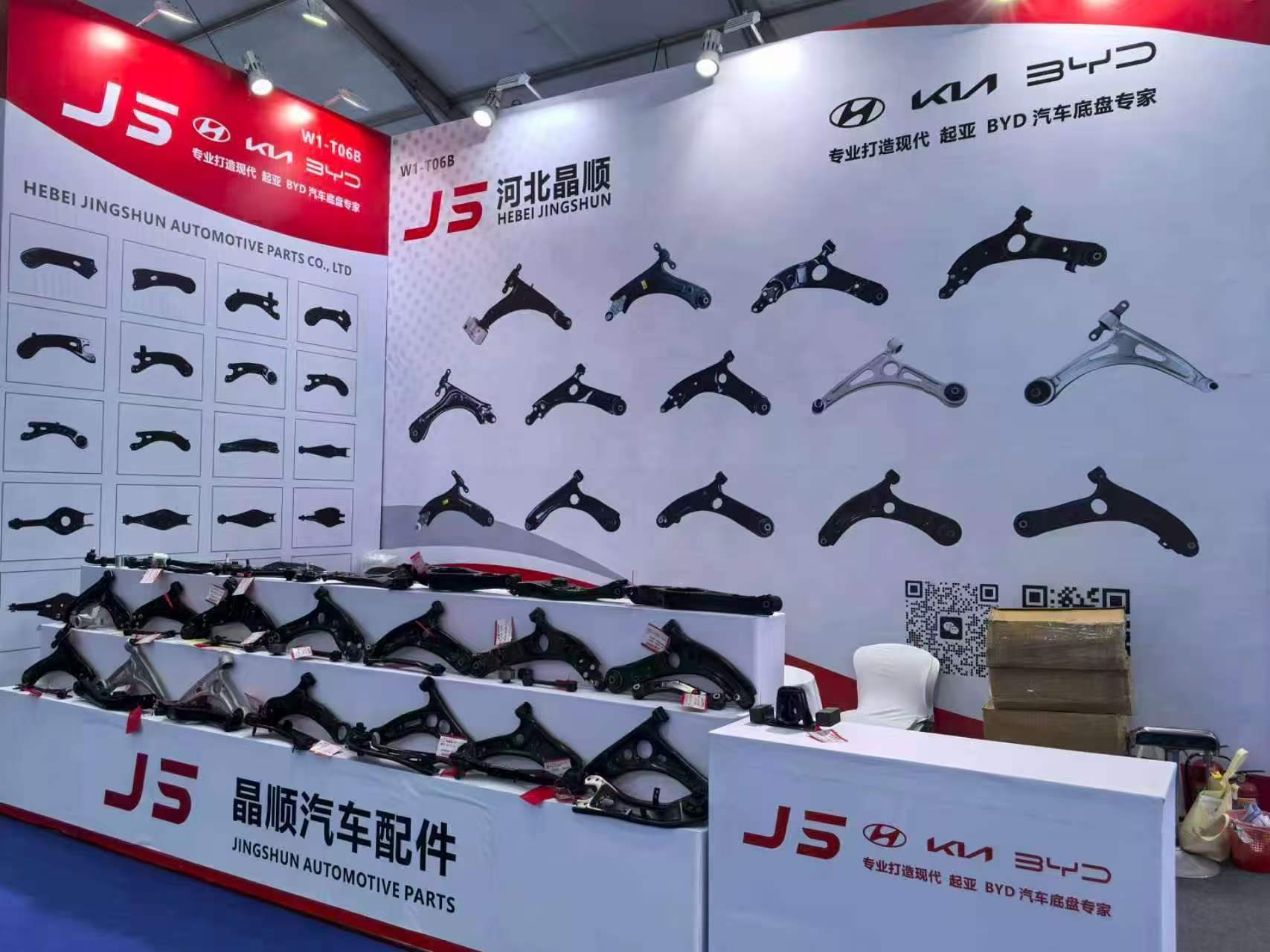
When sourcing suspension components, including knuckles and related parts like control arms and bushings, work with a supplier that provides clear OEM cross-reference data and warranty terms. For Hyundai and Kia applications, JS Suspension offers a range of control arms and bushings that meet OEM specifications. Note: JS Suspension does not supply steering knuckles; the link below is for related suspension parts. Browse our automotive suspension components to find the right part for your vehicle.
FAQ
Can a bent steering knuckle be repaired?
No. A bent, cracked, or damaged knuckle must be replaced. There is no safe repair procedure for a compromised knuckle in a street-driven vehicle. Attempting to straighten a knuckle is not recommended and can compromise its structural integrity.
How do I know if my steering knuckle is bent?
Visual inspection for impact damage, followed by measurement of camber and caster against factory spec. If the alignment technician runs out of adjustment range on one side, the knuckle is the prime suspect. A quick check with a straightedge across the hub face can reveal obvious bends.
Do I need an alignment after replacing a steering knuckle?
Yes. The knuckle determines camber and caster, so a four-wheel alignment is mandatory after either a bare knuckle or loaded assembly replacement.
Should I buy a bare knuckle or a loaded assembly?
Choose a loaded assembly when labor access is difficult or the existing hub and bearing are high-mileage. Choose a bare knuckle only when the existing components are known-good and the labor rate is low. Always budget for an alignment.
---
Related
