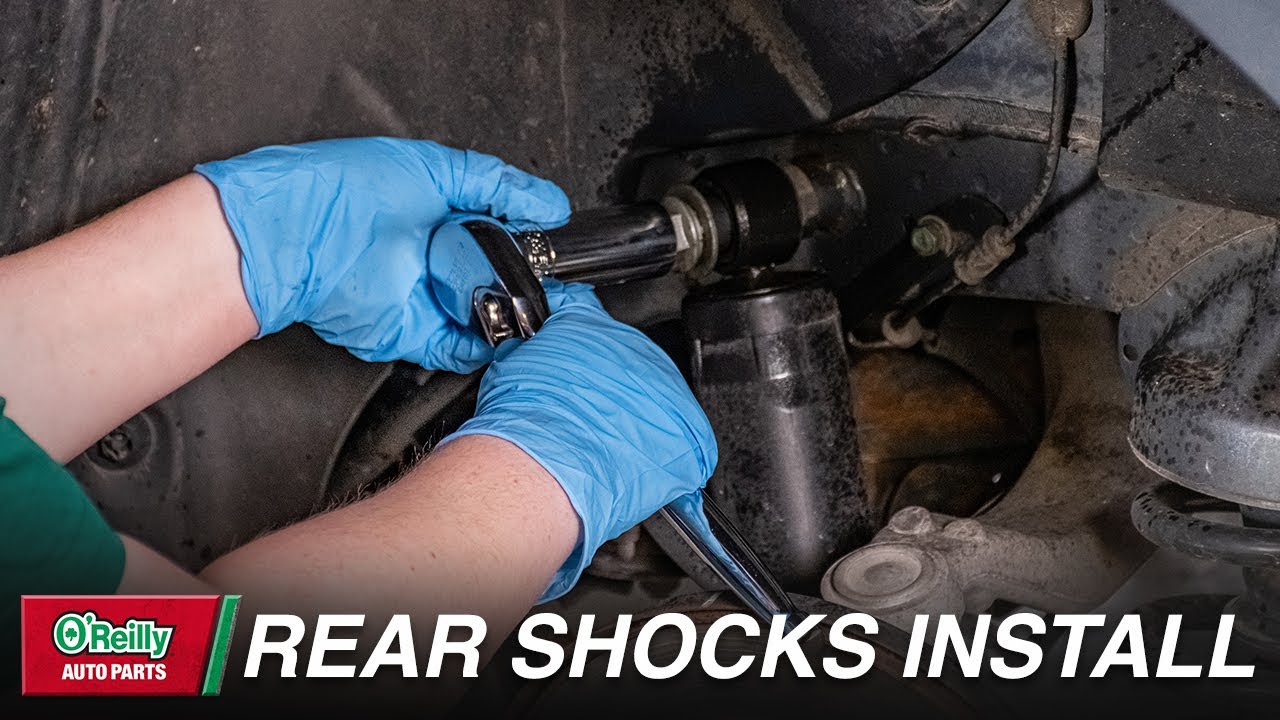
Confirm the Failed Component Before You Buy

Before you buy anything from O'Reilly, confirm the shocks are actually the failed part. Replacing shocks when the real problem is a strut, spring, or bushing wastes parts and labor without fixing the ride complaint. [MODEL_ANALYSIS]
Shocks and struts are not interchangeable. A shock absorber is a separate damper that controls spring oscillation but does not carry vehicle weight or locate the suspension. A strut is a structural component that carries spring load and often serves as a suspension locating member. If your vehicle has struts and you replace only the damper, you have not addressed the structural wear. [MODEL_ANALYSIS]
Diagnostic signs that point to shocks: excessive bouncing after a bump, nose-dive under braking, uneven tire wear across the tread, fluid leakage on the shock body, and degraded ride control over repeated bumps. A bounce test — pushing down on one corner and releasing — confirms weak damping if the vehicle continues to bounce more than once or twice. [SEARCH_EVIDENCE — User Questions: 'How do I know if my shocks are bad?']
Signs that point elsewhere: clunking over bumps often comes from sway bar links or bushings, not shocks. Sagging ride height usually indicates worn springs. Steering wander points to tie rods or alignment issues. Leaking at the strut body means strut replacement, not shock replacement. [MODEL_ANALYSIS]
A test drive on varied surfaces reveals damping behavior better than a static push. Drive over broken pavement, speed bumps, and at highway speed. If the vehicle feels floaty, bottoms out easily, or takes extra time to settle after a bump, the shocks are likely worn. [MODEL_GENERATION]
Pair Replacement Logic: Why Matched Damping Matters More Than Brand
Replace shocks in matched pairs on the same axle — left and right — because damping force differences between a new and worn shock cause asymmetric handling, especially in emergency maneuvers. [SEARCH_EVIDENCE — User Questions: 'Do I need to replace shocks in pairs?']
A new shock produces full damping force. A worn shock on the opposite side produces less. Under braking, the vehicle may pull toward the side with the weaker damper. In an evasive maneuver, the mismatch can cause unpredictable weight transfer and reduced stability. The new shock works harder while the worn one lags, accelerating wear on the new unit. [MODEL_ANALYSIS]
Replacing all four at once is ideal when mileage is similar across the vehicle. Axle-pair replacement is the minimum acceptable practice for safety and handling balance. If only one shock failed prematurely due to impact damage, still evaluate the opposite side. If it has significant mileage, replace both. [MODEL_ANALYSIS]
Mismatched damping can cause pulling under braking, uneven tire wear, and unpredictable behavior in evasive maneuvers. The cost difference between replacing one shock and replacing a pair is small compared to the handling penalty of mismatched damping. [MODEL_GENERATION]
Tools, Parts, and O'Reilly Rental Options: What to Have Before You Start
Gather every tool and part before you start. Getting stranded mid-installation because you lack a spring compressor or the correct socket wastes time and increases the risk of improvisation. [MODEL_ANALYSIS]
Essential tools: jack and jack stands, lug wrench, socket set, torque wrench, penetrating oil, wire brush, and a spring compressor if working on struts. O'Reilly rental options include spring compressors, torque wrenches, and specialty tools through O'Reilly's loaner tool program. Confirm availability at your local store before starting. [SEARCH_EVIDENCE — User Questions: 'What tools do I need to replace shocks?']
Parts checklist: new shocks (matched pair or full set), new mounting hardware (nuts, bolts, washers), new isolators and bump stops if worn, and any required brackets. Reusing old mounting hardware is a common mistake. Corroded or stretched fasteners may not torque correctly and can fail. New hardware is cheap insurance. [MODEL_ANALYSIS]
If you are working on a Hyundai or Kia, inspect related suspension components while you have the vehicle lifted. Worn bushings and control arms can mimic shock symptoms. JS Suspension offers a range of bushings and control arms that fit these platforms, including the Rear Trailing Arm Bushing — 55274-2W000 and Control Arm — 54500-S1AA0. [FACT_FROM_DATABASE]
Torque Specifications: The Difference Between 'Good and Tight' and Correct
Torque values matter because under-torquing allows movement that elongates holes, wears bushings, and causes clunking. Over-torquing can crush bushings, strip threads, or snap bolts. Neither condition is acceptable. [MODEL_ANALYSIS]
Torque values are vehicle-specific and must come from the service manual or a trusted repair database. Do not rely on generic torque charts or 'good and tight' judgment. O'Reilly's fitment tools and vehicle-specific guides can help identify the correct parts, but always verify torque specs against the manufacturer's service information. [SEARCH_EVIDENCE — Missing Topics: 'Torque specifications for shock mounting bolts']
Use a calibrated torque wrench and tighten in the specified sequence. For many shock mounts, this means tightening while the suspension is at ride height, not fully drooped. Tightening at full droop can preload the bushing and cause premature failure. [MODEL_ANALYSIS]
If you cannot find the torque spec for your vehicle, consult the factory service manual or a professional repair database. Do not guess. A torque wrench that has not been calibrated recently may be inaccurate. O'Reilly's loaner tool program includes torque wrenches if you need one. [MODEL_GENERATION]
Installation Mistakes That Shorten New Shock Life
Reusing old mounting hardware is the most common mistake. Corroded or stretched nuts and bolts may not hold torque, leading to loosening and shock damage. Always use new hardware when provided. [SEARCH_EVIDENCE — Missing Topics: 'Common mistakes during installation']
Improper spring compression is dangerous and damaging. Using a spring compressor incorrectly can damage the spring, the strut, or cause injury. Follow the tool's instructions and never use makeshift methods. Cross-threading mounting bolts is another common error. Start bolts by hand and ensure they thread smoothly. Cross-threading weakens the joint and can strip threads. [MODEL_ANALYSIS]
Missing or worn isolators and bump stops transfer stress to the new shock and shorten its life. These components protect the shock and mounting points. Reusing worn ones is a false economy. [MODEL_ANALYSIS]
If you are replacing shocks on a Hyundai or Kia, inspect the rear trailing arm bushings and control arms while you are under the vehicle. Worn bushings can cause clunking that mimics shock noise. JS Suspension offers direct-fit replacements such as the Rear Trailing Arm Bushing — 55274-D3000 and Control Arm — 54500-CG000. [FACT_FROM_DATABASE]
Post-Installation Checks: Break-In, Re-Torque, and Alignment
New shocks may cause a slight ride height change as they settle. This is normal. If ride height is significantly off, check spring seating and mounting. [SEARCH_EVIDENCE — Missing Topics: 'Break-in period for new shocks']
Re-torque mounting bolts after the first 100 miles of driving. New hardware and bushings can settle, causing torque loss. An alignment is recommended after strut replacement or any suspension work that alters geometry. For shock-only replacement, alignment may not be necessary unless handling feels off. [MODEL_ANALYSIS]
Test drive on varied surfaces and at varying speeds to confirm damping performance and check for unusual noises. If you hear clunking, re-check torque on all mounting bolts and inspect bushings and links. [MODEL_GENERATION]
OEM vs. Aftermarket Shocks: Matching the Part to the Use Case
OEM shocks are designed to match the vehicle's original damping characteristics and are a safe choice for daily drivers seeking stock ride and handling. Aftermarket shocks may offer different damping profiles for towing, hauling, or off-road use, but verify the intended application and compatibility. [SEARCH_EVIDENCE — Opinion Opportunities: 'Advice on choosing between OEM and aftermarket shocks']
For towing and heavy loads, consider shocks designed for increased damping and load control. For off-road, consider shocks with appropriate travel and durability features. O'Reilly's fitment tools can help identify shocks that fit the vehicle, but confirm the shock's intended use case matches your driving. [MODEL_ANALYSIS]
If you are replacing suspension components on a Hyundai or Kia, JS Suspension offers a range of control arms and bushings that are direct-fit replacements. For example, the Control Arm — 54500-2S000 and Rear Trailing Arm — 55270-2S000 are designed for specific platforms. Always verify fitment by OEM number. [FACT_FROM_DATABASE]
Frequently Asked Questions
Do I need to replace shocks in pairs? Yes. Replace at least the axle pair — left and right — to maintain balanced damping. Replacing all four is ideal if mileage is similar. [MODEL_ANALYSIS]
How do I know if my shocks are bad? Excessive bouncing, nose-dive under braking, fluid leakage, and uneven tire wear are common signs. A test drive on varied surfaces confirms damping behavior. [SEARCH_EVIDENCE — User Questions: 'How do I know if my shocks are bad?']
What tools do I need to replace shocks? Jack and jack stands, socket set, torque wrench, penetrating oil, wire brush, and a spring compressor for struts. O'Reilly offers loaner tools for spring compressors and torque wrenches. [SEARCH_EVIDENCE — User Questions: 'What tools do I need to replace shocks?']
Do I need an alignment after replacing shocks? For shock-only replacement, alignment may not be necessary unless handling feels off. After strut replacement, alignment is recommended. [MODEL_ANALYSIS]
Can I reuse my old mounting hardware? No. Corroded or stretched fasteners may not torque correctly. Use new hardware. [MODEL_ANALYSIS]