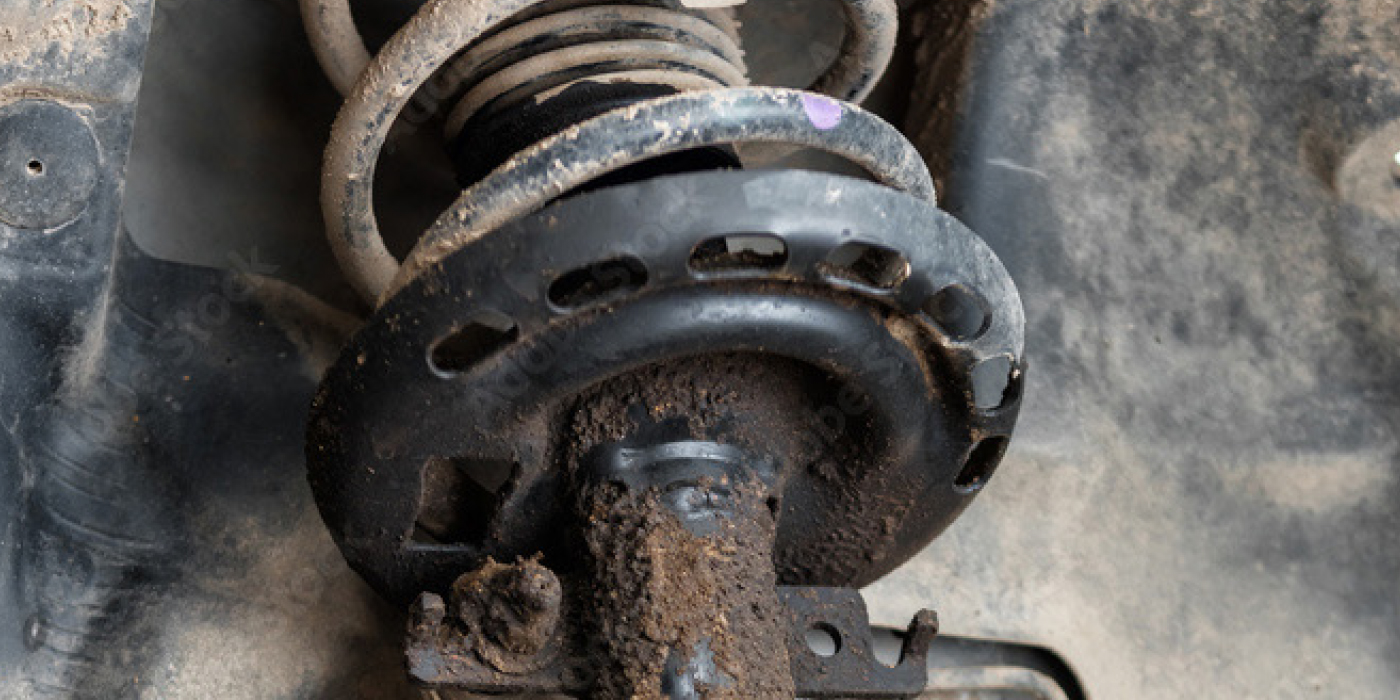
Shock Absorber Failure Analysis: Read the Symptom, Find the Failed Part

A shock or strut symptom is not proof the damper failed. It is a clue that must be traced to a specific internal failure — seal blow-by, gas loss, valve degradation, mount or bushing wear — or ruled out as a different suspension fault before you buy any part.
The bounce test is not enough to make that call. Pushing down on a fender corner and counting rebounds measures body motion, not damper condition. It can pass a shock that has lost most of its gas charge, because the hydraulic valving still resists slow hand pressure. It can also fail a healthy shock when a worn control arm bushing or loose sway bar link adds motion the damper never caused.
The sequence that produces the right part is: observe the symptom, map it to possible failure modes, rule out non-shock causes, confirm internal failure by inspection, then decide whether replacement is justified. Skipping a step is how good dampers get replaced while the real culprit stays on the car.
Symptom-to-Failure Mapping: What Each Clue Actually Points To
Each symptom narrows the suspect list. Use this mapping to move from observation to probable cause before you touch a wrench.
Oil leaks
Visible fluid on the shock body or strut housing points to rod seal blow-by. Once hydraulic oil escapes, damping force drops in that corner. A light film can be normal seepage; a wet, dripping body is a confirmed failure.
Bouncy ride
Excessive oscillation after a bump usually means gas loss in a gas-charged damper or valve degradation. Without gas pressure, the oil aerates and the damper cannot control rebound.
Nose dive under braking
Worn compression valving or a depleted gas charge lets the front end drop further than designed. The damper is no longer controlling weight transfer.
Cupped tires
Cupping or scalloping often follows a damper that has stopped keeping the tire planted — but worn control arm bushings, bad alignment, and tire imbalance produce the same pattern. Confirm the damper before blaming it.
Clunking
A clunk over bumps is more often a worn strut mount, a degraded bushing, or loose hardware than a failed damper body. Internal rod guide wear can also clunk, but rule out the mount first.
Beyond the Bounce Test: What a Technician Actually Checks
A technician confirms or rules out damper failure with four objective checks, not a fender push.
Visual inspection
Look for fluid weeping past the rod seal, torn dust boots, corroded springs, and cracked or separated mounts. Fluid residue on the body is the single most reliable non-subjective failure indicator.
Mount and bushing play
Use a pry bar on the upper and lower mounts and on control arm bushings. Excessive movement means the clunk or wander is coming from the mount, not the damper.
Damping behavior under load
Road-test on varied surfaces. Watch for wheel hop, excessive body motion, and how quickly the body settles after a bump. A damper that cannot control rebound under load is failing even if it passes a static bounce test.
Tire wear patterns
Cupping, scalloping, and flat spots suggest damper wear — but also alignment or balance problems. Read the wear pattern alongside the other three checks, never in isolation.
Ruling Out Look-Alike Faults: Control Arms, Bushings, Alignment, and Tires
Overlapping symptoms are the main cause of misdiagnosis. Before you order a damper, rule out these four look-alikes.
Control arm bushings
Worn bushings cause clunking, vague steering, and uneven tire wear — the same complaints as a failed strut mount, but the play is at the control arm pivots, not the strut tower. Pry the arm and watch for movement.
Ball joints and tie rods
Play here produces wandering, clunking, and uneven wear that mimics damper failure. Grab the tire at 12 and 6 o'clock and rock it; movement points to a joint, not a damper.
Alignment
Incorrect toe, camber, or caster causes cupping and pulling that owners often attribute to shocks. If the dampers pass inspection but the tires are cupped, check alignment before replacing parts.
Tires
Internal belt separation, imbalance, or uneven wear produces vibration and bounce that feels like damper failure. Rotate or swap tires to see if the symptom moves with the tire.
Twin-Tube vs. Monotube: How Construction Changes Failure Modes
The internal design of your damper determines which failures are likely and how they present.
Twin-tube
Oil and gas are separated, with the gas typically at lower pressure. Common failures are seal leaks, gas loss (aeration), and valve wear. Symptoms usually develop gradually, which is why owners often miss them until handling degrades noticeably.
Monotube
A single high-pressure gas charge acts directly on the oil. Common failures are sudden gas loss (abrupt damping loss), rod seal leaks, and a dented body causing internal binding. Symptoms can appear quickly rather than over thousands of miles.
Mounting and installation
Monotube dampers are often more sensitive to improper installation. A damaged rod or pinched seal from careless fitting can cause premature failure regardless of mileage.
Replacement
Match the original construction type. Swapping a monotube for a twin-tube (or vice versa) changes the designed performance characteristics of the vehicle.
Mileage, Load, and Driving Conditions: Why Mileage Alone Is a Weak Trigger
Mileage is not a reliable replacement trigger. Dampers can fail at 30,000 miles under severe use or last past 100,000 miles with gentle driving. Condition, not the odometer, decides.
Load and towing
Consistently carrying heavy loads or towing raises heat and stress on the damper, accelerating seal and valve wear.
Road conditions
Frequent rough roads, potholes, and dirt surfaces increase impact forces and can damage mounts and internal components well before the damper itself wears out.
Driving style
Aggressive cornering and hard braking demand more from the valving and shorten service life.
Use mileage as a prompt to inspect, not a reason to replace. A 90,000-mile damper with no leaks, no bounce, and controlled rebound is doing its job.
Matched Pairs and Handling Balance: Why Single-Side Replacement Is a Risk
Replace dampers in pairs — both front or both rear — when replacement is justified. A new damper on one side and a worn one on the other produces uneven damping, which shows up as unpredictable handling, especially in emergency maneuvers.
Dampers on the same axle typically wear at similar rates, so replacing one side creates a damping mismatch that the chassis cannot compensate for. Many vehicle manufacturers specify paired replacement for exactly this reason. The short-term saving from a single-side job is outweighed by compromised handling and longer stopping distances.
Decision Flow: When to Replace, When to Keep Looking
Use this flow to decide your next move.
- Fluid leak, bouncy ride, nose dive, or cupped tires present AND inspection confirms damper failure → replace in pairs.
- Clunking present but mounts and bushings are tight and there is no fluid leak → inspect control arms, ball joints, and sway bar links before replacing dampers.
- Irregular tire wear but dampers pass inspection → check alignment and tire balance.
- High mileage but no symptoms → continue monitoring. Mileage alone is not a replacement trigger.
FAQ
Can a shock fail without leaking?
Yes. Gas loss and valve degradation reduce damping without producing visible fluid. That is why a bounce test and a visual check alone are not enough — road-test behavior under load is the confirming check.
How do I know if my clunk is the shock or the mount?
Pry the upper and lower mounts and the control arm bushings. If there is excessive movement at the mount or bushing, the clunk is coming from there, not the damper body. Internal rod guide wear can also clunk, but rule out the mount first.
Should I replace shocks in pairs?
Yes, when replacement is justified. Dampers on the same axle wear at similar rates, and a new damper on one side against a worn one on the other creates a damping mismatch the chassis cannot compensate for.
Is high mileage a reason to replace shocks?
No. Mileage is a prompt to inspect, not a replacement trigger. A high-mileage damper with no leaks, no bounce, and controlled rebound is doing its job.
If your diagnosis points to worn control arm or trailing arm bushings rather than the damper itself, we manufacture a full range of automotive suspension components for Hyundai, Kia, Chevrolet, and Buick applications, backed by documented quality control at our manufacturing facility. You can learn more about our company and how we support parts buyers and mechanics.