Kia Forte Control Arm Replacement: OEM vs Aftermarket vs Bushing Repair
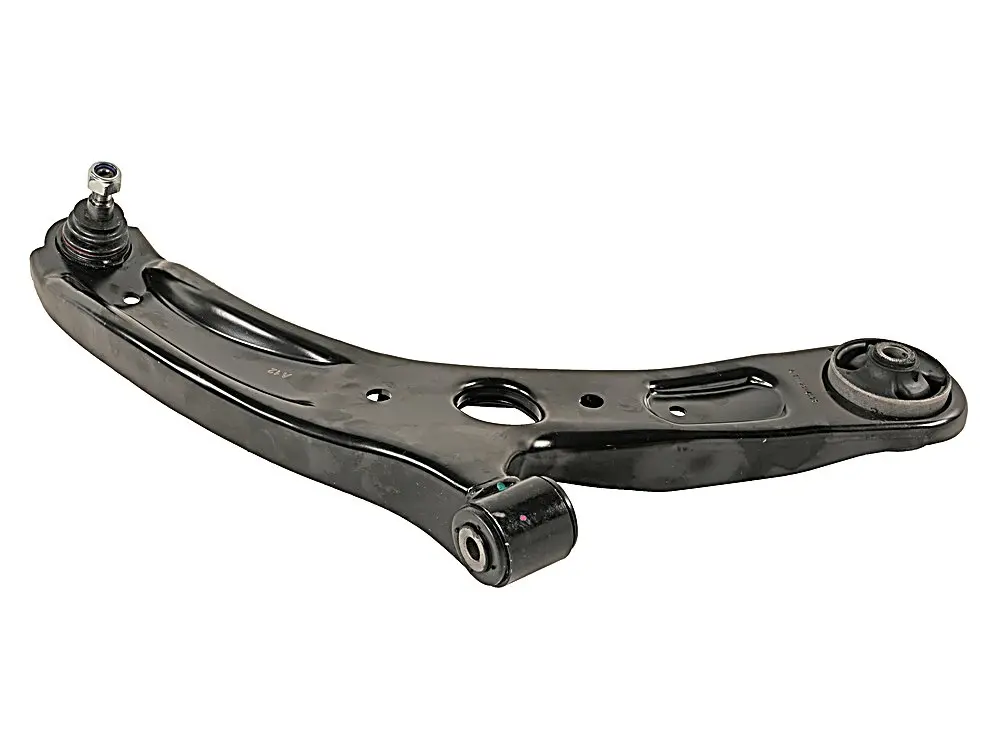
Replacing a control arm on a Kia Forte typically costs $200–$600 per side, including parts and labor. The final price depends on whether you choose OEM or aftermarket parts, the shop type, and your model year. But the real decision isn't just about cost—it's about safety and long-term reliability. This guide helps you decide between replacing the entire arm or just the bushings, and between OEM and aftermarket parts, so you can make an informed choice without getting ripped off.
Symptoms of a Bad Control Arm on a Kia Forte
A failing control arm on a Kia Forte usually presents with clunking or knocking noises over bumps, excessive vibration in the steering wheel, uneven tire wear, and a loose or wandering steering feel. These symptoms indicate worn bushings or a damaged ball joint.
Common Symptoms:
- Clunking or knocking sound when driving over bumps or turning
- Vibration in the steering wheel at highway speeds
- Uneven or cupped tire wear (especially on the inner or outer edges)
- Steering wheel off-center or car pulling to one side
- Loose or wandering steering, especially when braking
How to Differentiate from Other Suspension Issues:
- Struts: Usually cause a bouncy ride and fluid leaks, not clunking over small bumps.
- Tie rods: Cause steering play and uneven tire wear, but typically no clunking.
- Sway bar links: Clicking or rattling over bumps, but not vibration at speed.
Visual Inspection Tips:
- Jack up the car and support on stands.
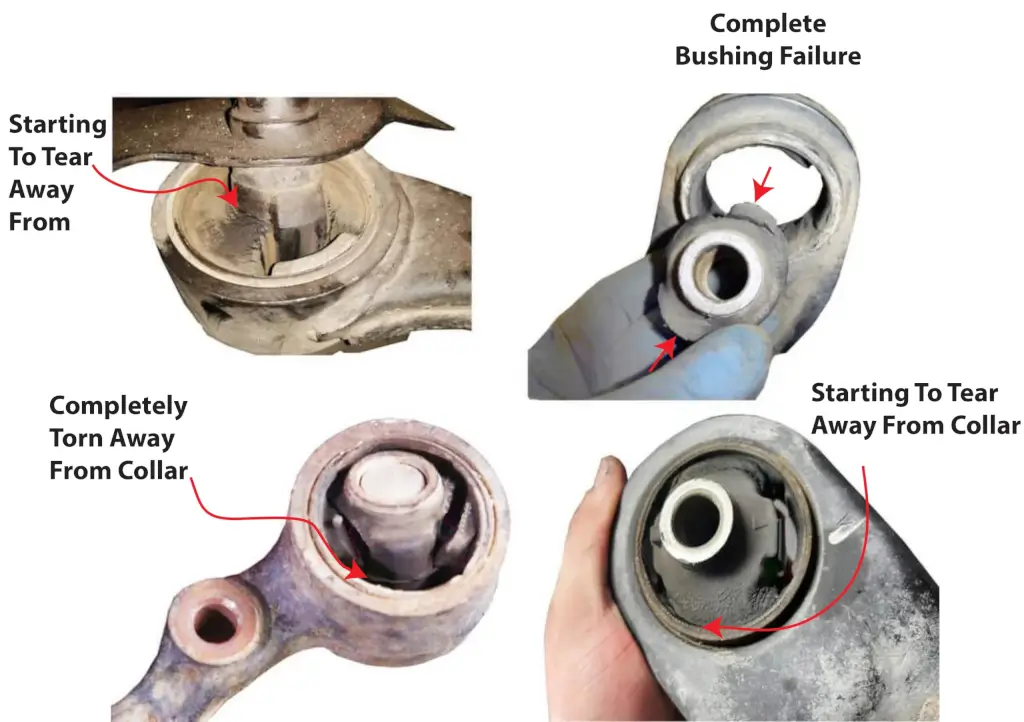
- Look for torn or cracked bushings (rubber parts where the arm mounts to the frame).
- Check the ball joint boot for cracks or grease leakage.
- Inspect the arm for bends, rust, or impact damage.
- Use a pry bar to check for movement in the bushings or ball joint.
Safety Implications: Driving with a bad control arm is dangerous. The arm can separate from the hub, causing loss of steering control. If you suspect a problem, have it inspected immediately.
OEM vs Aftermarket Control Arms: Which Should You Choose?
OEM control arms are the safest choice for guaranteed fit and quality, but aftermarket arms from reputable brands offer significant cost savings without sacrificing reliability. The decision hinges on your budget and the specific part quality.
OEM Parts:
- Pros: Exact fit, factory quality, warranty from Kia, no fitment surprises.
- Cons: Higher cost, often sold without ball joint or bushings (you may need to buy them separately).
Aftermarket Parts:
- Pros: Lower cost, often include ball joint and bushings, some brands offer lifetime warranties.
- Cons: Quality varies widely; cheap no-name brands may fail prematurely.
Reputable Aftermarket Brands:
- Moog: Known for durable bushings and ball joints, often with grease fittings.
- Mevotech: Offers OEM-grade quality at competitive prices.
- Delphi: Original equipment supplier for many automakers, including GM.
Considerations:
- Check if the arm comes with ball joint and bushings pre-installed. Some aftermarket arms do, which simplifies installation.
- Look for arms with greaseable ball joints for longer life.
- Verify the part number matches your Forte's model year and engine (e.g., 2010-2013 vs 2014-2018).
Warranty: OEM parts typically come with a 12-month/12,000-mile warranty. Aftermarket brands often offer 2-3 year warranties, and some have lifetime coverage. Read the fine print.
Decision Framework: If you plan to keep the car long-term and want zero fitment risk, choose OEM. If you're budget-conscious and can verify the aftermarket brand's reputation, a quality aftermarket arm is a smart choice.
When to Replace Bushings vs the Entire Control Arm
Replace only the bushings if the control arm itself is not bent, the ball joint is in good condition, and the arm is not corroded. Otherwise, replace the entire arm. Bushing replacement can be labor-intensive and may not save much money compared to a complete arm replacement.
When Bushing Replacement is Viable:
- The arm is straight and free of rust.
- The ball joint has no play and the boot is intact.
- You have access to a press or can buy pre-pressed bushings.
Signs You Need a Whole Arm:
- Bent or cracked arm (often from hitting a curb or pothole).
- Ball joint is worn (excessive play or torn boot).
- Severe corrosion that weakens the arm.
- The arm is an older design where bushings are not available separately.
Labor Cost Comparison:
- Bushing replacement: 2-3 hours of labor, plus the cost of bushings ($30-$80). Total: $200-$400.
- Complete arm replacement: 1.5-2.5 hours of labor, plus the arm ($50-$300). Total: $200-$500.
As you can see, the cost difference is minimal. Replacing the entire arm also gives you new bushings and ball joint, ensuring longer service life.
Long-Term Reliability: A new control arm with fresh bushings and ball joint will last 80,000-100,000 miles. Replacing just bushings may extend the arm's life by 30,000-50,000 miles, but the ball joint may fail soon after.
Decision Framework: Unless you're experienced with suspension work and have a press, replace the entire arm. It's simpler, safer, and often more cost-effective.
Step-by-Step DIY Replacement Guide for a Kia Forte
Replacing a control arm on a Kia Forte is a moderate DIY job that takes 2-3 hours per side. You'll need basic hand tools, a torque wrench, and jack stands. Follow these steps carefully.
Tools Needed:
- Jack and jack stands
- Lug wrench
- Socket set (10mm, 12mm, 14mm, 17mm, 19mm, 21mm)
- Wrenches (same sizes)
- Torque wrench (ft-lb and in-lb)
- Ball joint separator (pickle fork or tie rod puller)
- Penetrating oil (e.g., PB Blaster)
- Hammer
- Pry bar
- Safety glasses and gloves
Step-by-Step Process:
- Preparation: Park on a level surface, chock the rear wheels, and loosen the lug nuts on the front wheel.
- Lift the car: Jack up the front and support on jack stands. Remove the wheel.
- Remove the stabilizer link: Disconnect the stabilizer link from the control arm using a 14mm socket and wrench.
- Disconnect the ball joint: Remove the cotter pin and castle nut (17mm or 19mm) from the ball joint stud. Use a ball joint separator to pop the stud out of the steering knuckle.
- Remove the control arm bolts: There are two bolts (19mm or 21mm) that secure the control arm to the subframe. Remove them and the arm will drop down.
- Inspect the mounting points: Check the subframe and knuckle for damage or wear.
- Install the new control arm: Position the new arm and hand-thread the bolts. Do not tighten fully yet.
- Reconnect the ball joint: Insert the stud into the knuckle, install the nut, and torque to spec. Install a new cotter pin.
- Reconnect the stabilizer link: Torque the nut to spec.
- Tighten the control arm bolts: With the car still on stands, torque the bolts to spec. Important: The final torque must be done with the suspension loaded (car on the ground) to avoid preloading the bushings.
- Reinstall the wheel: Lower the car and torque the lug nuts to 80-100 ft-lb.
- Get an alignment: This is mandatory to ensure proper tire wear and handling.
Torque Specifications (typical for Kia Forte):
- Control arm to subframe bolts: 80-100 ft-lb (108-136 Nm)
- Ball joint nut: 40-50 ft-lb (54-68 Nm)
- Stabilizer link nut: 30-40 ft-lb (41-54 Nm)
- Lug nuts: 80-100 ft-lb (108-136 Nm)
Note: Always verify the exact torque specs for your model year in the factory service manual. Over-tightening can damage the bushings.
Alignment Requirements: After replacing the control arm, a wheel alignment is necessary. The control arm affects camber and caster angles. Skipping alignment will cause uneven tire wear and poor handling.
Safety Tips and When to Call a Professional
DIY control arm replacement is safe if you follow proper procedures, but it's not for everyone. If you lack the tools, experience, or confidence, hire a professional. Here's how to stay safe and know your limits.
Safety Precautions:
- Always use jack stands. Never work under a car supported only by a jack.
- Wear safety glasses to protect from debris and fluid.
- Use penetrating oil on rusted bolts and allow time to soak.
- Use a torque wrench for all critical fasteners.
- Double-check all connections before lowering the car.
Signs the Job is Beyond Your Skill Level:
- Bolts are rusted or seized and you don't have a torch or impact wrench.
- You don't have a ball joint separator or torque wrench.
- You're unsure about the process or torque specs.
- You've never done suspension work before.
Importance of Proper Torque and Alignment: Incorrect torque can cause the control arm to loosen, leading to catastrophic failure. Skipping alignment will cause premature tire wear and poor handling.
Recommendation: If you're not confident, have a professional inspect your work before driving. A misinstalled control arm is a safety hazard.
Maintenance Tips to Extend Control Arm Life
Regular inspection and good driving habits can extend the life of your Kia Forte's control arms to 100,000 miles or more. Here's how to prevent premature failure.
Regular Inspections:
- Check bushings and ball joint boots for cracks, tears, or grease leakage during oil changes or tire rotations.
- Listen for clunks or knocks over bumps, which may indicate worn bushings.
- Feel for steering wheel vibration or wandering.
Keep It Clean:
- Wash the undercarriage regularly, especially in winter where road salt is used. Salt accelerates corrosion.
- Avoid driving through deep water that can contaminate the ball joint.
Driving Habits:
- Slow down for potholes and speed bumps.
- Avoid hitting curbs.
- Don't overload the vehicle, which puts extra stress on suspension components.
Maintenance Schedule:
- Have the suspension inspected annually or every 12,000 miles.
- Replace worn bushings early before they damage the arm.
- If you replace the control arm, consider replacing the stabilizer link and ball joint at the same time.
By following these tips, you can avoid costly repairs and keep your Forte handling safely.
FAQ
Q: How long do control arms last on a Kia Forte?
A: Typically 80,000-100,000 miles, but they can fail earlier if you drive on rough roads or hit potholes.
Q: Can I drive with a bad control arm?
A: No. It's unsafe. The arm can fail completely, causing loss of steering control.
Q: Do I need to replace both control arms at the same time?
A: Not necessarily, but if one is worn, the other is likely close. Replacing both saves labor costs in the long run.
Q: What is the difference between a control arm and a trailing arm?
A: A control arm is a suspension link that connects the wheel hub to the chassis. A trailing arm is a specific type of control arm that runs longitudinally. On the Kia Forte, the front uses lower control arms, and the rear uses trailing arms.
Q: Can I replace just the bushing on a Kia Forte control arm?
A: Yes, if the arm is in good condition and the ball joint is fine. However, it's often more cost-effective to replace the entire arm.
Q: What are the torque specs for Kia Forte control arm bolts?
A: Typically 80-100 ft-lb for the subframe bolts and 40-50 ft-lb for the ball joint nut. Always verify with the service manual for your model year.
Conclusion
Replacing a control arm on a Kia Forte is a common repair that costs $200-$600 per side. Symptoms include clunking noises, steering vibration, and uneven tire wear. Choose OEM for guaranteed fit or a reputable aftermarket brand for savings. Replace the entire arm unless you're experienced with bushing replacement. DIY is possible with the right tools and torque specs, but always get an alignment afterward. Regular inspections and good driving habits can extend control arm life. If in doubt, consult a professional.