Hyundai Elantra Control Arm Symptoms: Diagnosis, Costs, and Replacement Guide
If your Hyundai Elantra is clunking over bumps, pulling to one side, or wearing tires unevenly, the control arm is a prime suspect. This guide covers the symptoms, how to confirm the diagnosis, replacement costs, and how to choose the right part.
Top 5 Symptoms of a Failing Control Arm in a Hyundai Elantra
Clunking or knocking noise over bumps – The most common symptom is a clunk or knock from the front suspension when driving over uneven surfaces. This noise occurs because worn bushings or a loose ball joint allow metal-to-metal contact. If you hear this, inspect the control arm immediately.
Pulling to one side during braking or acceleration – A failing control arm can cause the vehicle to pull left or right when you apply the brakes or accelerate. This happens because the control arm can no longer maintain proper wheel alignment under load, causing the tire to steer itself. On the highway, you may also notice the car wandering or needing constant steering correction.
Uneven or accelerated tire wear – Check your tires for excessive wear on the inner or outer edges. A worn control arm allows the wheel to tilt, causing the tire to ride on its edge. This not only shortens tire life but also reduces grip and safety. If you see scalloped or feathered wear patterns, suspect control arm issues.
Vibration in the steering wheel at highway speeds – When control arm bushings are worn, they can't dampen vibrations from the road. You'll feel a constant vibration or shimmy in the steering wheel, especially at 50-70 mph. This is often accompanied by a loose or vague steering feel.
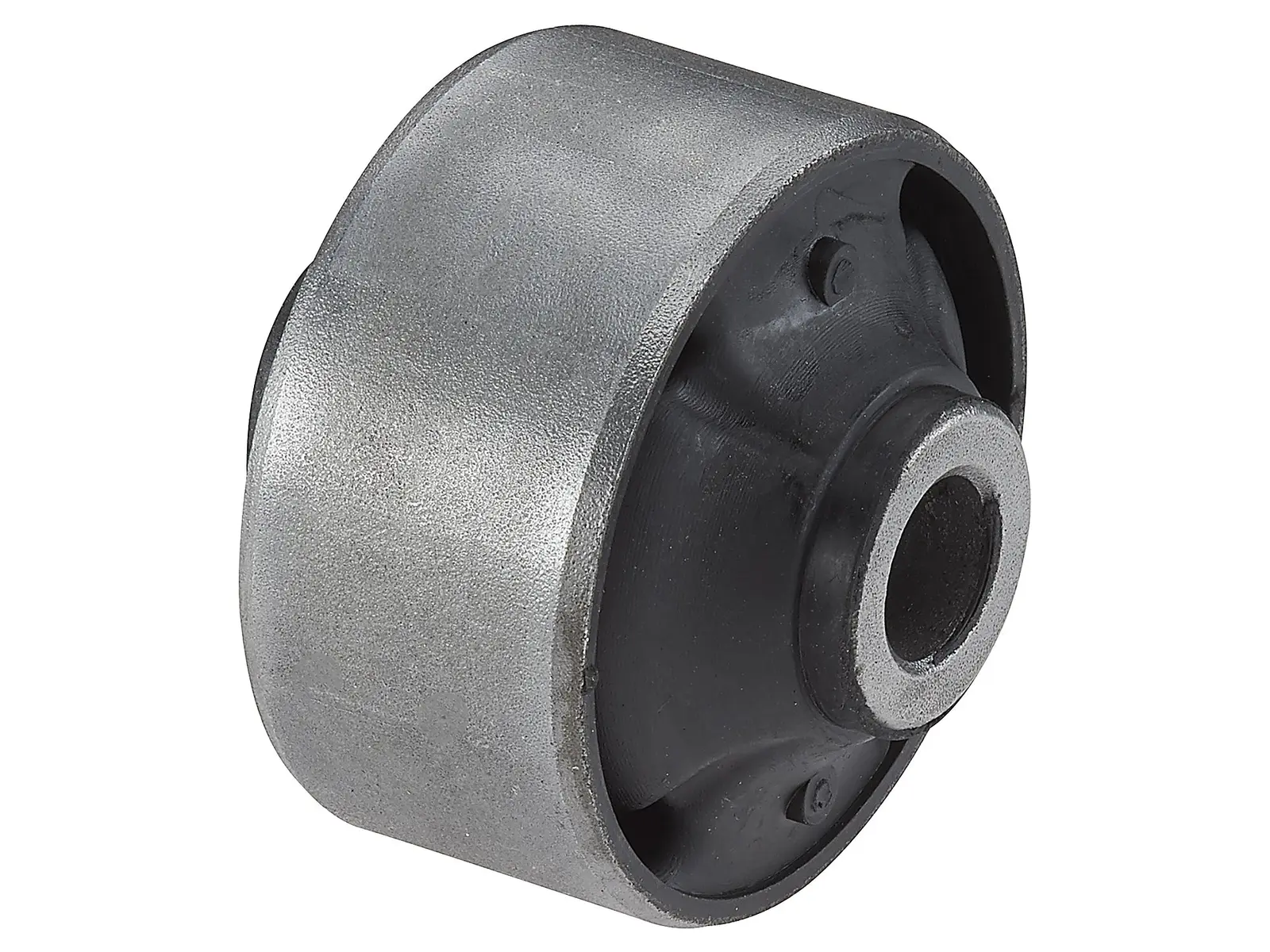
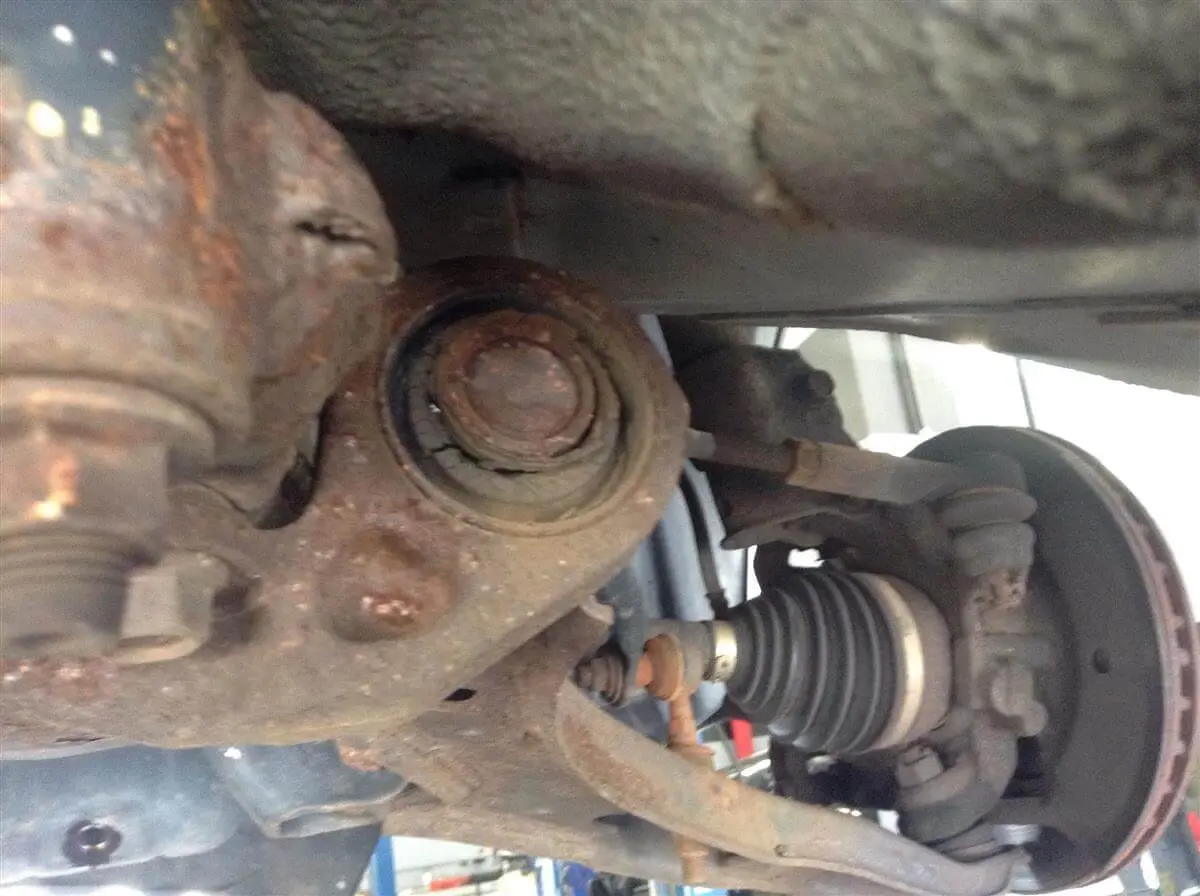
Visible signs: torn or cracked bushings, rust, or bent control arm – A visual inspection can confirm the diagnosis. Look for cracked, torn, or leaking bushings (the rubber parts where the arm attaches to the frame). Rust or impact damage on the arm itself, or a bent shape, also indicate failure. If you see any of these, the control arm needs replacement.
How to Diagnose a Bad Control Arm: Step-by-Step Inspection
Before buying parts, confirm the control arm is the culprit. Here's a systematic inspection you can do with basic tools.
Visual Inspection
Safely lift the car and support it on jack stands. Examine the control arm bushings for cracks, tears, or oil leakage. Also check for any signs of impact damage, like dents or bends in the arm itself. Compare both sides – if one looks different, it's likely worn.
Play Test
Use a pry bar to gently pry on the control arm near the bushings. There should be no movement. If you see or feel play, the bushings are worn. Also check the ball joint by prying between the control arm and the steering knuckle – any vertical movement indicates a worn ball joint.
Check the Ball Joint
Inspect the ball joint boot for tears or grease leakage. With the wheel off the ground, grab the tire at the top and bottom and rock it. Excessive play suggests a worn ball joint. A loose ball joint can cause the wheel to collapse inward, a dangerous failure.
Compare with Known Good Condition
If possible, compare the suspect side with the other side or a new part. This helps you gauge normal stiffness and movement. If the bushing feels softer or has more play than the new one, it's time to replace.
Hyundai Elantra Control Arm Replacement Cost: DIY vs. Professional
Replacement costs vary based on parts and labor. Here's what to expect.
Parts Cost
Aftermarket control arms for the Elantra typically cost $50-$150, while OEM parts run $150-$300. The price depends on the model year and whether you need just the arm or a complete assembly with ball joint and bushings. For example, a front lower control arm for a 2016 Elantra might be around $80 aftermarket, while an OEM part could be $200.
Labor Cost
A professional replacement takes 2-3 hours, with labor rates averaging $100-$150 per hour. Expect to pay $200-$400 for labor at a shop. Some shops charge a flat rate, so get a quote upfront.
DIY Cost
If you DIY, you'll need tools: a jack, jack stands, wrenches, a pry bar, and a torque wrench. If you don't own these, factor in $100-$200 for tools. The job takes 3-5 hours for a novice. You'll save $200-$300 in labor, but you must have mechanical skill and follow torque specs precisely.
Total Cost Comparison
DIY total: $150-$350 (parts + tools if needed). Professional total: $250-$700. The DIY route saves money but requires time and expertise. If you're not confident, professional installation is safer.
Safety Risks and Long-Term Effects of Driving on a Bad Control Arm
Ignoring a failing control arm is dangerous. Here's what's at stake.
Loss of steering control – A worn control arm can cause the wheel to shift suddenly, especially at high speeds or during emergency maneuvers. This can lead to a loss of control and a serious accident.
Accelerated tire wear – As mentioned, misalignment causes uneven tire wear, leading to premature tire replacement. Tires are expensive, and replacing them early adds up.
Damage to other suspension components – Excessive movement from a bad control arm stresses struts, tie rods, and sway bar links. This can cause premature failure of these parts, leading to more repairs.
Increased risk of control arm failure – The worst-case scenario is a complete control arm failure, causing the wheel to collapse inward. This will likely result in a crash. Don't wait – replace the control arm as soon as you notice symptoms.
OEM vs. Aftermarket Control Arms for Hyundai Elantra: Which Should You Choose?
Choosing between OEM and aftermarket parts involves trade-offs in cost, quality, and warranty.
OEM parts – These are made by the original manufacturer or their suppliers. They offer an exact fit and original quality, but cost more. OEM parts typically come with a limited warranty, often 12 months, but may not cover labor. If you want guaranteed fit and performance, OEM is the safe choice.
Aftermarket parts – These are cheaper, but quality varies widely. Look for reputable brands like Moog, Delphi, or TRW that meet or exceed OEM specifications. Key differences include bushing material (rubber vs. polyurethane), ball joint quality, and corrosion resistance. High-quality aftermarket arms often have better bushings and longer warranties.
Recommendation – For most Elantra owners, a high-quality aftermarket control arm from a trusted brand is the best value. It costs less than OEM and often includes a lifetime warranty. Ensure the part meets OEM specs and is designed for your specific model year. If you're unsure, consult a mechanic or the manufacturer's catalog.
Step-by-Step Guide to Replacing a Control Arm on a Hyundai Elantra
If you're DIY-inclined, here's a general guide. Always consult your vehicle's service manual for specific torque specs and procedures.
Tools and parts needed: Jack, jack stands, wheel chocks, socket set, torque wrench, pry bar, new control arm, and possibly new bolts (some arms come with them).
Step 1: Safely lift and support the vehicle – Park on a level surface, chock the rear wheels, and loosen the lug nuts. Jack up the front and secure it on jack stands. Never work under a car supported only by a jack.
Step 2: Remove the wheel – Remove the lug nuts and take off the wheel. This gives you access to the control arm.
Step 3: Disconnect the ball joint and remove the control arm bolts – Locate the ball joint nut and the two bolts securing the control arm to the frame. Use a pry bar to separate the ball joint from the steering knuckle. Then remove the bolts and lower the control arm.
Step 4: Install the new control arm – Position the new arm and hand-tighten the bolts. Torque the frame bolts to spec (typically 100-120 ft-lbs) and the ball joint nut to 50-70 ft-lbs. Always use new bolts if provided.
Step 5: Reassemble and perform a wheel alignment – Reinstall the wheel, lower the car, and torque the lug nuts. A wheel alignment is mandatory after control arm replacement to ensure proper tire wear and handling. Take it to a shop for alignment.
FAQ
How long do control arms last on a Hyundai Elantra?
Control arms typically last 80,000-100,000 miles, but this varies with driving conditions and road quality. Rough roads and potholes can shorten their life.
Can I drive with a bad control arm?
It's not recommended. A bad control arm compromises steering and safety. If you must drive, do so at low speeds and avoid sudden maneuvers. Replace it as soon as possible.
What does a control arm do?
The control arm connects the wheel hub to the vehicle's frame, allowing vertical wheel movement while maintaining alignment. It also absorbs road shocks and helps keep the tire in contact with the road.
How much does it cost to replace a control arm on a Hyundai Elantra?
Expect to pay $250-$700 for parts and labor at a shop, or $150-$350 if you DIY. Prices vary by model year and part quality.
What are the symptoms of a bad control arm bushing?
Symptoms include clunking noises, steering wander, uneven tire wear, and vibration. Visual inspection may reveal cracked or torn rubber bushings.
Conclusion
A failing control arm on your Hyundai Elantra is not something to ignore. Recognize the symptoms – clunking, pulling, uneven tire wear, vibration – and diagnose promptly. Replacement costs are manageable, especially if you DIY, but safety should be your top priority. Choose quality parts, whether OEM or reputable aftermarket, and always get a wheel alignment after replacement. If you're not comfortable with the repair, consult a professional. Your safety and your car's longevity depend on it.