How to Diagnose a Bad Control Arm: A Step-by-Step Guide
A bad control arm can cause clunking noises, uneven tire wear, and poor steering. Diagnosing it yourself is straightforward with basic tools and a systematic approach. Here's how to pinpoint the problem and decide on the right fix.
Symptoms of a Bad Control Arm: What Your Car is Telling You
A failing control arm typically announces itself through distinct symptoms. Recognizing these early can prevent further suspension damage and costly repairs.
- Clunking or knocking noises from the front suspension, especially over bumps or when turning. This often indicates worn bushings or ball joints.
- Uneven tire wear, often on the inner or outer edges. A loose control arm allows the wheel to tilt, causing abnormal tire contact.
- Steering wander or pulling to one side. Worn bushings can alter the alignment, making the car drift.
- Vibration in the steering wheel at highway speeds. Excessive play in the suspension can cause shimmy.
These symptoms may appear gradually or suddenly. If you notice any, inspect the control arms before driving further.
Tools and Safety Precautions for Inspecting Control Arms
Before you start, gather the right tools and prioritize safety. You'll need:
- Floor jack and jack stands
- Pry bar (or large screwdriver)
- Flashlight or work light
- Safety glasses
Proper lifting procedure:
- Park on level ground and engage the parking brake.
- Chock the rear wheels to prevent rolling.
- Lift the front of the car with the floor jack at the designated lift points.
- Support the vehicle on jack stands. Never work under a car supported only by a jack.
- Ensure the car is stable before crawling underneath.
Work in a well-lit area or use a work light to see clearly. Safety glasses protect your eyes from debris.
Step-by-Step Visual Inspection of Control Arm Bushings and Ball Joints
Visual inspection is the first step in diagnosing a bad control arm. Look for these signs:
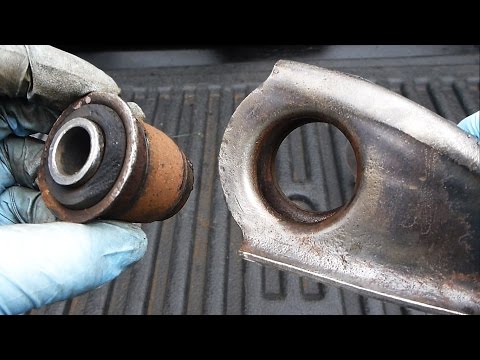
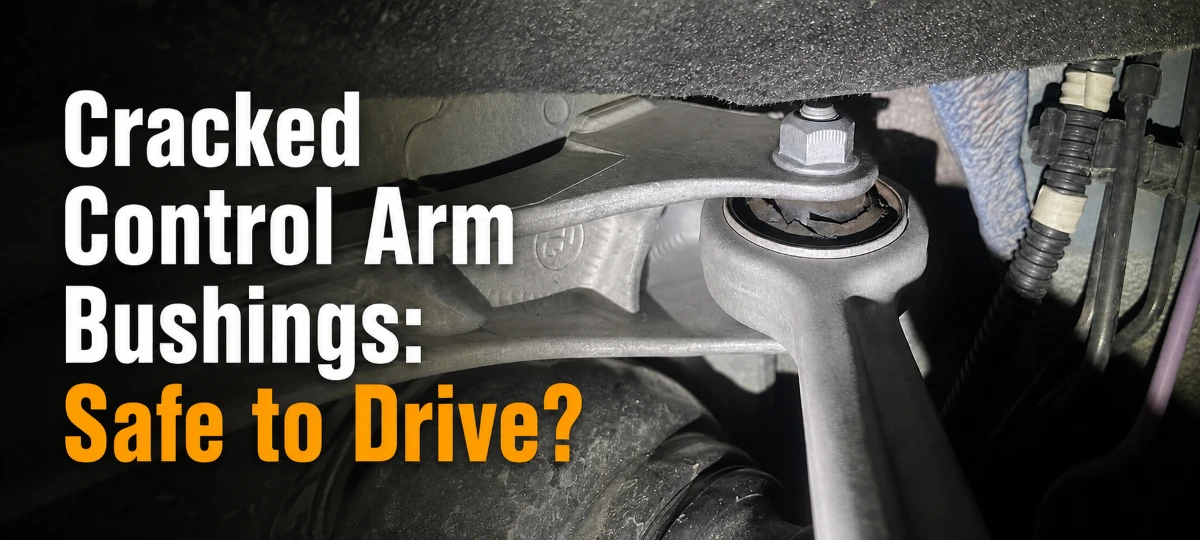
- Bushings: Check for cracks, tears, or excessive play. Rubber bushings often show dry rot or separation from the metal sleeve.
- Ball joint boots: Inspect for cuts, tears, or grease leakage. A torn boot allows dirt in and grease out, accelerating wear.
- Metal-to-metal contact: Look for shiny spots or rust indicating parts have been rubbing.
Use a pry bar to gently pry on the control arm and observe movement. Excessive movement in the bushing or ball joint indicates wear. Compare with the opposite side if possible—a new or tight side will feel solid.
Testing for Play: How to Physically Check Bushings and Ball Joints
Physical testing confirms what visual inspection suggests. Here's how to check for play:
- Bushings: Place the pry bar between the control arm and the frame or subframe. Gently pry and watch for movement. A worn bushing will allow the arm to move noticeably.
- Ball joints: With the wheel off the ground, grasp the tire at the top and bottom and rock it. Excessive movement indicates ball joint wear. You can also use a pry bar under the tire to check for vertical play.
- Listen for clunking while prying—a metallic sound indicates loose components.
If you find play, the control arm or its components need replacement.
Upper vs. Lower Control Arm: Symptoms and Inspection Differences
Upper and lower control arms experience different loads and wear patterns.
- Lower control arms bear more weight and are more prone to bushing wear. Symptoms often include clunking over bumps and uneven tire wear on the inner edge.
- Upper control arms are less common to fail but can cause steering wander or a loose feeling. The ball joint is at the top and may show wear differently.
Inspection points differ: lower arm bushings are often at the rear, while the upper arm ball joint is at the top. Check both for play and damage.
When to Replace vs. Repair: Bushing Replacement or Entire Control Arm?
Deciding whether to replace just the bushings or the entire control arm depends on several factors.
- Bushing replacement is possible but often requires special tools (press) and can be labor-intensive. It's cost-effective if the ball joint is still good and you have the tools.
- Replacing the entire control arm is often more practical for DIYers. It comes with new bushings and ball joints, saving time and ensuring all components are fresh.
- Consider the ball joint condition: If it's worn, replace the whole arm—it's cheaper than doing both separately.
- Aftermarket control arms often come with new bushings and ball joints, making installation straightforward.
For most DIYers, replacing the entire control arm is the safer, more efficient choice.
What to Look for in Quality Replacement Control Arms
When buying a replacement control arm, prioritize quality to ensure durability and performance.
- Bushing material: Rubber offers OEM-like comfort; polyurethane provides better handling but can be harsher. Choose based on your driving needs.
- OEM or better specifications: Look for parts that match or exceed original equipment standards.
- Corrosion-resistant finish: A coated arm lasts longer, especially in salt-belt regions.
- Brand reputation and warranty: Established brands with warranties offer peace of mind.
At our company, we manufacture control arms for Hyundai and KIA vehicles, ensuring precise fit and reliable performance. Check our automotive suspension components for options.
Can You Drive with a Bad Control Arm? Risks and Consequences
Driving with a bad control arm is unsafe and can lead to severe consequences.
- Loss of steering control: A failed control arm can cause the wheel to detach, leading to a loss of control.
- Accelerated tire wear: Misalignment from a worn arm ruins tires quickly.
- Damage to other components: Excessive movement stresses ball joints, tie rods, and struts.
In severe cases, the control arm can break completely, causing the wheel to collapse. Replace a bad control arm as soon as possible—it's not worth the risk.
---
*For more information on suspension components, visit our products page or learn about our manufacturing facility and quality control.