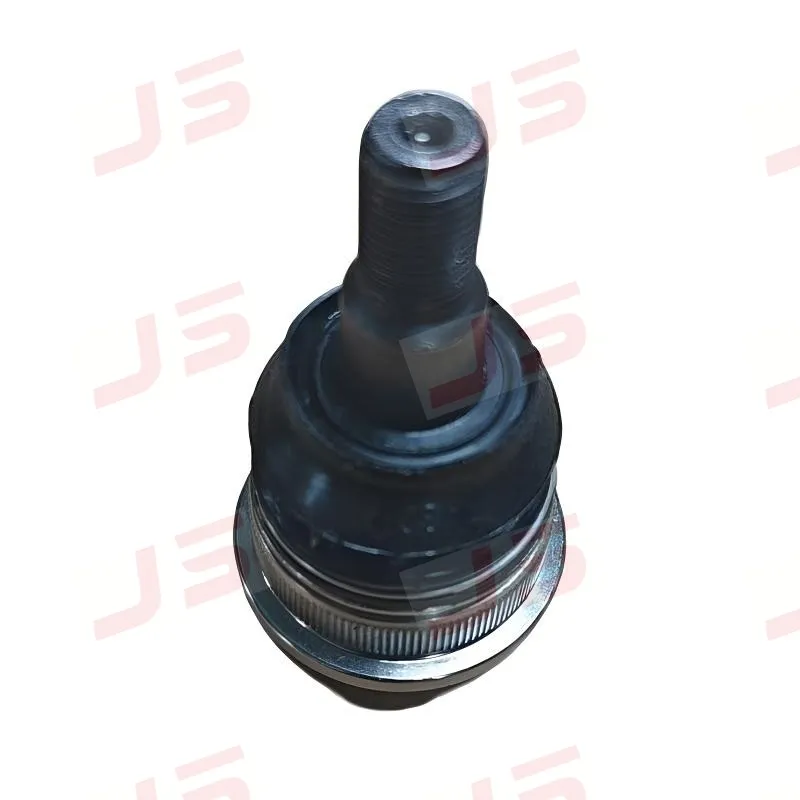
Greaseable vs Sealed Ball Joints: Which Is Better?
Neither type is universally better. The correct choice depends on three variables: duty cycle, your willingness to grease on schedule, and how much contaminant exposure the joint will see. That conditional answer matches what experienced mechanics on Reddit, Oilburners.net, Wrangler Forum, and Bob Is The Oil Guy consistently report, even when their individual preferences differ.
The real failure mode is not picking the "wrong" type. It is picking a greaseable joint and never greasing it, or paying a premium for greaseable joints on a vehicle that never leaves pavement. A greaseable joint that is never serviced performs worse than a sealed joint because its grease passages and boot design assume periodic purging. A sealed joint on a lifted truck that fords water and mud will fail earlier than a properly maintained greaseable unit because it cannot expel contaminants.
So the verdict is conditional: sealed for stock daily drivers in normal conditions with no greasing routine; greaseable for off-road, towing, fleet, or any application where you will actually grease on schedule. The rest of this article gives you the framework to make that call for your specific vehicle.
The Greaseable vs Sealed Decision Framework: Match the Joint to Your Reality
Start by classifying your vehicle into one of three use cases, then layer maintenance willingness and climate on top.
Use case 1: Stock daily driver
Normal commute, paved roads, no significant towing. Sealed joints are the rational default. They require no service, they are factory-filled with the correct lubricant, and they eliminate the risk of a missed grease interval. If you never plan to crawl under the truck with a grease gun, this is your answer.
Use case 2: Lifted/off-road rig
Larger tires, articulation, mud, water crossings, dust, and possibly salt. Greaseable joints win here — not because they are inherently stronger, but because you can purge water and grit out through the grease passage before they grind the ball stud. This is the application where the maintenance ritual actually pays for itself.
Use case 3: Fleet or wholesale program
High mileage, predictable routes, and either a shop that services vehicles on a schedule or a customer base that expects long service intervals. Sealed joints reduce labor touchpoints; greaseable joints reduce replacement frequency in harsh duty. The right answer depends on whether your labor rate or your parts cost dominates your total cost of ownership.
Maintenance willingness
Be honest. Will you grease every oil change, or every 5,000–6,000 miles, or as the manufacturer specifies? If the answer is "probably not," choose sealed. A greaseable joint with a dry zerk is a liability.
Climate and contaminant exposure
Wet, salty, or dusty environments accelerate wear and increase the value of fresh grease. A vehicle in the Rust Belt or a dusty job site benefits more from greaseable joints than the same vehicle in a dry, mild climate.
Decision matrix
- Daily driver + normal conditions + no greasing willingness → sealed.
- Off-road/towing/fleet + willing to grease → greaseable.
- Harsh climate + willing to grease → greaseable.
- Harsh climate + not willing to grease → sealed, and accept shorter replacement intervals.
Greaseable vs Sealed Ball Joints: Side-by-Side Comparison
| Aspect | Greaseable Ball Joint | Sealed Ball Joint |
|---|---|---|
| Lubrication | Serviceable via zerk fitting; purge and refill on schedule | Factory-filled for life; no service possible |
| Contaminant handling | Purge water, grit, and old grease out through the passage | Cannot expel contaminants; torn boot means countdown to failure |
| Maintenance requirement | Grease every oil change / 5,000–6,000 miles per spec | Zero scheduled maintenance |
| Typical service life | Longer when maintained; shorter than sealed when neglected | Consistent; shorter in harsh duty with no purging option |
| Strengths | Serviceability, contaminant purging, longer life in harsh duty | Zero maintenance, no missed-interval risk, simpler installation |
| Weaknesses | Worthless without greasing discipline; passage design varies | No recovery path once contaminated; earlier replacement in harsh duty |
| Upfront cost | Similar to sealed at comparable quality tiers | Similar to greaseable at comparable quality tiers |
| Best fit (B2B) | Fleet, off-road, and workshop channels with service programs | Retail and wholesale volume; fit-and-forget customers |
The 'Greaseable Joints Are Weaker' Argument: Engineering Reality vs Myth
The claim that greaseable joints are weaker because of the grease fitting is mostly myth, but it contains a kernel of truth that depends entirely on design execution.
The grease fitting itself does not weaken the ball stud. On virtually all production ball joints, the zerk fitting is threaded into the housing, not the ball stud. The ball stud is the load-bearing element; the housing carries the stud and the bearing surfaces. A fitting in the housing does not reduce the cross-sectional area of the stud or compromise the load path.
The critical factor is the grease passage — the internal channel that carries grease from the fitting to the bearing surfaces. A properly engineered passage is routed through low-stress regions of the housing and does not intersect the primary load-bearing surfaces. A poorly designed passage drilled through a high-stress area can create a stress riser and become a crack initiation site. Quality manufacturers avoid this; budget manufacturers sometimes do not.
Sealed joints are not automatically stronger. They simply eliminate the fitting and the passage, which removes those potential failure points but also removes the ability to purge contaminants. A sealed joint that ingests water through a torn boot has no recovery path; a greaseable joint can be purged and re-lubricated. So the strength comparison is not "greaseable = weaker." It is "poorly designed greaseable = potentially weaker; well-designed greaseable = equivalent strength with serviceability."
Application-Specific Guidance: Dana 60, Ford Ranger, Jeep Wrangler, and More
Dana 60, Ford Ranger, and Jeep Wrangler appear repeatedly in forum threads on this topic, so they are worth addressing directly — with the caveat that you must verify fitment and part numbers with the manufacturer or a trusted supplier. This article does not provide fitment data.
Dana 60 in lifted trucks
Heavy-duty applications with large tires and frequent off-road use favor greaseable joints. The ability to purge water and debris after a mud run or water crossing is a real advantage. The trade-off is that you must actually grease them.
Ford Ranger as a daily driver
Sealed joints are usually sufficient unless the truck sees regular off-road or towing duty. If it is a pavement commuter, the sealed joint's zero-maintenance design is the better fit.
Jeep Wrangler that off-roads frequently
Greaseable joints are the common preference because they let you purge water and debris after trail rides. Wrangler owners who never leave pavement can run sealed joints without penalty.
General rule for any platform
Match the joint type to the hardest duty the vehicle actually sees, not the duty you imagine it might see. A truck that never leaves pavement does not need greaseable joints. A truck that fords water monthly does.
Cost Over Life: Grease, Grease Gun, and Labor vs Sticker Price
Sticker price is the wrong comparison. The total cost of ownership includes the joint price, grease cost per service, tool amortization, and labor time — whether DIY or shop rate.
Greaseable joints require periodic greasing. That means a grease gun (one-time cost, amortized over years), grease (a tube lasts multiple services), and labor time. If you DIY, the labor cost is your time — maybe 15–30 minutes per service depending on access. If a shop does it, you pay their rate. Over a typical ownership period, those costs add up but are usually modest compared to the cost of replacing a joint prematurely.
Sealed joints have no greasing requirement, which eliminates grease, tool, and labor costs. But in harsh conditions they may need replacement sooner because they cannot purge contaminants. For high-mileage fleet vehicles, the labor savings from sealed joints can be offset by shorter replacement intervals — especially if the replacement labor is significant.
The calculation: add joint price + (grease cost × number of services) + tool amortization + (labor rate × service time × number of services) for greaseable. For sealed, add joint price + (replacement labor × number of replacements). Whichever total is lower for your duty cycle and ownership horizon is the better economic choice. Do not assume one type is cheaper without running the numbers for your situation.
Grease Type and Compatibility: What to Use and What to Avoid
Use a high-quality lithium complex or molybdenum disulfide (moly) grease as specified by the joint manufacturer. Mixing incompatible greases can cause the thickener base to break down, leading to lubricant failure. If you do not know what grease is already in the joint, purge it thoroughly before adding a different type.
Greaseable joints allow purging of contaminants, but only if greased regularly. Neglecting them leads to accelerated wear — the grease passage becomes a liability rather than an asset. The honest limit of "sealed = maintenance-free" is that sealed joints are not truly maintenance-free. They can still fail due to boot damage or loss of lubricant, and they cannot be re-greased. A sealed joint with a torn boot is on a countdown to failure with no intervention possible.
Always follow the manufacturer's grease recommendations. When in doubt, consult a professional. Do not assume that any grease is better than no grease — the wrong grease can be worse than a dry joint in some cases.
Can You Retrofit a Sealed Joint with a Grease Fitting? When It's a Bad Idea
Some sealed joints can be drilled and tapped for a grease fitting, but this is generally a bad idea. Drilling introduces metal shavings into the joint, and tapping compromises the boot seal. More importantly, the internal design may not have a grease passage to distribute grease to the ball stud. If the joint is not designed for greasing, adding a fitting may provide a false sense of security without actually lubricating the critical surfaces.
The only safe retrofit is if the manufacturer offers a kit or the joint is specifically designed to accept a fitting. Otherwise, leave sealed joints sealed. If you need greaseable joints, buy greaseable joints.

Frequently Asked Questions
Are greaseable ball joints better than sealed?
Neither is universally better. Greaseable joints last longer in harsh duty when serviced on schedule; sealed joints win for stock daily drivers with no greasing routine. The deciding factors are duty cycle, contaminant exposure, and whether the joint will actually be greased.
How often should you grease greaseable ball joints?
Follow the manufacturer's specification — typically every oil change or every 5,000–6,000 miles. Purging old grease matters as much as adding fresh grease: pump until clean grease exits the boot.
Can you mix grease types in a ball joint?
Avoid it. Mixing incompatible thickener bases can break down the lubricant. If you do not know what grease is in the joint, purge it thoroughly before switching types, and always follow the manufacturer's recommendation.
Do sealed ball joints last as long as greaseable ones?
In normal daily-driver conditions, yes — often with less hassle. In harsh conditions (water, mud, dust, salt), a maintained greaseable joint typically outlasts a sealed one because contaminants can be purged instead of trapped.
Should I convert sealed ball joints to greaseable?
Generally no. Drilling and tapping a sealed joint introduces metal shavings, compromises the boot seal, and the housing may lack a proper grease passage. If you want greaseable joints, buy joints designed as greaseable.
Making the Call: Your Next Steps for Ball Joint Selection and Maintenance
Reiterate the conditional verdict: sealed for stock daily drivers in normal conditions with no greasing willingness; greaseable for off-road, towing, fleet, or harsh climates with a real maintenance routine. The worst outcome is choosing greaseable and never greasing, or overpaying for greaseable on a vehicle that never leaves pavement.
Verify fitment and part numbers with a trusted supplier before ordering. Follow the manufacturer's maintenance schedule. If you are a wholesale buyer or importer, consider offering both types to meet diverse customer needs, and educate your buyers on proper selection — the conditional framework in this article is the same one your customers need.
For related suspension components, see our Control Arm — 54500-CG000 and Front Lower Ball Joint — 54530-0U000.
Sourcing Decision Framework for B2B Buyers
If you stock or distribute ball joints, use this five-step filter before placing an order:
- Segment your demand. Repair shops and retail customers default to sealed joints (zero-maintenance sell). Off-road shops, fleets, and agricultural channels ask for greaseable.
- Stock both, weighted by channel. A distributor serving mixed customers should carry both types; weight sealed heavier for general retail and greaseable heavier for 4x4 and fleet specialists.
- Qualify the grease passage design. For greaseable SKUs, ask suppliers how the passage is routed — it should avoid primary load-bearing surfaces. A passage drilled through a high-stress area is a crack initiation site.
- Bundle the maintenance story. Greaseable joints sell with grease, grease guns, and service-interval education. Sealed joints sell on install-and-forget convenience. Train your sales team on both pitches.
- Verify, don't trust. Request dimensional inspection reports and boot and seal quality documentation for the exact part numbers you buy. Consistent boot sealing matters most for sealed joints (no recovery path); consistent passage machining matters most for greaseable ones.
---
Related