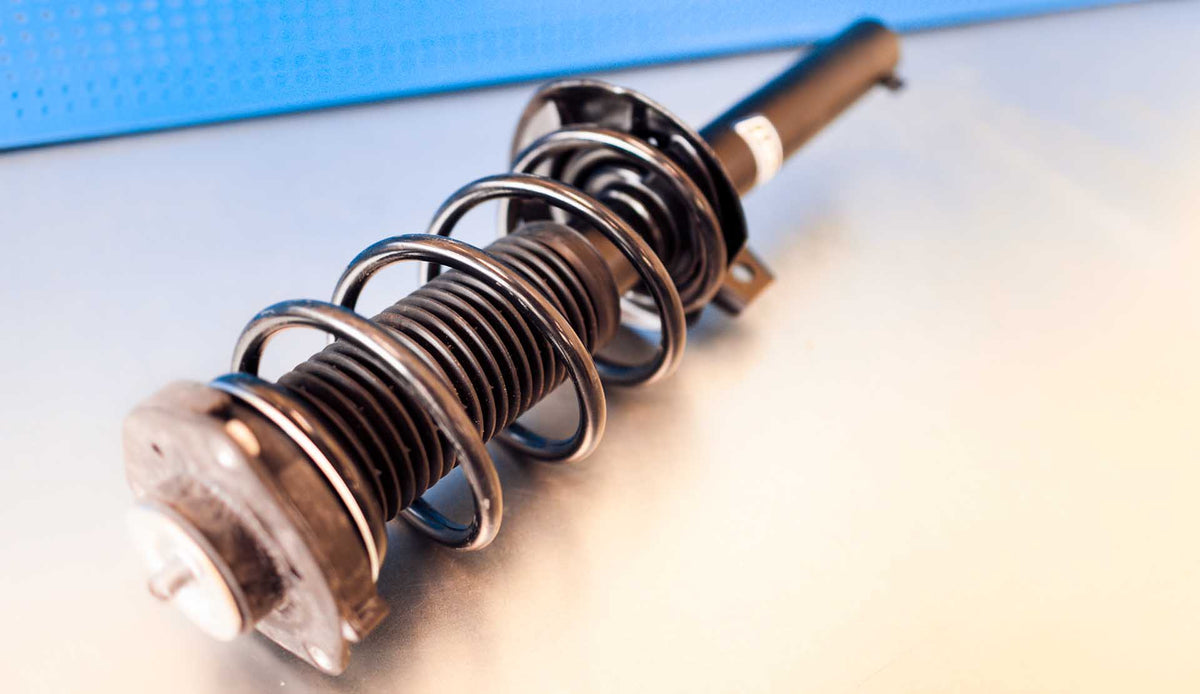
Coil Spring Manufacturing Process: How Winding, Material, and Finishing Decide Load, Fatigue, and Corrosion Performance

A coil spring is not defined by its dimensions. It is defined by the cumulative result of matched winding method, material grade, and finishing treatments. Two springs with identical wire diameter, free length, and coil count can diverge sharply in fatigue life, load consistency, and corrosion resistance because of decisions made before and after coiling.
The core manufacturing steps are wire selection, coiling, heat treatment, stress relief, end grinding, shot peening, scragging, and coating. Each step either reinforces or undermines the others. A spring wound from the correct grade but under-shot-peened will fatigue earlier than its dimensions suggest. A spring scragged properly but coated for the wrong environment will pit and crack from corrosion before it reaches its cycle target.
Buyers who compare springs on price or a single spec — usually wire diameter — miss the trade-offs that govern durability and handling. Wire diameter tells you roughly what load a spring can carry. It tells you nothing about how that load holds after 500,000 cycles, how the spring behaves after a winter of road salt, or whether ride height will stay consistent across a production run. The decision lens for evaluating any coil spring is: which winding method, which material grade, and which finishing steps were chosen — and were those choices matched to the application or made for cost alone?
Hot Winding vs Cold Winding: The First Decision That Shapes Everything Else
Hot winding and cold winding are the two primary coiling methods. The choice depends on wire diameter, material, and required properties. It is the first decision because it constrains everything downstream — heat treatment, residual stress state, dimensional control, and cost structure.
Hot winding is generally associated with larger wire diameters and heavy-duty applications where forming at temperature is necessary. The wire is heated above its recrystallization temperature, coiled while soft, then heat-treated to develop final properties. This enables sizes and materials that cold winding cannot form, but it carries higher energy and handling costs, and dimensional control is looser because the wire moves during cooling.
Cold winding is generally used for smaller wire and higher-volume production where tighter dimensional control and surface finish matter. The wire is formed at room temperature, retaining the pre-existing properties of the drawn wire, and typically followed by stress relief rather than full heat treatment. It is faster and more repeatable, but constrained by wire size and ductility — wire that is too large or too stiff will crack or spring back unpredictably.
The cost drivers differ in ways that matter to buyers. Hot winding carries higher energy and handling costs but enables sizes and materials cold winding cannot form. Cold winding is faster and more repeatable but constrained by wire size and ductility. The winding method also influences downstream steps: hot-wound springs typically require heat treatment after coiling, while cold-wound springs may rely on the wire's pre-existing properties plus stress relief. When a supplier quotes a spring, the winding method is often the single largest driver of unit cost and lead time — and the one most likely to be substituted without the buyer noticing.
Material Grade: Why 'Steel Wire' Is Not a Specification
Common coil spring materials include various steel wire types, and the specific grade matters for the application. 'Steel wire' is not a specification — it is a category. Two springs with the same dimensions but different grades will not age the same way.
Material grade affects hardenability, fatigue resistance, and the spring's ability to hold load over cycles. A higher-grade wire with cleaner steel and better control of inclusions will resist fatigue crack initiation longer than a lower-grade wire of the same diameter. That difference does not show up in a new spring on a bench — it shows up after tens of thousands of miles.
Material selection interacts with winding method. Some grades are more amenable to cold forming, others require hot forming and subsequent heat treatment. A grade chosen for cold winding may not survive hot forming without losing properties, and a grade chosen for hot winding may be unnecessarily expensive if the application could be cold wound. For automotive applications, corrosion resistance and fatigue life are often the deciding material factors, especially in road-salt environments. A grade with good fatigue resistance but poor corrosion resistance will fail prematurely in a salt-belt vehicle unless the coating compensates.
Finishing Steps That Decide Fatigue Life and Load Consistency: Stress Relief, Shot Peening, and Scragging
Stress relief, shot peening, and scragging are distinct finishing steps, and they are not interchangeable. Stress relief addresses residual stresses from forming, shot peening targets fatigue life, and scragging targets load consistency and dimensional stability. Skipping or under-controlling any of these steps can shift a spring from meeting load and fatigue requirements to failing them — even if the winding and material are correct.
Stress Relief and Shot Peening
Stress relief is a controlled heat treatment that reduces the internal stresses locked into the wire during coiling. Without it, a cold-wound spring may distort or lose load as those stresses relax in service. It is a stabilizing step, not a strengthening one.
Shot peening improves spring performance, commonly by inducing compressive residual stresses at the surface that resist fatigue crack initiation. The surface of a spring is where fatigue cracks start, because that is where tensile stresses concentrate under load. Shot peening bombards the surface with small media, creating a compressive layer that counteracts those tensile stresses. The result is a spring that can survive more cycles at the same load — or the same cycles at a higher load. Shot peening is not a cosmetic step; it is a fatigue-life decision.
Scragging and Setting
Scragging is a process that presets the spring to reduce in-service load loss (sag). The spring is compressed to solid height — or to a controlled overload — and held, which induces beneficial residual stresses and removes the initial permanent set that would otherwise occur in the first weeks of service. A scragged spring holds its free length and load height more consistently than an unscragged one. For automotive applications, where ride height and alignment depend on spring load, scragging is the difference between a spring that settles predictably and one that sags unevenly.
Coating and Corrosion Resistance: Choosing Protection for the Real Service Environment
Corrosion resistance is an automotive-specific requirement, especially in road-salt environments, and coating choice should match the expected exposure. Coating is one of the standard finishing steps in coil spring manufacturing, but it is not a default — it is a decision driven by where the vehicle will operate.
Coating interacts with the rest of the process. Surface preparation and prior steps — especially shot peening — affect coating adhesion and performance. A coating applied over a poorly prepared or contaminated surface will fail at the interface, allowing corrosion to start underneath. Shot peening creates a surface profile that can improve adhesion if the coating process is matched to it, or cause problems if it is not.
Corrosion is a fatigue-life issue, not just a cosmetic one. Pitting from corrosion can initiate fatigue cracks, so coating choice affects both appearance and structural durability. A spring that looks fine but has surface pitting is already on a shorter fatigue path. For buyers, the question is not 'is it coated?' but 'is it coated for the environment this vehicle will see?' A coating adequate for a dry climate may be insufficient for a salt-belt or coastal market.
Quality Control and Inspection: How Manufacturing Variation Shows Up in Vehicle Handling and Safety
Load testing and dimensional checks are the primary inspection steps that verify a spring meets its specification. They are also the steps that catch the variation which, left unchecked, becomes a vehicle-level problem.
Manufacturing variation — in wire diameter, coil geometry, heat treatment, or finishing — can shift spring rate and free length, which in turn affects ride height, alignment, and handling balance. A spring that is slightly out of spec on rate may still fit and drive, but it will change the vehicle's corner weights and ride height, which affects alignment angles and tire wear. Variation that is not caught in inspection becomes a vehicle-level issue: uneven ride height, unpredictable handling, or premature failure.
Fatigue and load validation are automotive-specific requirements because springs cycle millions of times in service and must hold load over that life. A spring that passes a static load test may still fail in fatigue if the finishing steps were under-controlled. This is why inspection is not just a final gate — it is a check on whether the process decisions made earlier were correct. For buyers, the practical question is: what does the supplier inspect, how often, and what happens when a lot is out of spec?
Automotive-Specific Trade-Offs: Weight Optimization, Corrosion, and Fatigue Validation
Weight optimization pushes toward higher-strength materials and optimized geometry, which in turn constrains winding method and finishing choices. A lighter spring generally means higher stress, which means fatigue life and surface condition become more critical — not less. Corrosion resistance for road salt is an automotive-specific requirement that affects material and coating selection. Fatigue and load validation are required because automotive springs must survive millions of cycles while holding load — a requirement that shapes material, winding, and finishing decisions together.
These three requirements often pull in different directions. A higher-strength material may be more sensitive to corrosion pitting. A coating that improves corrosion resistance may add weight or affect surface fatigue properties. A geometry optimized for weight may require a winding method that limits material choice. The manufacturing process is a balancing act rather than an optimization of any single property. Buyers who understand this can evaluate a spring against the vehicle's actual service environment rather than against a generic spec sheet.
How to Evaluate a Coil Spring Supplier: Questions That Reveal Process Decisions
Ask which winding method was used and why. The answer reveals whether the spring was matched to the application or chosen for cost alone. A supplier who can explain why hot or cold winding was selected for a given wire size and application is controlling the process; one who cannot is likely substituting whatever is cheapest.
Ask which material grade was specified and how it was selected. A vague answer signals a generic spring rather than an application-matched one. The grade should connect to the fatigue and corrosion requirements of the vehicle, not just to the dimensions.
Ask which finishing steps were performed — stress relief, shot peening, scragging, coating — and how they were validated. This reveals whether the supplier controls the steps that determine fatigue life and load consistency. A supplier who can describe the shot peening intensity, the scragging height, and the coating specification is managing the process; one who lists steps without parameters is not.
Ask how load and dimensional variation are controlled and inspected. This reveals whether the supplier manages the variation that affects vehicle handling and safety. The answer should include what is measured, how often, and what the acceptance criteria are.
For buyers sourcing suspension components, these questions apply across the board — whether you are evaluating coil springs or related parts like automotive suspension components such as control arms and bushings. The same process discipline that produces a consistent spring produces a consistent bushing or control arm. If you want to see how we apply these controls in production, review our manufacturing facility and quality control processes, or about our company to understand our approach to automotive parts supply.