Bad Shock Absorber Symptoms: A Mechanic-Grade Diagnostic Guide

How Shock Absorbers Work: A Brief Overview
Shock absorbers control the motion of your vehicle's springs by converting kinetic energy into heat. This damping action keeps your tires in contact with the road, ensuring stable braking, steering, and cornering. Without effective shocks, your tires lose traction, leading to dangerous handling and uneven tire wear.
Top Symptoms of Bad Shock Absorbers
Here are the 8 most common symptoms, with distinctions between front and rear where relevant.
1. Excessive Bouncing
If your car continues to bounce after hitting a bump or dip, your shocks are likely worn. A quick test: press down firmly on the hood or trunk. If it bounces more than twice before settling, your shocks are failing. This symptom is often more noticeable in the rear.
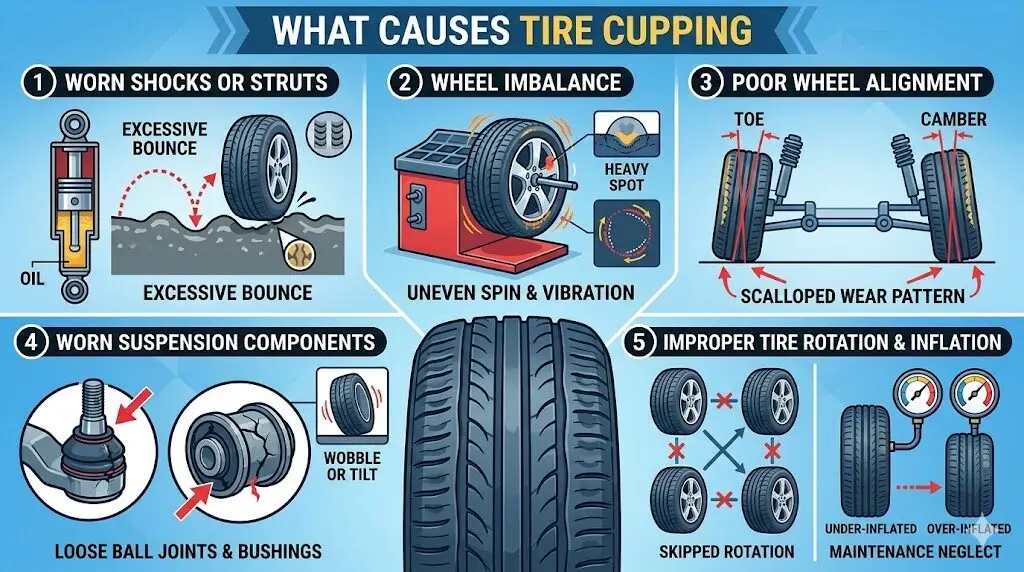
2. Uneven Tire Wear
Worn shocks allow tires to bounce and lose contact with the road, causing uneven wear patterns. Look for cupping or scalloping—a series of high and low spots on the tread. Front shocks often cause wear on the outer edges of front tires, while rear shocks cause cupping on rear tires.
3. Nose Diving During Braking
When you brake, the vehicle's weight shifts forward. Good shocks control this transfer, keeping the car level. If your car's nose dives sharply during braking, your front shocks are likely worn. This increases stopping distance and can make the car feel unstable.
4. Body Roll in Corners
Excessive body roll when cornering indicates weak shocks. The vehicle leans to the outside, reducing tire contact and grip. This is especially dangerous in emergency lane changes or evasive maneuvers. Rear shocks play a key role in controlling body roll, so if the rear feels loose, suspect them.
5. Fluid Leaks
Shock absorbers contain hydraulic fluid. If you see oil or fluid on the shock body, it's a sign of seal failure. A leaking shock has lost its damping ability and must be replaced. Check for wetness, dirt buildup, or streaks on the shock absorber casing.
6. Unusual Noises
Clunking, knocking, or rattling sounds from the suspension, especially over bumps, can indicate worn shocks or loose mounting hardware. Worn bushings or a loose shock can cause these noises. If you hear them, inspect the shocks and their mounts.
7. Vibrations in Steering Wheel
Worn front shocks can cause vibrations in the steering wheel, especially at highway speeds. This is due to reduced tire contact and uneven tire wear. If you feel a shimmy or vibration, check your shocks and tires.
8. Poor Handling and Stability
If your car feels floaty, wanders, or is difficult to control at highway speeds, your shocks are likely compromised. This is a serious safety concern, as it affects your ability to maintain your lane and respond to emergencies.
How to Diagnose Bad Shocks: The Bounce Test and Visual Inspection
You can perform a thorough DIY inspection with no special tools. Follow these steps:
- Visual Inspection: Park on a level surface and inspect each shock absorber. Look for fluid leaks, dents, or damage to the shock body. Check the mounting bushings for cracks or wear. If you see oil, the shock is leaking and needs replacement.
- Bounce Test: Press down firmly on each corner of the car and release. The car should settle quickly and smoothly. If it bounces more than twice, the shock is worn. Repeat on all four corners.
- Road Test: Drive over a series of bumps and listen for noises. Pay attention to how the car handles during braking and cornering. Note any vibrations in the steering wheel or seat.
- Tire Wear Check: Inspect your tires for cupping, scalloping, or uneven wear. These patterns indicate that the shocks are not keeping the tires in contact with the road.
Safety Risks of Driving with Worn Shocks
Driving with bad shocks is dangerous. Here's what you're risking:
- Increased Stopping Distance: Worn shocks can increase your braking distance by several feet, especially on uneven surfaces. This could be the difference between a near-miss and a collision.
- Reduced Stability: During emergency lane changes or evasive maneuvers, worn shocks cause excessive body roll and reduce tire grip, increasing the risk of rollover or loss of control.
- Premature Wear of Other Components: Bad shocks cause accelerated wear on tires, bushings, and other suspension parts. This leads to more expensive repairs down the road.
- Loss of Control in Wet or Icy Conditions: Reduced tire contact means less traction, making it easier to hydroplane or skid.
When to Replace: Lifespan and Mileage Guidelines
Shock absorbers typically last between 50,000 and 100,000 miles, but this varies with driving conditions. If you frequently drive on rough roads, carry heavy loads, or tow, they may wear out sooner. If you notice any of the symptoms above, replacement is recommended. Otherwise, inspect them at regular intervals—every 20,000 miles or so—to catch wear early.
Shocks vs. Struts: What's the Difference and Why It Matters
Shocks and struts are often confused, but they serve different roles. Shocks are standalone dampers that control spring motion. Struts are structural components that also support the vehicle's weight and provide a mounting point for the steering and suspension. Symptoms are similar, but replacement procedures differ. Knowing which part your vehicle uses is essential for purchasing the correct replacement. Check your owner's manual or consult a professional if you're unsure.
Replacement Cost: What to Expect and Why Quality Matters
The average replacement cost for shocks or struts ranges from $200 to $800 per axle, depending on your vehicle and labor rates. While it may be tempting to choose the cheapest option, quality matters. High-quality shocks improve ride comfort, handling, and longevity. Cheaper parts may wear faster and compromise safety. Invest in reputable brands that meet your vehicle's specifications.
Why Choose Quality Shocks: Manufacturer's Perspective
As a manufacturer of automotive suspension components, we understand the engineering that goes into a quality shock absorber. We use high-grade materials and rigorous testing to ensure durability and performance. Our manufacturing facility employs advanced processes and quality control measures to meet or exceed OEM standards. When you choose quality shocks, you're investing in safety and reliability.
Conclusion: Don't Ignore the Signs
Bad shock absorbers are a safety risk that should not be ignored. If you've identified any of the symptoms discussed, schedule a professional inspection or proceed with replacement. Choose quality parts from reputable brands, and consider professional installation if you lack the tools or experience. Your safety—and the safety of others on the road—depends on it.