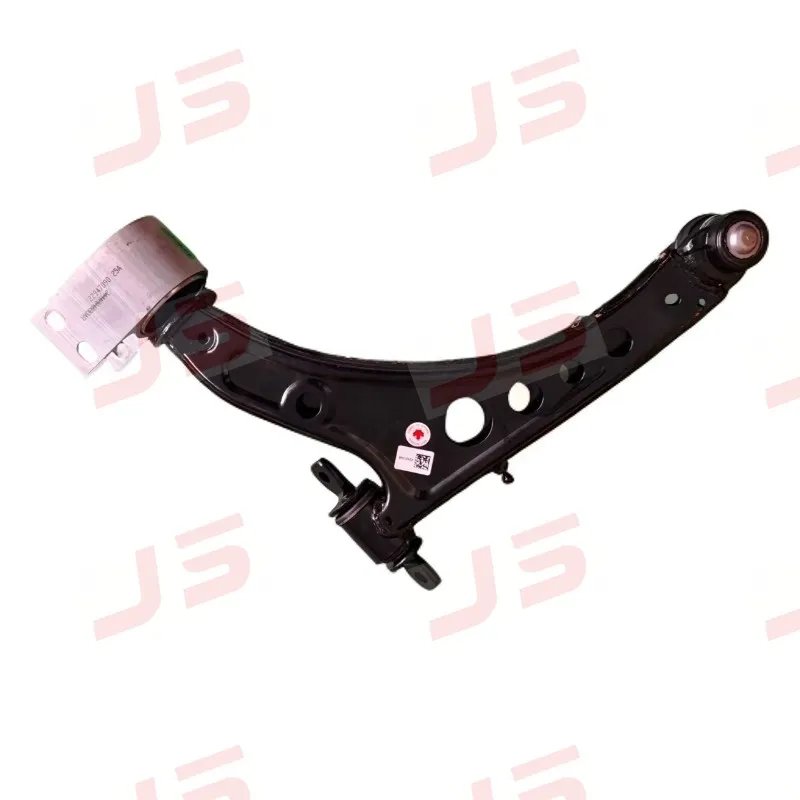
Adjustable Control Arms and Camber Kits: A B2B Specification and Stocking Guide
Camber kits are correction-only components that recover alignment within a narrow, platform-specific range. Full adjustable control arms are required when the needed range, durability, or caster correction exceeds what a kit can deliver. The decision is not "which is better" — it is a fitment and range calculation driven by vehicle platform, lift or lower height, and alignment target. For B2B buyers, that same calculation becomes a stocking decision governed by MOQs, lead times, and warranty terms.
Start by calculating the required correction in degrees for the platforms you service. If the target falls inside the kit's published range for that chassis, the kit is the correct, cost-effective SKU. If it falls outside — or if caster correction is needed — specify a full adjustable arm. This range-first logic prevents the two most common B2B errors: overstocking expensive arms for mild corrections, and understocking kits that max out on the rack.
Camber Kits vs. Adjustable Control Arms: Function, Adjustment Range, and Durability Compared
Camber kits correct camber (and sometimes caster) within a limited range; adjustable control arms replace the OE arm and provide a wider, often on-car adjustable range. That functional difference is the entire comparison.
| Decision factor | Camber kit | Full adjustable control arm |
|---|---|---|
| Adjustment range | Correction-only; narrow, platform-specific | Wider range; often adjustable on the vehicle |
| Unit cost & inventory | Lower cost; lighter MOQ exposure | Higher cost; ties up more working capital |
| Durability / duty cycle | Mild corrections, street-driven vehicles | Higher-duty use: lifted trucks, off-road, track |
| Caster correction | Limited or none | Documented caster adjustment range |
| When to stock it | Platforms you service with mild drops | Lifted or lowered platforms needing real range |
| What to verify | Published range for the chassis code | Chassis-specific range plus written warranty terms |
- Adjustment range: kits are correction-only and low-cost with limited range. Full arms offer greater range and alignment stability.
- Durability: full adjustable control arms are specified for higher-duty applications where the kit's range or construction is insufficient.
The "camber kit vs control arms" question is answered by the required range and the alignment target, not by brand or price. A kit that maxes out at the edge of its range will not hold alignment under load; an arm specified for a mild correction is overkill that ties up capital. Match the component to the target, then compare suppliers on construction and terms.
Platform and Lift/Lower Height: The Primary Fitment Filter for B2B Buyers
Platform and lift/lower height are the first filter in the buying decision — before brand, before price.
- Lifted trucks: upper control arm replacement is commonly required once lift height exceeds the range the OE arm and a camber kit can correct.
- Lowered cars: camber kits are often sufficient for mild drops within their correction range; full adjustable arms are required when the drop exceeds that range or when caster correction is needed.
Chassis codes and platform notes are the primary selection filter. Buyers should specify by platform before considering brand or price. The "2 inch lift" vs "3 inch lift" question is a range question: whether the required correction falls inside the kit's range or requires a full arm. For example, a 2-inch lift on one chassis may sit inside the kit's range while the same lift on a different chassis does not — the platform note, not the lift number alone, decides.
Range Calculation Framework: Turning Lift/Drop Into a Specification Decision
You cannot specify a component without a target number. The framework below is platform-agnostic and uses only inputs you already have on the alignment rack or in the supplier's fitment sheet.
- Establish the OE alignment baseline. Record camber and caster on the stock vehicle at ride height. This is your reference point.
- Measure the after-modification alignment. After the lift or drop is installed, re-measure camber and caster. The delta between step 1 and step 2 is the correction you must recover.
- Convert the delta to a required range. The required range is the measured delta plus a working margin for load, ride-height variation, and future adjustment. Do not specify a component whose published range equals the delta exactly — a maxed-out adjuster will not hold alignment under load.
- Compare to the supplier's published range for that chassis. The range figure must come from the supplier's fitment sheet or product data for the specific chassis code — not from a generic "fits most" claim. If the supplier cannot provide a chassis-specific range, treat the range as unverified.
- Decide. If the required range falls inside the kit's published range, specify the kit. If it falls outside, or if caster correction is required, specify a full adjustable arm.
This is the arithmetic the decision hinges on. The lift or drop number alone does not determine the answer; the measured alignment delta on that chassis does.
Technical Specification Framework: Materials, Bushings, and Ball Joint vs. Uniball Trade-offs
Bushing types — polyurethane vs rubber vs spherical — each have a different trade-off between compliance, NVH, and alignment stability.
Do not rely on fabricated load ratings or certification claims (TÜV, DOT) unless the supplier can substantiate them from supplied product facts. Build a specification checklist: bushing type, pivot design, adjustment mechanism, and verified range per platform. Compare suppliers on these points rather than marketing language.
Ball Joint vs. Uniball vs. Spherical Bearing
Ball joints suit daily drivers and OE-style service life. Uniballs and spherical bearings offer greater articulation for off-road or race use, with different maintenance and NVH trade-offs. Specify by duty cycle: a street-driven vehicle rarely needs a uniball, while a lifted off-road truck may require the articulation a ball joint cannot provide. Verify the pivot design matches the intended use before committing to a stock order.
Caster Correction: The Safety and Steering-Feel Requirement Buyers Under-Specify
Caster correction is a safety and steering-feel requirement, not just a camber adjustment. Lifted and lowered vehicles often need caster correction that a camber-only kit cannot provide. When caster correction is required, a full adjustable control arm is the correct specification.
Symptoms That Point to Caster, Not Camber
Caster affects steering return-to-center and straight-line stability. When caster is out of spec after a lift or drop, the symptoms are typically:
- Wandering at highway speed — the vehicle requires constant small steering corrections.
- Weak or slow return-to-center — the wheel does not self-center after a turn.
- Vague on-center feel — reduced steering precision without a camber-related tire wear pattern.
If a customer reports these symptoms after a lift or drop, camber adjustment will not fix them. Specify caster correction at the point of sale, not after the comeback.
How to Specify Caster Correction
- Measure caster on the alignment rack before and after the modification, using the same method as the camber delta.
- Compare the measured caster to the OE specification for that chassis.
- If the required caster correction exceeds what a camber kit's limited caster range can deliver, specify a full adjustable control arm with a documented caster adjustment range for that chassis.
- Confirm the arm's caster range on the supplier's fitment sheet — not from a general product description.
Wholesale Logistics: MOQs, Lead Times, Tier Pricing, and Warranty Terms
Pricing tiers, MOQs, and lead times are part of the stocking decision, not an afterthought. Distributor support and warranty terms should be compared alongside the technical specification. Specify by platform and range first, then negotiate terms — not the other way around.
Structuring MOQ Negotiations
MOQs are usually set per SKU, not per order. That matters when you stock multiple chassis codes: a low order-level MOQ can still leave you carrying slow-moving SKUs for platforms you service rarely. When negotiating:
- Ask whether MOQ is per SKU, per chassis family, or per order. The answer changes your working capital exposure.
- Ask whether mixed-SKU orders can meet a single order-level MOQ. This is the most common lever for buyers stocking several platforms.
- Ask whether MOQ tiers step down as order value or unit volume increases, and what the break points are.
- Ask whether MOQ applies to first orders only or to every reorder.
Lead-Time Variables to Ask About
Lead time is not a single number. Ask the supplier to break it down:
- Production or picking lead time — time from PO to shipment.
- Transit time — by mode (air, LCL, FCL), with the supplier's typical range.
- Customs and clearance — who handles documentation, and what the typical dwell is.
- Seasonality — whether lead times extend during peak lift/lower season.
- Backorder behavior — whether partial shipments are allowed and how backorders are priced.
Tier-Pricing Break Structures
Tier pricing is typically structured by unit volume per SKU, by total order value, or by annual committed volume. Ask which structure applies and where the break points sit. A tier that requires you to commit to a slow-moving chassis code to reach a price break is not a saving — it is inventory risk. Compare tiers on total cost of ownership, not headline unit price.
Warranty Term Components to Compare
Warranty terms are not interchangeable. Ask for written terms and compare:
- Coverage duration — by component (arm, bushing, ball joint/uniball, adjuster).
- Exclusions — off-road use, racing, modified suspension beyond the intended range, improper installation, and maxed-out adjusters are common exclusions.
- Claim process — who files, what documentation is required (alignment printouts, installation records, proof of purchase), and the turnaround time.
- Remedy — replacement, credit, or refund, and who pays return freight.
- Distributor support commitments — technical support, fitment data, and marketing assets, in writing.
A lower unit price with weak warranty support can cost more in comebacks than a higher-priced SKU with clear terms. Ask suppliers for written warranty terms, return policies, and distributor support commitments before placing a stock order.
Alignment Pitfalls After Installation: What Shops Must Check Before the Vehicle Leaves
Verify the achieved alignment falls within the target range; if it does not, the kit-vs-arm decision was wrong for the platform. Check caster as well as camber after installation. Confirm adjustment range is not maxed out — a maxed-out kit indicates a full arm was required. Document the alignment before and after to support warranty and comeback discussions.
A maxed-out kit is the clearest signal that the specification was wrong. Shops should treat it as a red flag, not an acceptable outcome. Documenting before-and-after alignment protects both the shop and the supplier in warranty discussions.

FAQ
Can a camber kit correct caster?
Some kits offer limited caster correction, but when caster correction is required, a full adjustable control arm is the correct specification.
How do I verify a supplier's claimed adjustment range?
Ask for the chassis-specific fitment sheet or product data showing the published range for that platform. If the supplier cannot provide a chassis-specific figure, treat the range as unverified and do not specify the component on that basis.
What documentation should I request for warranty?
Written warranty terms covering duration by component, exclusions, claim process, required documentation, remedy type, and who pays return freight. Verbal assurances are not sufficient for a stock order.
How do MOQ tiers typically interact with platform-specific SKUs?
MOQs are usually set per SKU, so stocking multiple chassis codes multiplies your minimum commitment. Ask whether mixed-SKU orders can meet a single order-level MOQ, and whether MOQ applies to first orders only or to every reorder.
What should I compare between suppliers?
Bushing type, pivot design, adjustment mechanism, verified range per platform, warranty terms, MOQs, and lead times — not just unit price.
Related
Fitment and application notes for the part numbers above should be confirmed against the supplier's chassis-specific fitment sheet before ordering. Product data for these SKUs is available on the linked product pages.