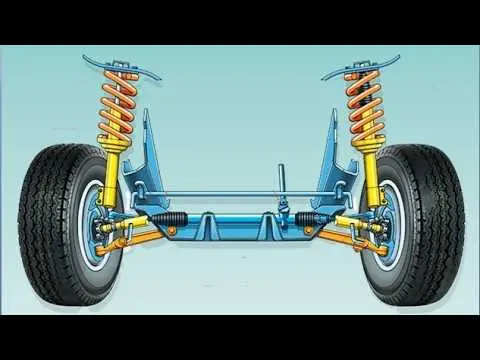
Key Quality Indicators in Suspension Parts Manufacturing
When evaluating a suspension parts manufacturer, start with these four concrete indicators:
Material grade and sourcing. A reputable manufacturer specifies steel grades (e.g., SAE 4140 for high-strength control arms) and sources from certified suppliers. Ask for material certificates (EN 10204 3.1) to verify composition and traceability. Avoid suppliers that cannot provide this documentation.
Precision tolerances. Critical components like ball joints and tie rod ends require tight tolerances (e.g., ISO 2768-m). Check if the manufacturer uses CNC machining for these parts and provides tolerance specifications on datasheets. Loose tolerances lead to premature wear and poor handling.
Surface treatment. Corrosion resistance is non-negotiable for suspension parts exposed to road salt and moisture. Look for zinc plating (yellow or clear), powder coating, or e-coating. Ask about salt spray test results (e.g., 96+ hours per ASTM B117).
Testing and inspection. A quality manufacturer performs 100% inspection on critical dimensions and conducts fatigue testing on load-bearing parts (e.g., control arms, steering knuckles). Inquire about their testing equipment (CMM, hardness testers) and whether they have in-house labs or third-party validation.
OEM vs Aftermarket Suspension Parts: Trade-offs and Considerations
OEM parts are designed to exact vehicle specifications, guaranteeing fit and performance. They typically come with the vehicle's warranty (e.g., 3-year/36,000-mile bumper-to-bumper). However, OEM parts are often 30-50% more expensive than aftermarket equivalents.
Aftermarket parts vary widely in quality. Reputable brands like Moog, Mevotech, and KYB offer improved materials (e.g., forged steel vs. cast) or enhanced features (e.g., greasable ball joints). But fitment can be an issue, especially for less common vehicles. Always check compatibility with your vehicle's year, make, and model.
Warranty and liability: OEM parts are covered under the vehicle warranty, while aftermarket warranties vary—some offer limited lifetime warranties (e.g., Moog, AC Delco). For critical safety components like control arms and steering knuckles, choose OEM or high-quality aftermarket to avoid liability issues.
Manufacturing Processes: Forging, Casting, and Stamping Impact on Quality
The manufacturing method directly affects part strength, durability, and cost. Here's what to look for:
Forging: Produces parts with aligned grain flow, making them stronger and more fatigue-resistant. Ideal for control arms, steering knuckles, and other load-bearing components. Forged parts are typically 20-30% stronger than cast equivalents but cost more due to tooling and energy.
Casting: Allows complex shapes at lower cost but may have porosity (internal voids) that weakens the part. Suitable for less critical components like brackets and mounts. Ask about the casting process (e.g., investment vs. sand) and whether they perform X-ray or ultrasonic inspection to detect porosity.
Stamping: Cost-effective for high-volume parts like shields and covers, but stamped parts have lower strength and are not suitable for load-bearing applications. If a manufacturer uses stamping for critical parts, that's a red flag.
Ask manufacturers about their primary process for each part and how it aligns with the part's function. A reputable manufacturer will explain why they chose a specific method.
Certifications and Standards: What to Verify and How
Key certifications to look for:
- IATF 16949 (formerly ISO/TS 16949): The global automotive quality management standard. This certification ensures the manufacturer has robust processes for design, production, and quality control.
- ISO 9001: General quality management, but less specific to automotive.
- Product-specific standards: e.g., SAE J429 for bolts, ASTM A576 for steel bars.
How to verify: Check the certification body's database (e.g., IATF Global Oversight) or request a copy of the certificate. Be wary of manufacturers claiming certifications without verifiable proof—you can cross-check with the issuing body.
Also, look for evidence of continuous improvement, such as Six Sigma or Lean manufacturing practices. A manufacturer that invests in quality systems is more likely to deliver consistent parts.
Cost Factors and Pricing Considerations
Understanding cost drivers helps you balance budget and quality:
Material costs: Higher-grade steel (e.g., SAE 4140) or aluminum increases price but improves performance and durability. For example, a forged control arm may cost $50-80, while a cast one is $30-50.
Manufacturing process: Forging is more expensive than casting or stamping due to tooling and energy costs. Expect to pay a premium for forged parts, but they offer better long-term value.
Volume and customization: Bulk orders reduce per-unit cost (e.g., 10-20% discount for 100+ units). Custom designs increase engineering and setup fees—budget for these if you need specific dimensions or features.
Hidden costs: Consider shipping, tariffs, and potential warranty claims. A cheaper part that fails early can cost more in labor and downtime. Always factor in total cost of ownership.
Warranty and Support: Comparing Across Brands
After-sales support is critical for long-term reliability. Evaluate:
Warranty terms: Look for at least a limited lifetime warranty on suspension components (e.g., Moog, AC Delco). Some manufacturers offer 1-3 year warranties—these may indicate lower confidence in their product.
Claims process: Check if the manufacturer has a straightforward process and responsive customer service. Read reviews on how they handle warranty claims—slow or difficult claims are a red flag.
Technical support: Assess availability of installation guides, torque specs, and expert advice. A manufacturer that provides detailed documentation shows they care about proper installation.
Brand reputation: Research reviews on forums, social media, and industry publications. Look for patterns of issues or praise.
Expert Recommendations for Vehicle Types and Use Cases
Tailor your choice to the vehicle and driving conditions:
Passenger cars: Prioritize comfort and NVH reduction. OEM or premium aftermarket (e.g., KYB, Monroe) is suitable. These parts are designed for smooth rides and moderate loads.
Trucks and SUVs: Focus on load capacity and durability. Consider heavy-duty aftermarket options (e.g., Bilstein, Fox) that can handle towing and off-road stress.
Off-road or performance: Look for reinforced components and adjustable features. Brands like King or Icon are known for high-performance off-road suspension. These parts are built to withstand extreme conditions.
Always match the part to the vehicle's intended use and load requirements. A part designed for a sedan may fail in a truck used for towing. Consult the manufacturer's application guide or ask for recommendations.
FAQs
Q: What is the difference between OEM and aftermarket suspension parts?
A: OEM parts are made by the vehicle's original manufacturer or their suppliers, ensuring exact fit and performance. Aftermarket parts are made by third-party companies and can vary in quality—some are better than OEM, others are worse. Consider cost, warranty, and intended use.
Q: How can I verify a manufacturer's certifications?
A: Ask for a copy of their IATF 16949 or ISO 9001 certificate and verify with the issuing body. You can also check the IATF Global Oversight database for active certifications.
Q: What is the most important factor in choosing a suspension parts manufacturer?
A: Quality and reliability. Look for manufacturers that use high-grade materials, precise manufacturing processes, and have robust quality control systems. A cheap part that fails early is more expensive in the long run.
Q: Are forged suspension parts always better than cast?
A: Not always, but forging generally produces stronger, more durable parts due to aligned grain flow. For critical load-bearing components, forged is preferred. Casting is acceptable for less critical parts where cost is a factor.
Q: How do I know if a suspension part is compatible with my vehicle?
A: Check the manufacturer's application guide or use your vehicle's year, make, and model. For aftermarket parts, verify fitment with the seller or manufacturer. When in doubt, consult a professional mechanic.
Q: What should I do if a suspension part fails under warranty?
A: Contact the manufacturer or seller immediately. Keep your receipt and any documentation. A reputable manufacturer will have a straightforward claims process and replace the part.
For more information on our range of automotive suspension components, including Large suspension bushings and control arms, visit our manufacturing facility and quality control pages. Learn more about our company.