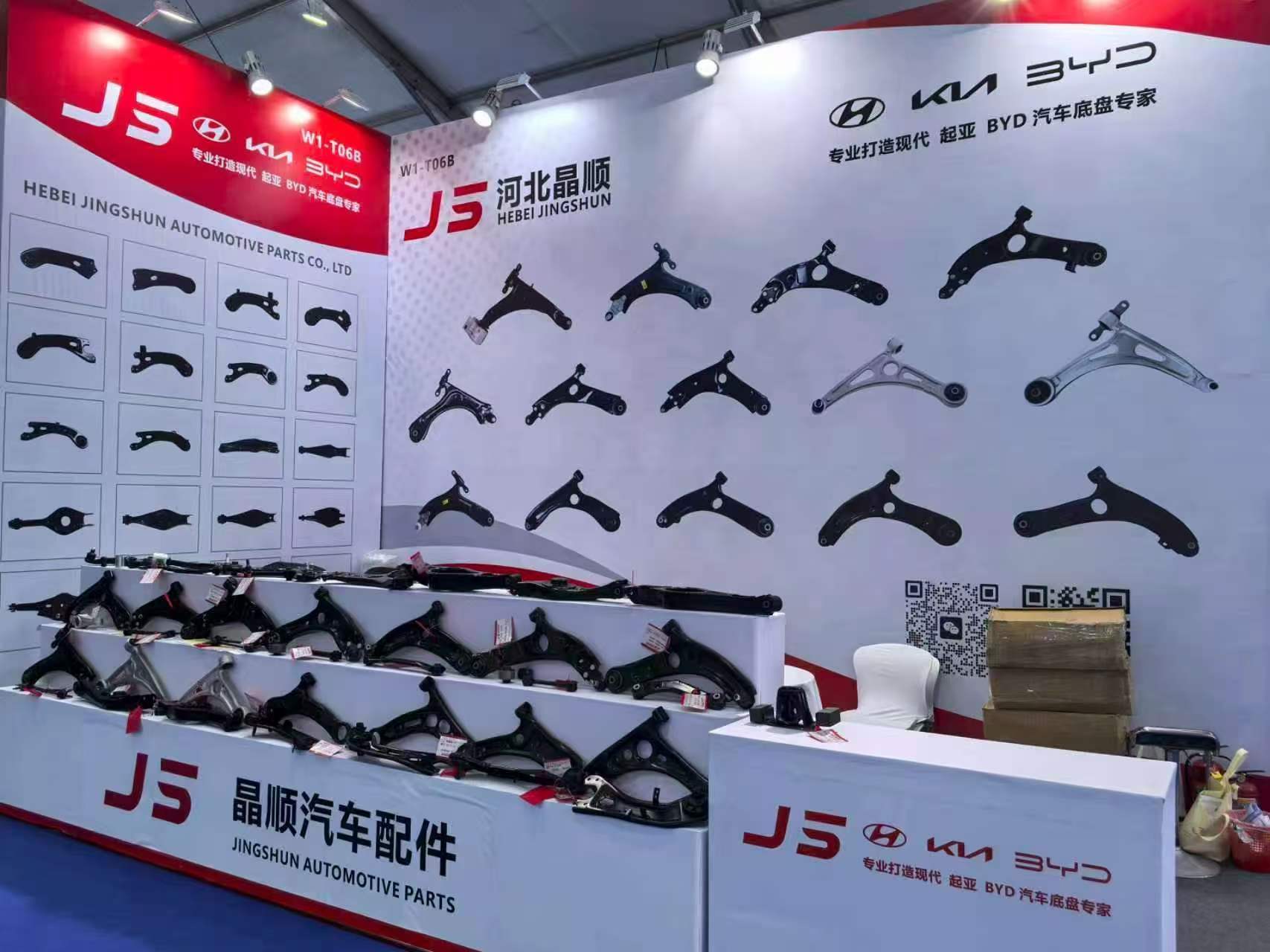
Automotive Suspension System Working Principle: How Springs, Dampers, and Geometry Manage Weight Transfer and Tire Contact

A suspension system manages the forces between the road and the vehicle body by balancing three conflicting goals: isolating the cabin from road disturbances, maintaining tire contact with the road surface, and controlling weight transfer during acceleration, braking, and cornering. Softer settings improve comfort but allow more body movement and camber change. Stiffer settings improve response but transmit more noise, vibration, and harshness (NVH). Every production suspension is a negotiated settlement between these opposing demands.
OEM tuning reflects deliberate trade-offs shaped by vehicle class, intended use, cost targets, and durability requirements — not arbitrary stiffness choices. A luxury sedan and a sports coupe may share the same basic architecture but diverge sharply in spring rates, damper valving, and bushing durometer because their design priorities differ. The purpose of a suspension system is to absorb bumps, maintain tire contact, and support vehicle weight while providing steering control and ride comfort. [SEARCH_EVIDENCE]
For parts buyers and mechanics, this framing matters because it explains why a component that works well in one application can degrade another. A damper calibrated for a 3,800-pound sedan will behave differently on a 3,200-pound hatchback even if the mounting points are identical. The system, not the part, determines performance.
Springs and Dampers: How They Work Together to Control Wheel Motion
Springs store energy when compressed and release it, causing the wheel to oscillate; shock absorbers (dampers) convert kinetic energy into heat to control that oscillation. [SEARCH_EVIDENCE] Without damping, a spring would oscillate at its natural frequency until friction eventually stops it — a condition that destroys tire contact and vehicle control. [MODEL_ANALYSIS]
Damping force is velocity-dependent: it resists fast suspension movement more than slow movement. That is why a worn damper allows excessive body motion over repeated bumps but may still feel "firm" in a static push test. The damper is not resisting position; it is resisting speed. A damper that has lost its gas charge or developed internal bypass will still offer some resistance at low piston speeds but will fade under the high-velocity inputs that matter most for control.
Spring rate (force per unit compression) and damping coefficient (force per unit velocity) must be matched. A stiffer spring with a stock damper will oscillate longer. A stock spring with an overly stiff damper will transmit more harshness. When selecting replacement components, the critical question is not "Is this part stiffer?" but "Is this part matched to the spring and the vehicle's mass?" A mismatched damper can make a car feel simultaneously harsh and floaty — harsh over sharp bumps, floaty over undulations — because it is over-damping high-velocity inputs and under-damping low-velocity ones.
The Physics of Damping: Velocity-Dependent Force and Its Effect on Ride vs. Handling
Damping force is proportional to suspension velocity, not position — meaning dampers respond differently to a sharp bump (high velocity) versus a gradual cornering load (low velocity). [MODEL_ANALYSIS] This distinction is the single most useful concept for interpreting damper specifications.
Low-speed damping (piston movement below roughly 0.1 m/s) controls body roll, pitch, and weight transfer during cornering, braking, and acceleration — this is the handling regime. [MODEL_ANALYSIS] High-speed damping (piston movement above roughly 0.3 m/s) controls impact absorption over sharp bumps and road irregularities — this is the ride regime. [MODEL_ANALYSIS]
Digressive, linear, and progressive valving describe how damping force increases with velocity. Each profile prioritizes different ride/handling trade-offs, and OEM tuning typically favors a digressive curve for a balance of control and comfort. [MODEL_ANALYSIS] A digressive damper produces high force at low speeds (controlling body motion) but the force curve flattens at high speeds (absorbing impacts without harshness). A linear damper increases force proportionally with velocity, which can feel more predictable but harsher over sharp bumps. A progressive damper increases force disproportionately at high speeds, which is useful for heavy vehicles or off-road applications but can compromise ride quality.
For parts buyers, the practical implication is that two dampers with the same physical dimensions can have completely different force-velocity curves. Without a dyno graph or manufacturer specification, you cannot assume a replacement will match the original. This is why OEM-specified dampers are often the safest choice for stock replacement, and why performance upgrades should be matched to the intended use — not simply chosen for "stiffer" valving.
Suspension Geometry Fundamentals: Camber, Caster, and Toe — How They Affect Tire Wear and Vehicle Dynamics
Camber (inward/outward tilt of the wheel) affects the contact patch shape and lateral grip; excessive negative camber improves cornering grip at the expense of straight-line tire wear on the inner shoulder. [MODEL_ANALYSIS] Caster (forward/backward tilt of the steering axis) influences straight-line stability and steering returnability; more positive caster increases steering effort and high-speed stability. [MODEL_ANALYSIS] Toe (inward/outward angle of the wheels relative to the vehicle centerline) directly affects tire scrub and straight-line stability; incorrect toe is a primary cause of rapid, uneven tire wear. [MODEL_ANALYSIS]
Suspension geometry is dynamic: as the suspension compresses and extends, camber, caster, and toe change. The rate and direction of these changes are designed into the linkage geometry and determine how the tire contact patch behaves under load. [MODEL_ANALYSIS] A double-wishbone suspension can be designed to gain negative camber as it compresses, keeping the tire flatter during cornering. A MacPherson strut, by contrast, has less freedom to tune camber gain because the damper is a structural member.
For mechanics and DIY users, geometry explains why worn components cause handling complaints that alignment alone cannot fix. A worn control arm bushing allows the arm to move under load, changing toe and camber dynamically. A bent strut or knuckle shifts the geometry permanently. Replacing a worn bushing or arm restores the original geometry; adjusting alignment without addressing the worn part will not hold. This is where components like Large suspension bushing — 54584-2D000 or Large suspension bushing — 54584-3S100 become system-critical: they locate the control arm and preserve the geometry the alignment machine measures.
Unsprung Mass: Why Reducing It Improves Suspension Performance and How It Affects Component Selection
Unsprung mass includes components not supported by the springs — wheels, tires, brake assemblies, hubs, and portions of the suspension links — and it directly affects how quickly the tire can follow road irregularities. [MODEL_ANALYSIS] Lower unsprung mass allows the suspension to react faster to bumps, improving tire contact and reducing the inertia that the springs and dampers must control. [MODEL_ANALYSIS]
Reducing unsprung mass (e.g., via lighter wheels, aluminum control arms, or lightweight brake calipers) can improve ride and handling without changing spring or damper rates — but it may also alter NVH characteristics and durability trade-offs. [MODEL_ANALYSIS] A lighter wheel reduces the mass the damper must control, which can make the same damper feel more effective. An aluminum control arm reduces mass but may transmit more road noise and have different fatigue characteristics than steel.
Unsprung mass is a key differentiator in suspension design: a double-wishbone setup with aluminum components may have lower unsprung mass than a MacPherson strut with cast iron parts, affecting both performance and cost. [MODEL_ANALYSIS] For parts buyers, this means that material and design choices are not cosmetic. When replacing a control arm, the mass of the replacement affects the system. When choosing a wheel, the weight affects how the suspension performs. These are system-level decisions, not isolated purchases.
Common Suspension Types: MacPherson Strut, Double Wishbone, Multi-Link, and Dependent — Trade-Offs That Affect Parts Decisions
Common suspension types include MacPherson strut, double wishbone, multi-link, and dependent (solid axle) designs, each with distinct packaging, cost, and performance characteristics. [SEARCH_EVIDENCE]
MacPherson strut: compact, low cost, widely used in front suspensions; integrates the damper into the structural load path, which simplifies packaging but limits geometry tuning and increases unsprung mass compared to some alternatives. [MODEL_ANALYSIS] Double wishbone: superior geometry control (camber change under load can be tuned), often used in performance and luxury vehicles; more complex, more expensive, and requires more packaging space. [MODEL_ANALYSIS] Multi-link: derived from double wishbone principles, uses multiple links to control geometry with fewer compromises; common in rear suspensions of modern passenger cars; complex and costly to manufacture and service. [MODEL_ANALYSIS] Dependent (solid axle): simple, durable, and cost-effective for load-carrying and off-road applications; compromises ride and handling because the wheels are linked, so movement on one side affects the other. [MODEL_ANALYSIS]
For parts decisions, the type determines what wears, what is adjustable, and what a replacement involves. A MacPherson strut typically requires replacing the entire strut assembly or compressing the spring to replace the damper. A double-wishbone or multi-link setup separates the damper from the spring, allowing more granular replacement. Dependent suspensions often use simpler, more robust components but offer fewer alignment adjustments. Knowing the type tells you what to expect before you order parts.
How Suspension Design Trade-Offs Manifest in Real-World Parts Decisions
OEM parts are designed as a system: replacing a worn strut with a generic aftermarket unit that has different damping characteristics can degrade ride and handling even if the part physically fits. [MODEL_ANALYSIS] Stiffer is not always better: increasing spring rate or damping without adjusting the other components can reduce tire contact on uneven roads, hurting both comfort and grip. [MODEL_ANALYSIS]
Durability and cost trade-offs are real: aluminum components reduce unsprung mass but may cost more and have different fatigue characteristics than steel; polyurethane bushings improve geometry control but transmit more NVH. [MODEL_ANALYSIS] When diagnosing ride or handling issues, consider the system: a worn bushing can change alignment angles, a weak spring can accelerate damper wear, and a bent control arm can alter geometry — replacing one part without addressing the root cause may not solve the problem. [MODEL_ANALYSIS]
For buyers, the decision framework is: identify the symptom, trace it to the system-level cause, and replace components in matched sets where the design requires it. If a bushing is worn, check the control arm and ball joint. If a damper is leaking, inspect the spring and mount. If tire wear is uneven, measure alignment before replacing tires. The goal is not to replace the most parts but to restore the system to its designed behavior. Components like Large suspension bushing — 54584-F9000 or Large suspension bushing — 54584-L4000 are part of that system; they should be selected to match the vehicle and the intended use, not simply to fit the hole.
FAQ
What is the working principle of an automotive suspension system?
A suspension system manages the forces between the road and the vehicle body. Springs store and release energy from road inputs. Dampers convert kinetic energy into heat to control spring oscillation. Linkages and bushings locate the wheels and determine how they move under load. The system balances comfort, tire contact, and weight transfer.
How do springs and shock absorbers work together?
Springs support the vehicle weight and absorb bumps by compressing and extending. Shock absorbers (dampers) resist the speed of that motion, converting kinetic energy into heat. Without damping, the spring would oscillate until friction stops it, causing loss of tire contact and control.
What is the difference between low-speed and high-speed damping?
Low-speed damping controls body roll, pitch, and weight transfer during cornering, braking, and acceleration (piston speeds below roughly 0.1 m/s). High-speed damping controls impact absorption over sharp bumps (piston speeds above roughly 0.3 m/s). OEM tuning typically balances both.
Why does unsprung mass matter?
Unsprung mass is the mass not supported by the springs — wheels, tires, brakes, hubs, and part of the suspension links. Lower unsprung mass allows the tire to follow road irregularities more quickly, improving contact and reducing the inertia the springs and dampers must control.
What are the common suspension types?
MacPherson strut, double wishbone, multi-link, and dependent (solid axle). Each has distinct trade-offs in cost, packaging, geometry control, and serviceability.
Can I replace just the shock absorber, or do I need the whole strut assembly?
It depends on the suspension type. MacPherson struts often require compressing the spring to replace the damper, which is why many buyers choose a complete strut assembly. Double-wishbone and multi-link setups typically separate the damper from the spring, allowing more granular replacement. Always check the vehicle-specific design before ordering.