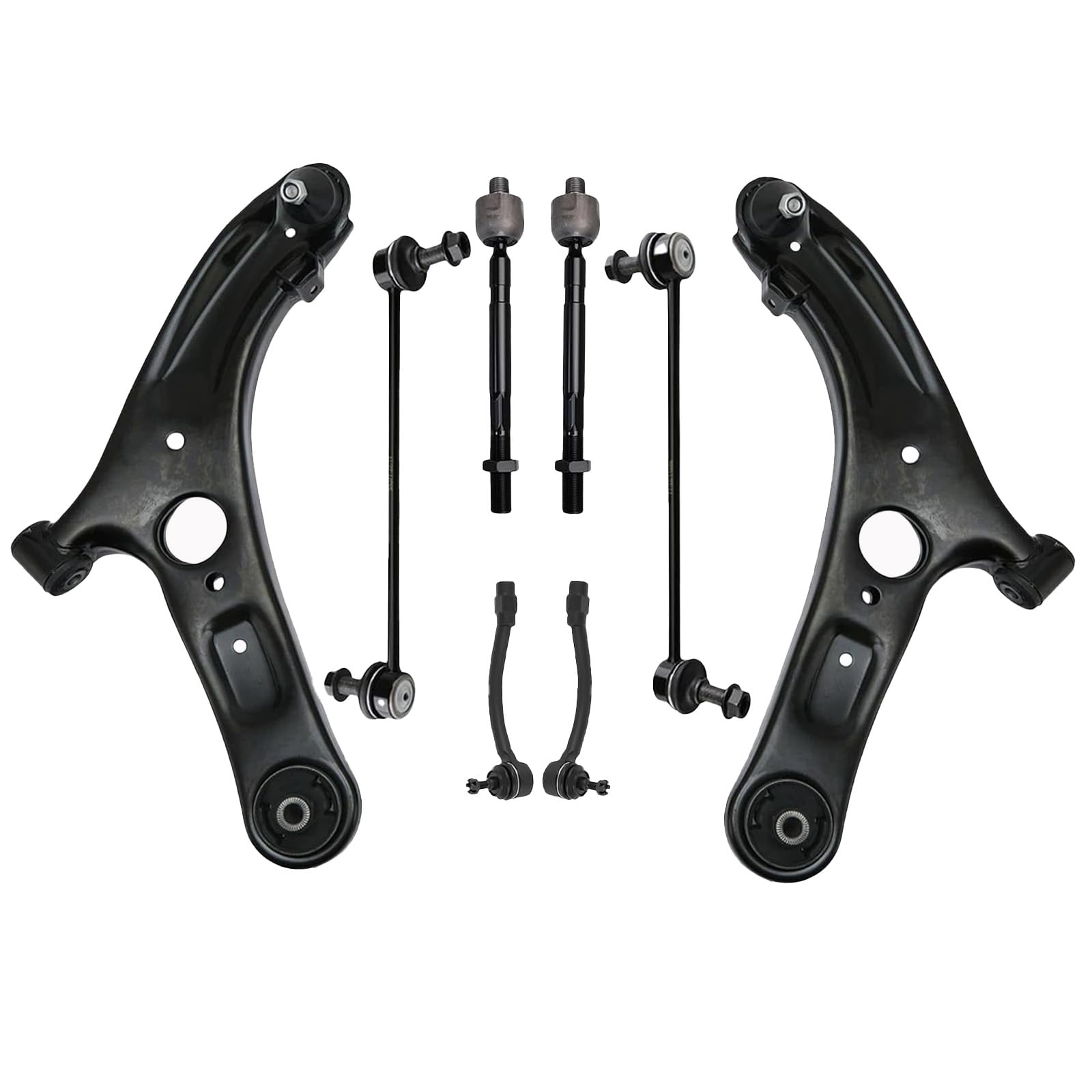
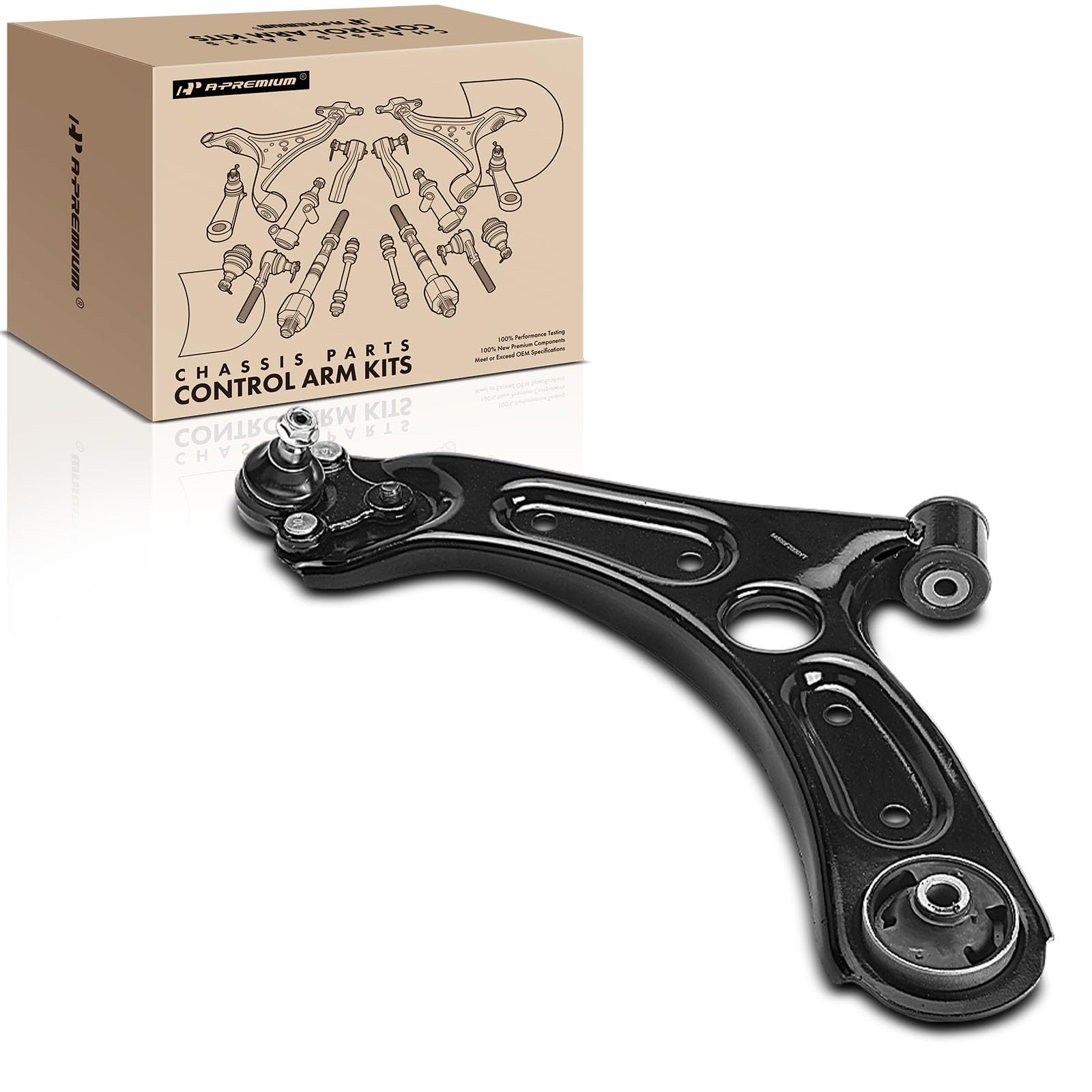
Symptoms of a Failing Control Arm in a Hyundai Elantra
A worn control arm in your Elantra doesn't hide for long. Here are the most common symptoms:
- Clunking or banging noises over bumps, especially when turning. The control arm's bushings and ball joint absorb road impacts. When they wear, metal-to-metal contact produces a distinct clunk.
- Steering wheel vibration or shaking at highway speeds. Excessive play in the control arm allows the wheel assembly to vibrate, which you feel through the steering wheel.
- Uneven tire wear (cupping or scalloping) on the inner or outer edges. A loose control arm alters the wheel's alignment angles, causing abnormal tire wear patterns.
- Vehicle pulling to one side or a loose, wandering steering feel. If the control arm bushings are collapsed, the wheel alignment shifts, making the car drift.
If you notice any of these, inspect the control arms before the problem worsens.
How to Inspect Control Arms on Your Elantra at Home
You can confirm control arm wear with basic tools and a safe lift.
- Visual check: Look for cracked or deteriorated bushings and torn ball joint boots. Cracks in the rubber or grease leaking from the boot indicate failure.
- Use a pry bar: Insert a pry bar between the control arm and subframe, then gently pry. Excessive movement (more than a few millimeters) means worn bushings.
- Rock the wheel: With the car lifted and the wheel on, grab the top and bottom of the tire and rock it. Clunking or movement suggests ball joint play.
- Bounce test: Push down on the front bumper and release. Listen for clunks from the suspension area.
If you find any of these issues, replacement is necessary.
Hyundai Elantra Control Arm Replacement Cost: Parts and Labor
Costs vary by model year and shop type. Here's a realistic breakdown:
- Parts cost: OEM typically $150–$300 per arm; aftermarket (MOOG, Mevotech) $80–$200.
- Labor cost: Dealership $200–$400 per side; independent shop $150–$300; DIY $0 (but requires time and tools).
- Total replacement cost: Dealership $350–$700 per side; independent $230–$500; DIY $80–$200 plus tools.
- Model year variations: 2011–2016 and 2017+ have different part numbers and costs. For example, 2017+ Elantra control arms are often more expensive due to updated designs.
DIY Replacement Guide for 2011-2016 Hyundai Elantra
Replacing the lower control arm on a 2011–2016 Elantra is a manageable weekend project. Here's how to do it right.
Tools needed:
- Jack and jack stands
- Lug wrench
- Socket set (metric)
- Torque wrench
- Pry bar
- Penetrating oil (e.g., PB Blaster)
- Safety glasses
Step-by-step instructions:
- Loosen lug nuts on the front wheel, then lift the car and secure it on jack stands.
- Remove the wheel.
- Disconnect the sway bar link from the control arm (usually a 14mm nut).
- Disconnect the ball joint from the steering knuckle. Remove the cotter pin and castle nut, then use a ball joint separator to pop it loose.
- Remove the bolts securing the control arm to the subframe (two bolts) and to the knuckle (one bolt). Note their positions.
- Replace the arm and torque to spec:
- Subframe bolts: 85–95 lb-ft
- Ball joint nut: 40–50 lb-ft
- Sway bar link: 30–40 lb-ft
Tips:
- Soak bolts with penetrating oil the night before.
- Replace any worn hardware (bolts, nuts) with new ones.
- Get an alignment after installation—this is non-negotiable.
Common mistakes to avoid:
- Not supporting the lower arm when removing the ball joint (it can drop suddenly).
- Over-torquing bolts, which can strip threads or damage bushings.
- Skipping the alignment, which will cause uneven tire wear.
OEM vs Aftermarket Control Arms: Which Is Best for Your Elantra?
Choosing between OEM and aftermarket control arms depends on your priorities.
- OEM: Guaranteed fit, OE quality, but higher cost and limited warranty (typically 12 months).
- Aftermarket: MOOG and Mevotech offer improved bushings (e.g., pre-greased, heavy-duty), lifetime warranties, and lower price.
- Quality insights: Aftermarket brands often use better materials (e.g., forged steel vs stamped) and are engineered to outlast OEM. For example, MOOG's RK620327 features a hardened ball joint and corrosion-resistant coating.
- Recommendation: For DIYers, aftermarket with warranty is often better value; for those keeping the car stock, OEM is safe.
Preventive Maintenance and Longevity Tips for Control Arms
Extend the life of your control arms with these habits:
- Regularly inspect bushings and ball joints during oil changes or tire rotations.
- Avoid hitting potholes and curbs; slow down over speed bumps.
- Keep tires properly inflated and rotate them regularly to reduce stress.
- Get an alignment after any suspension work and at least annually.
FAQs: Control Arm Replacement on Hyundai Elantra
How long do control arms last?
Typically 80,000–100,000 miles, but can vary with driving conditions.
Can I drive with a bad control arm?
It's unsafe; it can lead to loss of control and further damage.
Should I replace both sides at once?
Yes, if one is worn, the other is likely close; replacing both ensures even wear and saves on future labor.
What is the difference between upper and lower control arms?
Lower arms are more common on Elantra; upper arms are used in some models for additional adjustment.