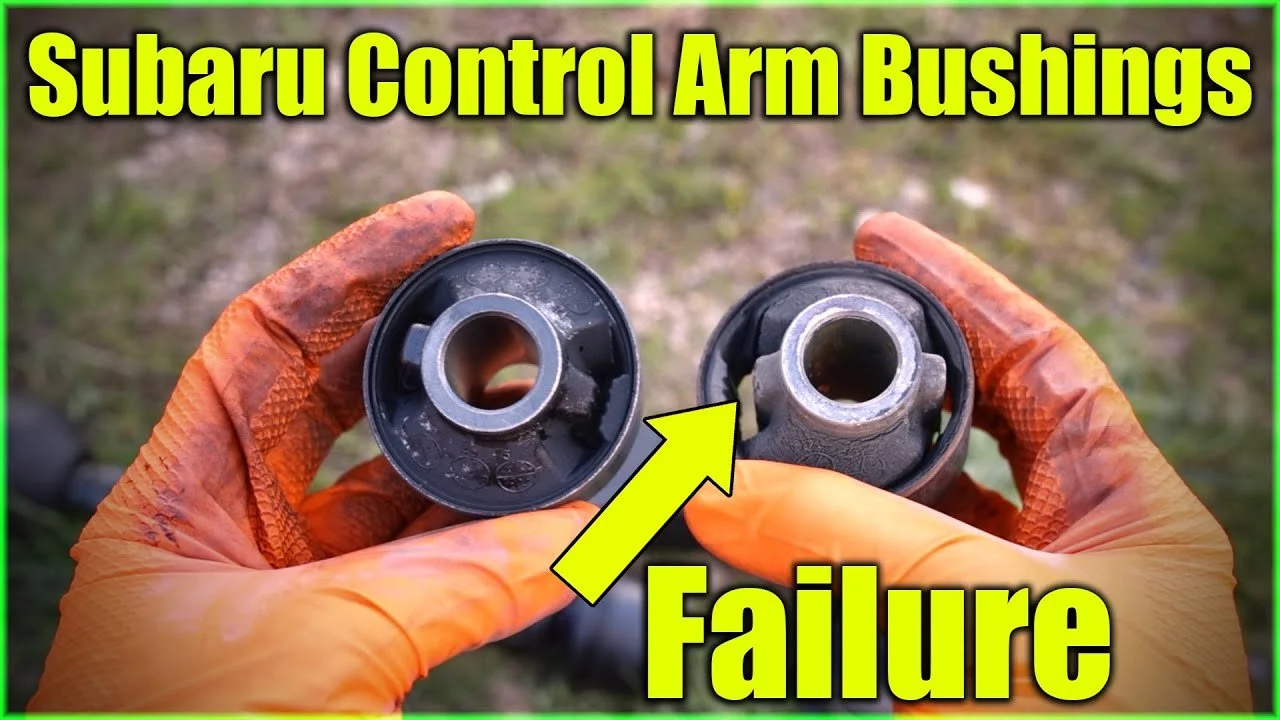
Control Arm Bushing Replacement: Press New Bushings or Replace the Arm?
Replace the complete control arm assembly when the bushing is non-serviceable, the arm shows corrosion or damage, or the labor cost of pressing approaches the cost of a new arm. Press new bushings only when the arm is structurally sound, the bushing is serviceable, and you have access to the right tools or a shop that can press them correctly. That is the decision rule. Everything below is how you apply it.
Control arm bushing replacement is not a single job. Before you buy a bushing set or a complete arm, answer three questions: Is the bushing actually the failed part? Is that bushing serviceable on its own? Does pressing new bushings cost less than replacing the arm? Get those right and the repair is straightforward. Get them wrong and you buy the wrong part, damage a good arm, or pay twice for the same fix.
Confirm the Bushing Is the Problem, Not the Ball Joint, Tie Rod, or Strut Mount
Start with the symptom, not the part. A clunk over sharp bumps points to a control arm bushing or a sway bar link. A single-wheel shimmy at 50–70 mph points to a bushing or wheel balance. Uneven inner-edge tire wear points to an alignment shift caused by bushing deflection. Vague steering with wander points to a bushing or an inner tie rod. Matching the symptom to the component before you buy anything prevents the most common and most expensive mistake in front-end repair.
Inspection must be done loaded. Rubber bushings can look intact with the suspension hanging and show tearing only when loaded at ride height. A pry bar test performed on a hanging suspension will miss a failed bushing. Put the vehicle on ramps or load the arm at ride height before you pry. Four visual failure modes justify replacement: cracked rubber, a separated bonded sleeve, fluid weeping from a hydraulic bushing, and metal-to-metal contact. Any one of those is a confirmed failure.
If the symptom does not match the bushing, check the ball joint, tie rod, and strut mount before ordering parts. A worn ball joint clunks over bumps too, but it also shows play when you load the wheel top-to-bottom. A failed strut mount makes noise when you turn the wheel at a standstill. A tie rod shows play when you rock the wheel side-to-side. Isolate the component first; replace second.
The Serviceability Test: Is Your Bushing Replaceable on Its Own?
Not every control arm bushing can be replaced separately. There are three bushing architectures, and only two of them are serviceable. Press-in rubber bushings are serviceable. Bonded or hydraulic bushings in a stamped arm are often serviceable with the right adapter. Bushings molded directly into the arm or into an aluminum forging are not serviceable — the arm and bushing are one part.
The searcher question "Can you replace control arm bushings without replacing the arm?" has a conditional answer: yes for press-in designs, no for integrated designs. The condition is not the vehicle's mileage or the noise level — it is the architecture of the specific arm on your vehicle.
Verify serviceability before you buy. Check the parts catalog for a separate bushing part number. If only the arm assembly is listed, the bushing is not sold separately, and the arm is the replacement unit. For Hyundai and Kia applications, for example, our catalog lists Rear Trailing Arm Bushing part numbers separately from complete Control Arm assemblies — which means the bushing is serviceable on those platforms, but the arm is also available as a complete unit if the arm itself is compromised. The same catalog logic applies across brands: if the bushing has its own part number, it can be pressed; if it does not, it cannot.
The Economic Threshold: When Pressing Bushings Stops Making Sense
Replace the complete arm when the bushing is non-serviceable, the arm shows corrosion or damage, or the shop labor to press bushings approaches the price of a new arm. That is the decision rule. Everything else is arithmetic.
There are four cost tiers to compare. DIY bushing-only means the bushing set plus press access. DIY complete arm means the arm pair plus alignment. Shop bushing press means labor hours to remove the arm, press out the old bushing, press in the new one, and reinstall. Shop complete arm means labor plus alignment. The threshold is not a fixed dollar figure — it is the point where the press labor line item gets close to the arm price.
Vehicle class changes the math significantly. Economy compact arms are often cheap enough that pressing is not worth it — the arm costs little more than the bushing set plus an hour of press time. Heavy-duty truck and performance arms can justify pressing because the arm itself is expensive. A stamped steel arm on a compact sedan and a forged aluminum arm on a performance car are not the same economic decision, even if the symptom is identical.
Tool Reality Check: Pressing Bushings Without a Hydraulic Press
You do not need a hydraulic press to press bushings — but you do need to understand which tools work and which are marginal. The realistic options are a threaded rod bushing kit, a ball joint press with adapter cups, a shop hydraulic press, or the remove-the-arm-and-pay-a-machine-shop path.
Improvised pressing has real failure modes. A cocked bushing tears rubber on the way in. A deformed arm bore will not hold the new bushing's preload. A damaged sleeve turns a bushing job into an arm job. Those failures are not rare — they are the reason many first-time DIYers end up buying an arm anyway after destroying a bushing.
The outsourcing rule is simple: if the arm is off the vehicle and the bushing is serviceable, a machine shop press fee is usually the lowest-risk path for a first-time DIYer. You remove the arm, hand it to the shop with the new bushing, and reinstall it yourself. You avoid buying a press, you avoid the cocked-bushing failure mode, and you keep the labor cost low. Buying a press only makes sense if you plan to do this job repeatedly.
Material Choice: OEM Rubber vs Polyurethane vs Hydraulic Bushings
OEM rubber is the correct choice for daily drivers and stock suspension. It offers the best NVH isolation and moderate durability. If you want the vehicle to feel the way it did when it left the factory, rubber is the answer.
Polyurethane reduces deflection and improves steering precision, but it increases road noise and vibration, and it requires proper lubrication to avoid squeaking. Polyurethane is a performance choice, not a comfort choice. If you drive on rough roads or care about cabin noise, it is the wrong material.
Hydraulic bushings are engineered for specific NVH and damping targets. Replacing a hydraulic bushing with a solid rubber or poly bushing changes ride and noise characteristics and may not match the original design intent. If your vehicle came with hydraulic bushings, understand that you are changing the design, not just the part, when you substitute a different material.
Manufacturer Design Intent: Why Some Bushings Are Not Sold Separately
Non-serviceable bushings are not a parts-sales tactic. They are an engineering decision. Bonded bushings can be molded directly into stamped or cast arms for cost, weight, and durability. Aluminum forgings often use press-fit bushings that require high-force tooling and precise bore control. In both cases, the bushing and the arm are designed as a system.
There is also a service reason. A bushing pressed into a corroded or out-of-round bore will not hold preload or alignment. The manufacturer may specify arm replacement to guarantee the repair — because a bushing pressed into a compromised bore is a comeback waiting to happen. The arm replacement recommendation protects the repair quality, not the parts counter.
Aftermarket suppliers respond to this by offering bushing-only kits for arms the OEM sells as assemblies. That is a legitimate option, but the installer assumes the risk of bore condition and pressing quality. If the bore is sound and the pressing is done correctly, the result is fine. If either is compromised, the arm is scrap.
After the Swap: Alignment, Torque-at-Ride-Height, and the Cost of Skipping Them
Alignment is mandatory after control arm or bushing replacement. The arm position defines camber, caster, and toe. Skipping the alignment causes uneven tire wear and handling degradation — and it will cost more than the alignment itself in premature tire replacement.
Rubber bushings must be tightened at ride height, not with the suspension hanging. If you torque the bushing bolts with the suspension at full droop, the bushing will be preloaded and fail early. This is the single most common installation error, and it is invisible until the bushing tears months later.
Post-installation checks matter. Test drive for clunks. Re-check torque after the suspension settles. Inspect for bushing shift or sleeve movement. If you hear a new noise after the swap, stop and inspect before you drive further — a shifted bushing can cause immediate handling problems.
Final Decision Path: Matching Your Situation to the Right Repair
Use this decision tree. Branch 1: bushing serviceable, arm sound, press access — press bushings. Branch 2: bushing serviceable, arm sound, no press — remove the arm and outsource pressing. Branch 3: bushing non-serviceable or arm corroded or damaged — replace the complete arm. Branch 4: any branch where shop labor approaches the arm price — replace the complete arm.
The searcher's core question — press bushings or replace the arm — is answered by the branch, not by mileage or noise alone. Mileage tells you when to inspect. Noise tells you which component to check. The branch tells you what to buy.
Budget tiering follows the same logic. OEM arm, aftermarket arm, and bushing-only kit are three different products at three different price points. Alignment cost belongs in every arm-replacement branch. If you are comparing a bushing-only kit against an arm, include the press labor or the machine shop fee in the bushing-only column — otherwise the comparison is not honest.
For Hyundai and Kia applications, our catalog separates serviceable bushings — such as the Rear Trailing Arm Bushing and the large and small suspension bushings — from complete Control Arm assemblies. That separation is the serviceability answer in part-number form: if the bushing has its own number, it can be pressed; if only the arm is listed, the arm is the repair.
FAQ
Can I replace just the bushing instead of the whole control arm? Yes, if the bushing is a press-in design and the arm bore is sound. No, if the bushing is molded into the arm or into an aluminum forging.
How do I know if my control arm bushing is bad? Cracked rubber, a separated bonded sleeve, fluid weeping from a hydraulic bushing, or metal-to-metal contact. Symptoms include clunks over sharp bumps, a single-wheel shimmy at 50–70 mph, uneven inner-edge tire wear, and vague steering with wander.
Do I need an alignment after replacing control arm bushings? Yes. The arm position defines camber, caster, and toe. Skipping the alignment causes uneven tire wear and handling degradation.
Can I press bushings without a hydraulic press? Yes, with a threaded rod kit or a ball joint press with adapter cups. If the arm is already off the vehicle, paying a machine shop to press the bushing is usually the lowest-risk path for a first-time DIYer.
Should I use OEM rubber or polyurethane bushings? OEM rubber for daily drivers and stock suspension. Polyurethane for performance use, with the understanding that road noise and vibration will increase and proper lubrication is required.
Why does the manufacturer sell the whole arm instead of just the bushing? Because bonded bushings can be molded directly into the arm for cost, weight, and durability, and because a bushing pressed into a corroded or out-of-round bore will not hold preload or alignment. The arm replacement guarantees the repair.
Summary
Control arm bushing replacement is a decision, not a procedure. Confirm the bushing is the failed part with a loaded inspection. Test serviceability by checking for a separate bushing part number. Apply the economic threshold: if press labor approaches the arm price, buy the arm. Choose your tool path honestly — press, outsource, or replace. Pick the material that matches your driving, not the marketing. Torque at ride height. Get the alignment. Follow the decision tree and you will buy the right part the first time.