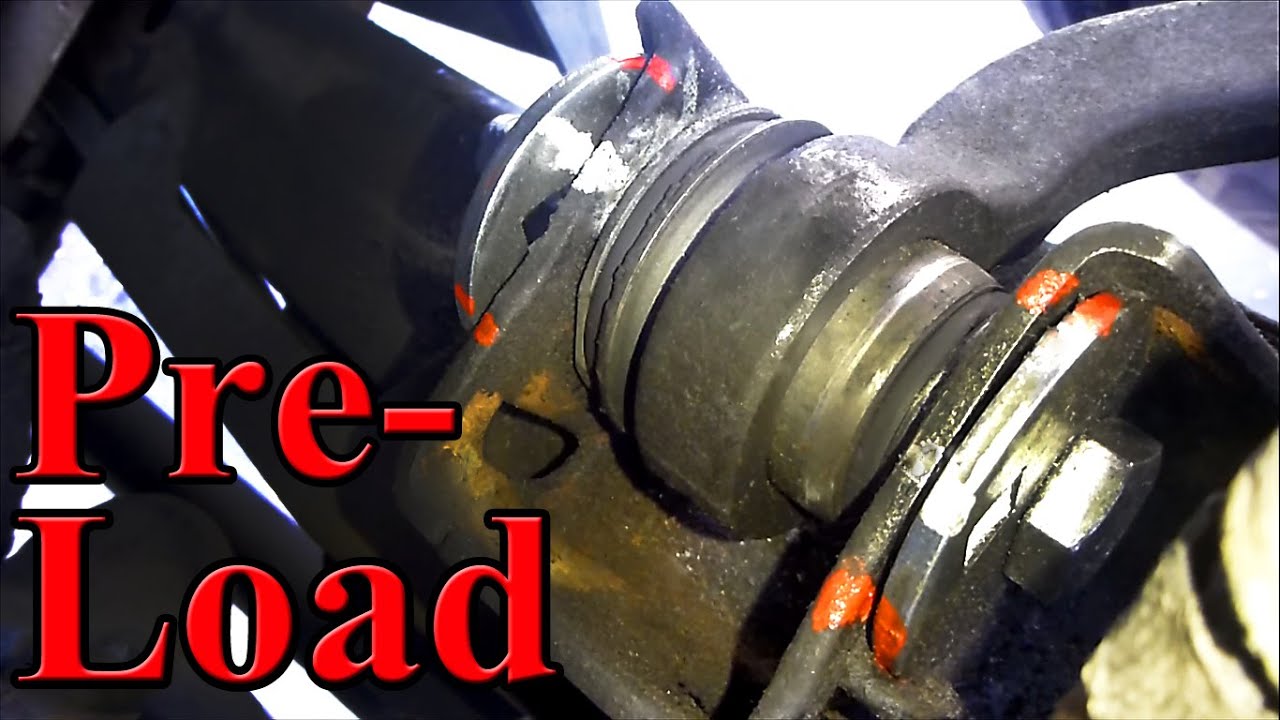
Control Arm Bushing 'Preload' Is Not a Setting — It's a Torsional Wind-Up You Must Avoid
Control arm bushing preload is not a tunable value. It is the torsional stress locked into a bonded rubber bushing when you tighten its pivot bolts with the suspension at the wrong position. The only correct target is zero torsional wind-up at static ride height—the bushing sits neutral when the vehicle is at rest on the ground.
Rubber control arm bushings have an outer shell bonded to rubber and an inner sleeve bonded to rubber. They do not rotate freely; they twist within the rubber's elastic range. When you tighten the pivot bolt at full droop, you force the bushing to hold the suspension's entire travel as a permanent twist. That stored energy accelerates fatigue and causes cracks at the bonded interface. There is no 'preload spec' to dial in. The term 'preload' is shorthand for this mistake.
What Happens If You Tighten at Full Droop: The Real Cost of Getting It Wrong
The bonded rubber is held in constant twist, which accelerates fatigue and causes cracks at the bonded interface. Handling feels vague because the bushing's effective spring rate changes as it twists through its range. The bushing may fail at low mileage—often within 10,000–20,000 miles—leading to repeat replacement. Steering feel and alignment stability degrade because the suspension is effectively pre-loaded in one direction.
This is not a subtle effect. A bushing tightened at full droop is already twisted by the full suspension travel—often 3 to 5 inches of wheel travel translates to 30–60 degrees of rotation at the bushing. Rubber does not tolerate that kind of static twist for long. It heat-cycles, cracks, and eventually tears. The driver notices vague steering, clunks over bumps, and uneven tire wear. The root cause is almost always the installation, not the part.
Step-by-Step: How to Tighten Control Arm Pivot Bolts at Ride Height Without a Lift
Use ramps or load the suspension with jack stands under the lower control arms to simulate ride height. Never torque pivot bolts with the suspension hanging; always tighten at the position the suspension sits at rest. For vehicles where the pivot bolts are inaccessible at ride height, use a drive-on ramp or a loaded jack stand setup that supports the hub. Tighten bolts in the specified sequence and to the OEM torque value, then lower the vehicle and recheck.
Here is a safe, repeatable procedure for a home garage:
- Prepare the vehicle. Loosen the pivot bolts slightly while the vehicle is on the ground, then raise it and support it on jack stands under the frame. Remove the wheels if needed for access.
- Replace the control arm or bushing. Follow the service manual for removal and installation. Do not tighten the pivot bolts yet—leave them snug.
- Lower to ride height. Use ramps or place jack stands under the lower control arms (not the frame) so the suspension compresses to its normal resting position. If you use jack stands under the control arms, ensure they are rated for the load and placed securely. Alternatively, drive the vehicle onto ramps.
- Torque the pivot bolts. With the suspension loaded, tighten the pivot bolts to the OEM torque value in the specified sequence. Use a torque wrench—do not guess.
- Lower and recheck. After tightening, lower the vehicle fully and recheck torque if the bolts are accessible. If you had to use a loaded jack stand setup, verify that the suspension is still at ride height before final torque.
If the pivot bolts are inaccessible at ride height (common on some MacPherson strut designs), you may need to use a drive-on ramp or a pit. Do not tighten them at full droop and hope for the best.
Rubber vs. Polyurethane Bushings: Why the Rule Changes
Rubber bushings are bonded to both the outer shell and inner sleeve, so they twist and must be tightened at ride height. Polyurethane bushings usually have a free-rotating sleeve or are designed to rotate, so they do not carry torsional preload. Some poly bushings require lubrication and specific hardware; always follow the manufacturer's instructions. Mixing rubber and poly on the same arm can create different preload requirements per pivot.
This is the key distinction that forum answers often miss. A poly bushing with a greased sleeve rotates as the suspension moves—it does not store torsional energy. Tightening it at full droop is not ideal, but it will not cause the same bonded-rubber failure. However, poly bushings can squeak if not lubricated, and they may require re-torquing after a few hundred miles. Always check the manufacturer's instructions for your specific bushing.
Torque Spec Discipline: Why the OEM Value and Sequence Matter More Than You Think
Always use the OEM torque value for the specific vehicle; generic torque tables are not reliable. Torque-to-yield bolts must be replaced and tightened in the specified sequence, often with a torque angle gauge. Slotted or eccentric pivots may require tightening at ride height and then rechecking alignment. Tightening at ride height is not optional—it's part of the torque procedure for bonded rubber bushings.
Torque-to-yield bolts stretch when tightened and must be replaced every time they are removed. If you reuse them, they may not hold the correct clamp load, leading to movement and premature bushing failure. For slotted pivots, the bolt's clamping force is what holds the alignment setting. If you tighten at full droop, the suspension will shift when you lower the car, changing camber and caster. Always tighten at ride height, then verify alignment.
Alignment Timing: Set Preload First, Then Align — Here's Why
If you tighten pivot bolts at ride height after an alignment, the suspension may shift and change camber/caster. On slotted or eccentric pivots, the act of tightening can move the adjustment unless the suspension is loaded and the bolts are torqued in the correct sequence. Always set preload first, then align, and recheck torque after alignment if the pivots are disturbed. For vehicles with adjustable camber/caster at the control arm, the alignment technician must be aware of the preload procedure.
The correct order is: install the control arm, tighten pivot bolts at ride height, then drive the vehicle to settle the suspension, then align. If you align first and then tighten the pivots at ride height, you risk shifting the alignment. Some shops will align with the suspension loaded and then tighten—but that requires a lift that supports the vehicle at ride height. If you are doing this at home, set preload first, then take the car to an alignment shop.
When 'Preload' Still Matters: Diagnosing Repeat Bushing Failure and Vague Handling
Symptoms of incorrect preload include vague steering, clunks over bumps, and bushings cracking at low mileage. Inspect the bushing for torsional cracks or deformation at the bonded interface. If the bushing was tightened at full droop, replacement is often the only fix, followed by proper ride-height tightening. After replacement, verify that the suspension sits at ride height when torquing and that the alignment is set afterward.
Look for cracks that radiate from the inner sleeve or outer shell—these are telltale signs of torsional fatigue. If the rubber is torn or separated from the sleeve, the bushing is done. Do not try to 're-tighten' it at ride height; the damage is already done. Replace the bushing or the entire control arm, then follow the ride-height tightening procedure. If you are replacing the control arm, consider upgrading to a polyurethane bushing if you want easier installation and don't mind a slight increase in NVH.
FAQ
Q: Can I tighten control arm bushings with the car on a lift?
A: Only if the lift supports the suspension at ride height. A standard two-post lift leaves the suspension hanging, which is the wrong position. Use ramps or jack stands under the control arms.
Q: Do polyurethane bushings need to be tightened at ride height?
A: Typically no, because they rotate freely on their sleeves. However, always follow the manufacturer's instructions—some designs may require a specific procedure.
Q: What happens if I tighten at full droop and then drive?
A: The bushing is held in twist, which accelerates wear and can cause cracking within 10,000–20,000 miles. You may also notice vague steering and uneven tire wear.
Q: Do I need an alignment after replacing control arm bushings?
A: Yes, because the suspension geometry changes. Set preload first, then align.
Q: Can I reuse the pivot bolts?
A: Only if they are not torque-to-yield. If they are, replace them. Check the service manual.
Conclusion
Control arm bushing preload is not a setting—it's a mistake to avoid. Tighten pivot bolts only at static ride height, use the OEM torque spec, and set preload before alignment. Rubber bushings twist; poly bushings rotate. Knowing the difference saves you from repeat failures and vague handling. For quality replacement bushings and control arms, explore our [automotive suspension components](/products) or learn more [about our company](/about).